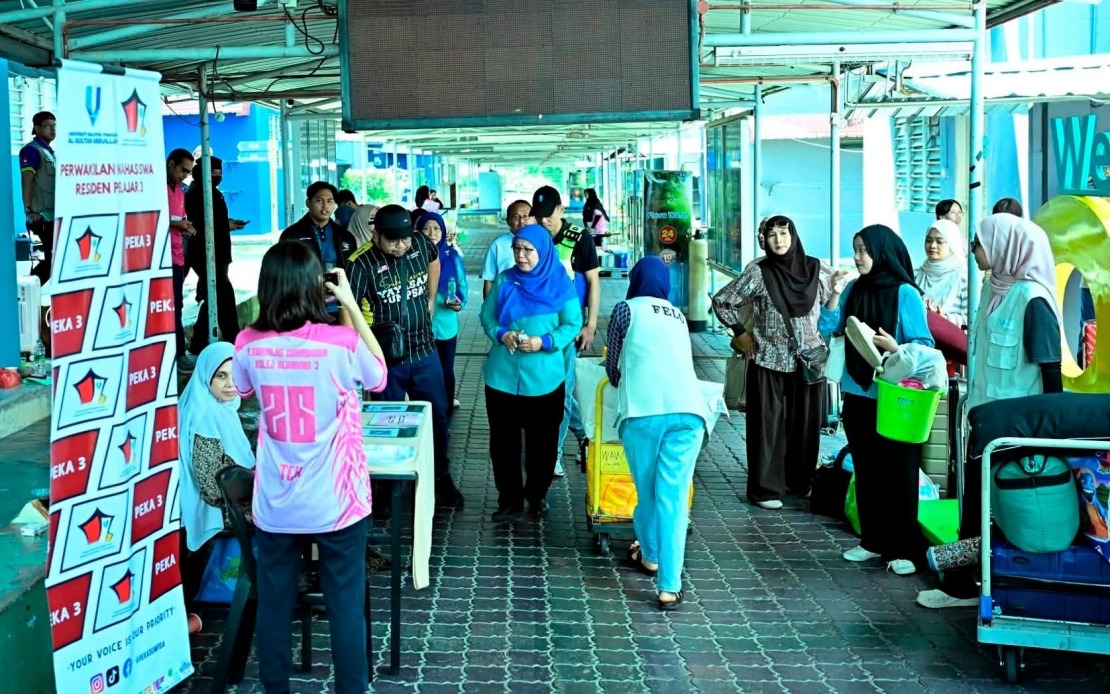
Universiti Malaysia Pahang Al-Sultan Abdullah (UMPSA) has doubled down on its pledge to make higher education accessible to students from disadvantaged backgrounds, with Vice-Chancellor Prof Dr Yatimah Alias emphasising that financial hardship should never be a barrier to quality learning. Speaking during the registration of new diploma students in Kuantan on July 19, Yatimah highlighted the institution's multi-pronged approach to student welfare, spanning monetary support, academic mentoring, and targeted welfare schemes designed to remove obstacles that might otherwise derail a student's academic journey.
The timing of this commitment is particularly significant as UMPSA registered 1,045 new diploma students for the 2026/2027 academic session, marking the largest cohort intake since the university's establishment. This surge in enrolment underscores the growing demand for technical and vocational pathways in Malaysia's higher education landscape, and demonstrates UMPSA's expanding role in serving students who may come from diverse socioeconomic backgrounds across Pahang and beyond.
Concrete manifestations of UMPSA's welfare philosophy became evident during the registration day itself. Twenty students were awarded scholarships that comprehensively cover tuition fees alongside monthly allowances, ensuring recipients can concentrate on their studies rather than scrambling to secure funds. For many beneficiaries, particularly those from rural or lower-income families in East Coast Malaysia, such awards represent transformative opportunities that would otherwise remain out of reach.
Beyond traditional scholarships, UMPSA has introduced an Early Education Incentive scheme providing RM1,000 to students in immediate need. Administered through the UMPSA Foundation, this programme represents a nimble response to the financial pressures facing Malaysian tertiary students, many of whom grapple with accommodation, transport, and living costs on top of tuition obligations. The fund's accessibility during the registration period itself signals an institutional recognition that financial crises can strike at any point in a student's academic calendar.
Yatimah's emphasis on equal access and quality educational opportunity reflects broader national priorities articulated in Malaysia's education policy frameworks. The vision of ensuring every learner receives equitable treatment aligns with the aspirations outlined in various government education roadmaps, though implementation at the institutional level often requires resourcefulness and strategic prioritisation. For a university serving a geographically diverse and economically mixed student population, such commitment demands sustained budget allocation and administrative vigilance.
The intersection of record enrolment figures and expanded student support initiatives reveals a deliberate institutional strategy. Rather than allowing growth to dilute quality or stretch resources thin, UMPSA appears committed to scaling support mechanisms alongside student numbers. This approach stands in contrast to some higher education institutions globally that have witnessed ballooning enrolments without corresponding increases in welfare infrastructure, resulting in student distress and attrition.
For Malaysian policymakers and education administrators, UMPSA's model offers instructive lessons. The combination of merit-based scholarships, need-based financial assistance, and targeted emergency funds creates a multi-layered safety net that addresses different manifestations of financial disadvantage. First-generation university students from low-income households, mature-age learners juggling employment alongside studies, and students from remote areas all face distinct barriers that monolithic support systems often fail to address comprehensively.
The role of institutional foundations such as UMPSA's in supplementing government allocations has grown increasingly important as demand for higher education has intensified across Southeast Asia. These quasi-private funding mechanisms, typically drawing on alumni contributions, corporate partnerships, and accumulated endowments, enable universities to respond with agility to emerging student needs without awaiting bureaucratic budget cycles. However, the sustainability of foundation-dependent support remains contingent on robust fundraising and institutional health.
Yatimah's engagement with new students during registration day itself carries symbolic weight beyond mere administrative routine. Senior leadership visibility during student-facing activities signals institutional prioritisation of welfare matters and provides opportunities for direct contact with the beneficiary community. Such interactions often generate valuable feedback about whether support schemes actually reach intended recipients and whether implementation matches policy intention.
The specific focus on underprivileged students reflects a widening recognition within Malaysian higher education that equity in tertiary access requires active institutional intervention. Market mechanisms alone have demonstrably failed to ensure that talented but economically disadvantaged students progress through the education pipeline. UMPSA's approach acknowledges that meritocracy requires levelling competitive playing fields, not merely identifying talent among those already advantaged by circumstance.
Looking ahead, the sustainability and scaling of UMPSA's student support architecture will merit monitoring. As enrolment grows and resource demands multiply, institutional commitment will be tested. The current trajectory appears positive, with concrete funding mechanisms in place and senior leadership articulating clear priorities. Whether such commitment can be maintained through inevitable budgetary fluctuations and competing institutional priorities remains an open question that extends well beyond UMPSA itself to the broader Malaysian higher education sector.

