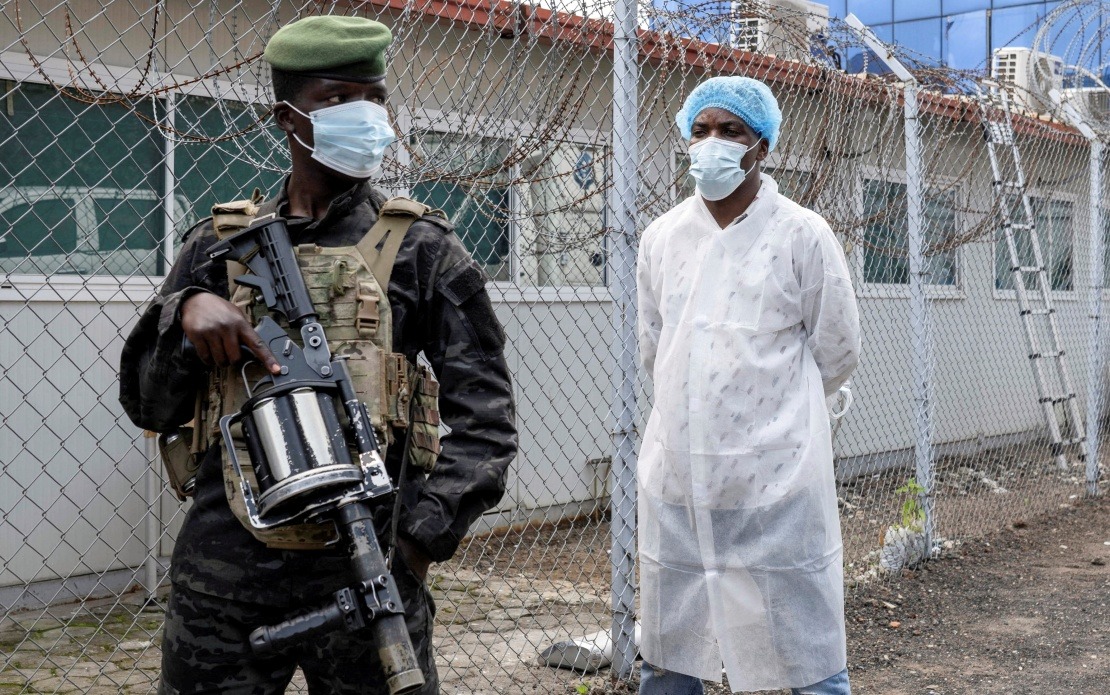
A United Nations migration agency has sounded an urgent alarm over traditional funeral customs in the Democratic Republic of Congo, cautioning that the movement of Ebola victims' bodies to ancestral burial grounds is significantly amplifying the disease's spread across the nation. The warning comes as the death toll from the outbreak, declared on May 15, has climbed past 800 with no immediate sign of abatement. According to the Health Ministry's latest figures, confirmed cases now exceed 2,100, with the case fatality rate standing at a stark 37.5 per cent, underscoring the severity of the public health emergency unfolding in Central Africa.
The International Organisation for Migration has documented a troubling pattern whereby bodies are transported across provincial boundaries, creating multiple exposure opportunities for virus transmission. In one specific measure of this phenomenon, surveillance teams at border crossings and entry points into different health zones have intercepted 105 bodies during their monitoring operations. This movement reflects deep-rooted cultural practices where families insist on returning deceased relatives to their home communities for proper burial rites—a practice that, while culturally significant, has become epidemiologically catastrophic in the context of a highly fatal disease with no proven cure.
The geographical footprint of the outbreak continues to expand at an alarming rate. The virus has now established itself across five provinces: Haut-Uele, Ituri, North Kivu, South Kivu, and Tshopo, creating a sprawling crisis that stretches the capacity of health authorities and humanitarian organisations. Over the past two weeks alone, the outbreak has surged by approximately 70 per cent, with health workers reporting an average of more than 40 new cases daily. This explosive growth trajectory has prompted international health agencies to classify this as one of the most rapidly escalating Ebola outbreaks in recorded history.
Community resistance to safe burial protocols has emerged as a critical impediment to containing the disease. Frantz Celestin, the IOM's Regional Director, highlighted during a video briefing that burial teams regularly encounter opposition from local populations, with some incidents escalating to physical violence. One particularly violent episode occurred last month at a cemetery in Bunia, the capital of Ituri province, when Red Cross volunteers were seriously injured while conducting funeral rites for an Ebola victim. According to local reports, a group of youths attempted to forcibly open the coffin, underscoring the tension between epidemiological necessity and community mistrust.
The lack of early detection and community engagement has compounded the challenge of managing the outbreak effectively. Celestin emphasised that 60 per cent of reported deaths have taken place within community settings rather than in controlled medical environments, reflecting the difficulty in identifying cases promptly and ensuring affected individuals receive timely treatment. This statistic reveals a deeper problem: surveillance systems remain inadequate, and healthcare facilities in remote areas lack the resources and trained personnel needed to respond rapidly when new cases emerge. The delay between symptom onset and diagnosis creates a window during which infected individuals continue to circulate through their communities, amplifying transmission.
The World Health Organisation has documented a concerning expansion in the geographical scope of transmission. The number of affected health zones increased from 36 to 42 in the span of a single week, demonstrating how quickly the virus is establishing itself in new areas. This expansion suggests that containment efforts, though ongoing, have not yet achieved the level of effectiveness needed to reverse the trajectory of the outbreak. Health officials attribute this continued spread partly to the porous nature of borders in the region and the difficulty of coordinating cross-border surveillance and response measures.
Médecins Sans Frontières, the international medical charity known in English as Doctors Without Borders, has characterised the current outbreak as the third-largest Ebola epidemic on record and, more troublingly, the fastest-growing outbreak documented in just the first two months following its declaration. This assessment places the DRC crisis in a category with the 2014-2016 West African epidemic and the 1976 Zaire outbreak, both of which had catastrophic humanitarian consequences. The rapid acceleration within such a compressed timeframe raises concerns about whether available resources and international support will prove sufficient to reverse the outbreak's momentum.
For Malaysian and broader Southeast Asian readers, the DRC Ebola situation carries implications beyond the immediate humanitarian tragedy. The virus's rapid expansion and the challenges posed by cultural practices and community resistance offer lessons for pandemic preparedness in the region. Southeast Asia, with its significant cross-border populations, informal trade networks, and diverse burial traditions, could face similar complications should an emerging infectious disease become established. The DRC case underscores the importance of investing in robust disease surveillance systems, training community health workers to build trust with local populations, and developing culturally sensitive public health messaging that respects traditions while protecting populations from deadly pathogens.
The role of misinformation and mistrust in hampering outbreak response cannot be understated. In the DRC, suspicion of authorities and healthcare workers has led communities to reject safe burial practices and isolate cases, inadvertently facilitating transmission. This dynamic reflects broader challenges in global health security where technical solutions alone—vaccines, treatments, isolation protocols—cannot succeed without community buy-in. International health agencies have recognised this reality and are increasing efforts to engage community leaders, traditional healers, and religious figures in designing locally appropriate response strategies.
As the outbreak continues its destructive course, international donors and the Congolese government face mounting pressure to scale up their response substantially. The current pace of spread suggests that without dramatic increases in resource allocation, case identification capacity, and community engagement, the death toll will continue to rise. The situation also highlights the persistent vulnerability of low-income countries with weak health infrastructure to large-scale disease outbreaks, a problem that predates but has been exacerbated by the global pandemic.

