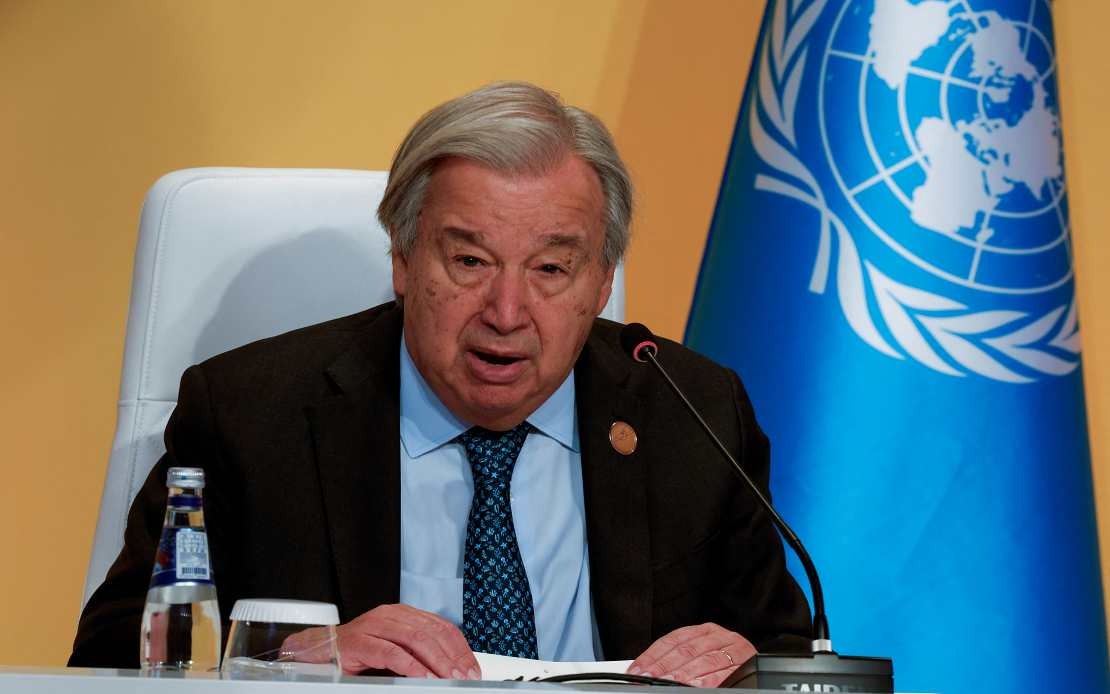
The United Nations has raised urgent alarm over deteriorating security conditions in the Persian Gulf, with Secretary-General Antonio Guterres expressing grave concern about a cycle of military escalation involving multiple regional actors. In a statement released on Sunday, UN spokesperson Stephane Dujarric outlined the organisation's position on incidents that have heightened tensions considerably, including vessel attacks in the Strait of Hormuz attributed to Iran, retaliatory American military strikes against Iranian targets, and Iranian military operations affecting neighbouring states.
Guterres has made clear that the international community views the current trajectory as deeply troubling, with the UN chief appealing directly to all involved parties to exercise maximum restraint and refrain from actions that would deepen the crisis. The Secretary-General's intervention reflects the UN's mandate to preserve international peace and security, particularly when developments threaten to spiral beyond control. Rather than issuing threats or taking sides, the UN's position centres on halting the momentum of military exchanges before irreversible damage is inflicted on the region and beyond.
The statement emphasises that returning to all-out hostilities would produce catastrophic results with far-reaching consequences. Such escalation would devastate populations already living under strain throughout the Gulf states and surrounding areas. More broadly, the UN recognises that regional conflict at this scale inevitably destabilises global systems, with ramifications for international commerce, energy security, and stability in other parts of the world. For Malaysia and Southeast Asia, a major conflagration in the Gulf would carry significant economic implications given the region's reliance on stable shipping lanes and energy supplies.
A critical priority identified by Guterres involves restoring and protecting freedom of navigation through the Strait of Hormuz, one of the world's most strategically important waterways. Approximately one-third of global seaborne traded oil passes through this narrow corridor, making any disruption to shipping a matter of international concern. Attacks on commercial vessels have already created insurance complications and deterred shipping companies from routing through the strait, effectively creating an economic blockade that affects economies far from the Middle East. The UN's insistence on unrestricted passage reflects both legal principles enshrined in international maritime law and practical economic necessity.
The Secretary-General's position diverges from either party's maximalist stance by rejecting the logic of military escalation as a solution. While Iran has framed its actions as defensive responses to perceived threats and American aggression, and the United States has characterised its operations as necessary protection of regional interests and national security, Guterres contends that this cycle only increases risks of miscalculation and unintended consequences. History demonstrates that in periods of high tension, accidents or misidentifications can trigger major conflicts even when neither party desires full-scale war.
Crucially, the UN has called upon both Tehran and Washington to return urgently to the negotiating table. This appeal carries particular weight given that both nations maintain diplomatic channels and have demonstrated willingness to engage in talks previously. The reference to addressing "outstanding issues through diplomacy" suggests the UN views the current confrontation as rooted in substantive disagreements that are theoretically resolvable through patient negotiation rather than military posturing. The withdrawal of the United States from the Joint Comprehensive Plan of Action in 2018, followed by the restoration of American sanctions on Iran, created the underlying tensions that have now manifested in military form.
For Southeast Asian nations including Malaysia, these developments carry multiple implications. The region depends on stable Gulf security for energy supplies and as a transit route for critical commerce. Escalating conflict could divert shipping lanes, increase insurance costs, and create economic ripples throughout supply chains. Additionally, any sustained military conflict in the Gulf risks drawing in regional powers and potentially other nations, creating unpredictable security dynamics. The UN's emphasis on de-escalation and diplomatic resolution directly aligns with Southeast Asia's preference for peaceful dispute resolution and respect for international law.
The timing of Guterres' intervention suggests the UN views the situation as approaching a critical juncture where determined diplomatic intervention might still prevent catastrophic outcomes. Each military exchange risks triggering responses that expand the conflict's scope and involve additional actors. The Secretary-General's appeal to both nations reflects the reality that while external parties can encourage restraint, only Tehran and Washington can decide whether to prioritise dialogue over confrontation.
The UN's stance also highlights the fragility of international security arrangements when major powers resort to unilateral military action outside established frameworks. Both American and Iranian actions have proceeded with limited consultation with the Security Council or broader international community, reflecting the breakdown in multilateral security cooperation that characterises contemporary international relations. Guterres' insistence on the need for diplomatic engagement implicitly critiques this trend and advocates for restoring space for negotiated settlements.

