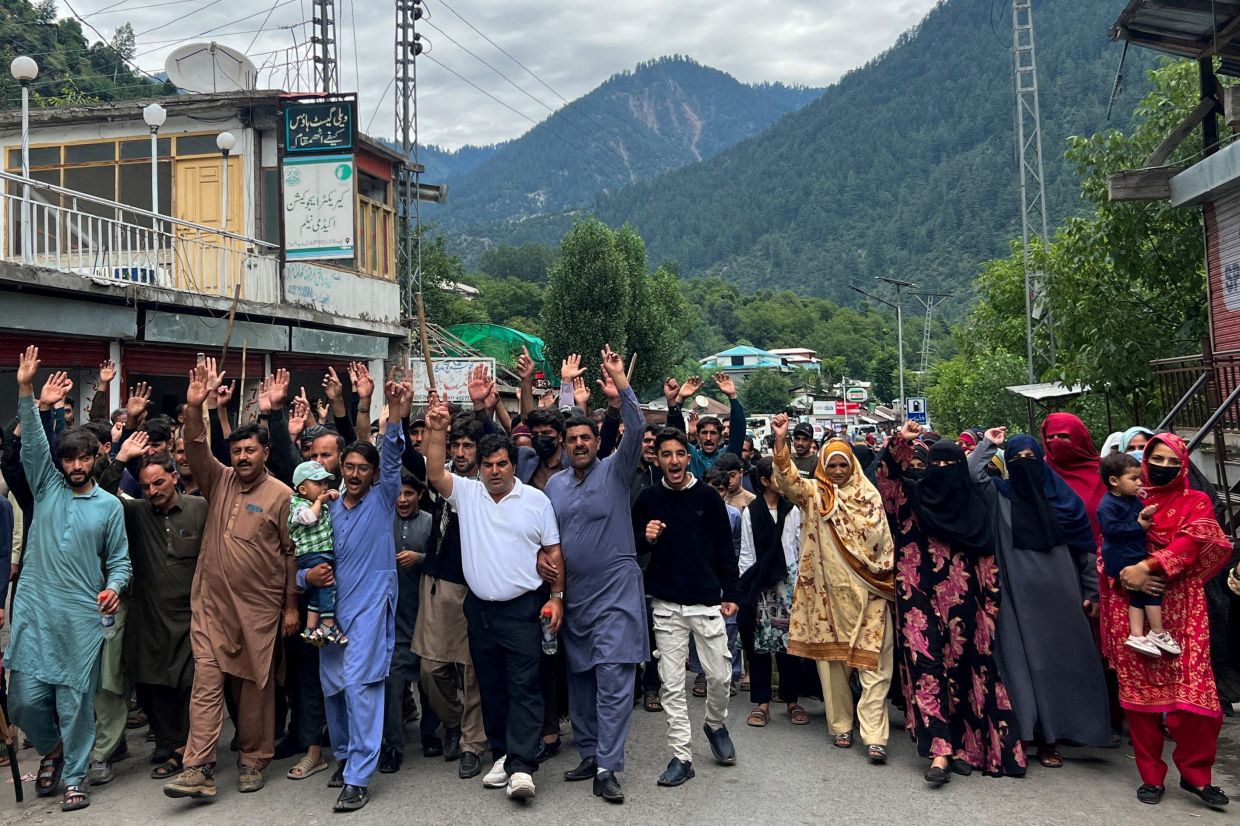
The United Nations has intensified pressure on Pakistan to conduct transparent inquiries into the mounting death toll in Pakistan-administered Kashmir, where dozens of people have reportedly lost their lives during escalating unrest that has coincided with preparations for a crucial legislative assembly vote scheduled for July 27. UN High Commissioner for Human Rights Volker Turk issued a direct appeal for calm through his spokesman Jeremy Laurence at a Geneva briefing on Friday, signalling deep international concern over the volatile political climate in the disputed Himalayan territory.
The wave of violence has claimed numerous victims since June, with both protesters and law enforcement personnel among the casualties, presenting a troubling picture of civil disorder in a region already burdened by decades of geopolitical tension. Turk has explicitly demanded that Pakistani authorities launch investigations that are not only comprehensive and timely but crucially independent, ensuring that accountability mechanisms are free from political interference or military influence. This international scrutiny reflects growing alarm at the UN over the handling of civil unrest in a strategically sensitive area where state security apparatus typically maintains tight control.
At the heart of the recent turmoil lies the Joint Awami Action Committee, an anti-establishment movement that has mobilized public discontent over economic stagnation and governance failures affecting the region's population. The JAAC's activism represents a rare challenge to administrative authority in Pakistan-administered Kashmir, where political space has historically been constrained by security considerations. Despite facing a formal ban imposed under anti-terrorism legislation just weeks earlier—a designation Pakistani officials justified by citing threats to public order—the organization has persisted in organizing demonstrations that have occasionally descended into violent confrontations with police and paramilitary forces.
The pattern of unrest is not unprecedented in the territory. Similar clashes erupted just last September when protests led by JAAC-affiliated activists resulted in at least nine confirmed deaths, demonstrating how quickly political tensions can transform into deadly encounters. The recurrence of such violence within a compressed timeframe raises questions about whether underlying grievances are being adequately addressed through dialogue or whether security-focused responses are inadvertently fuelling further alienation among the population. For Malaysian observers monitoring developments in South Asia, these cycles of protest and repression illustrate broader challenges facing governance in militarized zones where civilian political expression intersects with security imperatives.
The UN rights office has gone beyond mere calls for investigation to directly criticize Pakistan's treatment of JAAC leadership, particularly the arrest of organization figures and the legal weaponization of anti-terrorism statutes against civil society activists. This framing proves significant because it shifts the narrative from one of security maintenance to one of fundamental rights protection. By characterizing the JAAC ban as problematic criminalization of legitimate political organizing, the UN has implicitly questioned whether the security justification genuinely reflects the threat level or instead represents disproportionate state response to civilian dissent.
Freedom of expression concerns extend beyond physical assembly restrictions to encompass digital restrictions that have been imposed across Pakistan-administered Kashmir during the turmoil. Internet disruptions and bandwidth throttling have effectively isolated the region from broader information flows at precisely the moment when transparent communication and fact verification become most essential. The UN spokesperson specifically warned that these digital restrictions carry particular significance during periods of heightened tension, as they prevent citizens from accessing independent news sources and sharing eyewitness accounts of events. For a population already subject to narrative control through traditional media channels, internet restrictions compound information asymmetries and reduce accountability mechanisms.
The timing of these restrictions and the security response coinciding with electoral preparation raises analytical questions about the extent to which political considerations influence administrative decisions. Pakistan-administered Kashmir's legislative assembly elections represent moments when political legitimacy is theoretically contested through democratic processes, yet the presence of security operations and civil restrictions during pre-election periods complicates the environment in which voters form preferences and candidates campaign. The UN's emphasis on "meaningful and inclusive political dialogue" implicitly suggests that military or administrative approaches alone cannot resolve the substantive grievances underlying JAAC mobilization and public receptiveness to its message.
For regional observers, these developments underscore how security frameworks in contested territories can inadvertently undermine the governance legitimacy they purport to protect. When civilian grievances about economic conditions and administrative responsiveness are met primarily through security apparatus deployment rather than policy recalibration or political dialogue, public confidence in democratic institutions may further erode. This dynamic carries implications beyond Pakistan's borders, as similar patterns of protest-suppression cycles have affected stability across South and Southeast Asia where development and governance challenges intersect with securitized governance models.
The UN's call for due process guarantees for detained JAAC leaders and meaningful access to legal representation reflects international concern that emergency or security provisions may be applied in ways that circumvent standard protections. Pakistan's characterization of the JAAC as a security threat requiring anti-terrorism legislation invokes provisions designed for transnational militant organizations, a framing that advocacy groups argue stretches terminology beyond its intended application. Such definitional flexibility in security frameworks raises concerns about whether similar statutes might be applied increasingly broadly across the region against various forms of political organizing deemed inconvenient to incumbent authorities.
The international attention garnered by events in Pakistan-administered Kashmir also reflects the territory's unique status within global geopolitics. As a disputed region claimed by two nuclear-armed powers and central to their historical animosity, developments there carry implications extending far beyond local governance concerns. The UN's specific focus on human rights documentation and investigation procedures in this context represents an effort to establish international accountability standards even in zones where state sovereignty claims remain contested. For Malaysia and other regional states observing these dynamics, the case illustrates how international human rights mechanisms engage with securitized governance environments and the constraints such engagement necessarily confronts.

