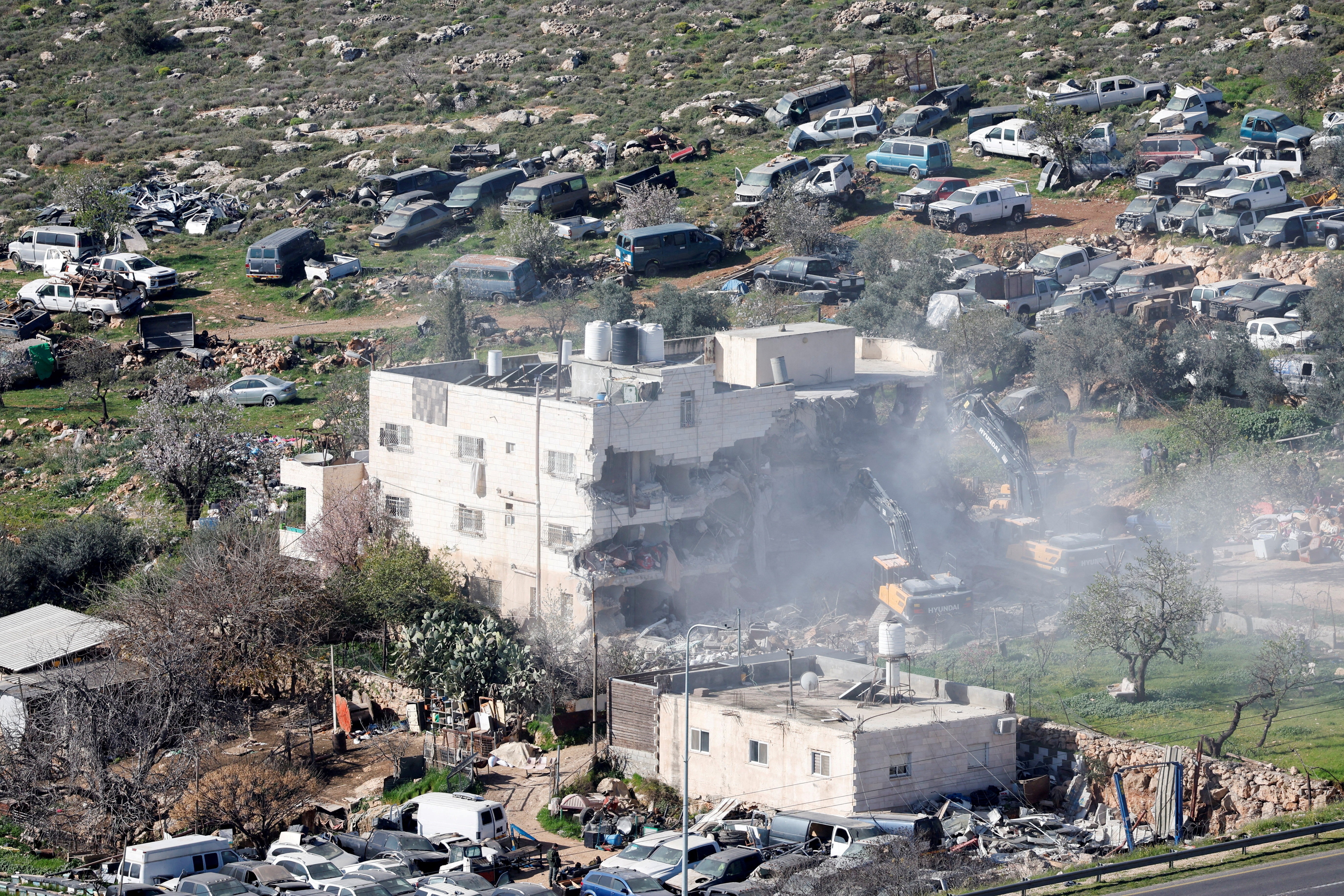
The United Nations leadership has escalated its criticism of Israeli settlement activities in the occupied West Bank, with Secretary-General Antonio Guterres signalling deep concern over the establishment of fresh illegal outposts in the territory. Speaking through his official spokesperson Stephane Dujarric at a press briefing on Wednesday, the UN chief underscored particular anxiety regarding developments connected to the E1 settlement project, which threatens to fundamentally alter the geographical and political structure of Palestinian territories.
The E1 settlement represents a particularly sensitive flashpoint because of its strategic location and potential consequences for Palestinian territorial continuity. According to Dujarric, the expansion would effectively fracture the connection between the northern and southern portions of the West Bank, creating a physical and administrative divide that could prove irreversible. This geographic division holds implications far beyond simple territorial control, potentially undermining the foundational assumptions upon which any future Palestinian state might be constructed.
The UN's alarm extends beyond immediate settlement concerns to encompass broader consequences for Palestinian governance and self-determination. Dujarric articulated that such developments carry severe ramifications for the territorial integrity of the occupied Palestinian territory as an entity. More critically, the UN assessment frames these actions as presenting an existential threat to the two-state solution framework that has anchored international peace efforts in the Middle East for decades. This framing reflects a perception that incremental territorial changes, rather than headline-grabbing events, may ultimately prove most damaging to peace prospects.
Guterres has formally called upon Israel to refrain from undertaking additional settlement measures and to demonstrate compliance with relevant United Nations resolutions. The UN Secretary-General's demands align with the advisory opinion issued by the International Court of Justice on July 19, 2024, which provided landmark legal analysis of Israel's position in Palestinian territories. The court's assessment carries significant weight within international law circles and represents a coordinated diplomatic messaging effort between the UN leadership and the global judicial body.
The International Court of Justice's advisory opinion established that Israel's continued presence in the occupied Palestinian territory constitutes an unlawful situation under international law. The court went further, declaring that Israel bears a legal obligation to terminate this presence "as rapidly as possible" and to immediately discontinue all new settlement activities. The ICJ further stipulated that Israel must evacuate existing settlers from occupied territories and provide reparations for damage caused by its actions in the region.
For Malaysian observers and regional policymakers, these developments carry significance given Malaysia's historical position on Palestinian rights and its role within the Non-Aligned Movement and Organisation of Islamic Cooperation frameworks. The UN's invocation of legal standards and international resolutions reflects an attempt to anchor the dispute within rules-based international systems, rather than permitting settlement expansion to proceed through de facto territorial acquisition. Malaysia, which maintains robust diplomatic connections across multiple regions, watches these developments as indicators of whether international law mechanisms can effectively constrain state actions in contested territories.
The timing of these warnings also reflects broader patterns of diplomatic messaging ahead of potential negotiations or policy shifts. The consistent reiteration of UN resolutions and ICJ opinions suggests an international effort to establish clear legal and normative parameters before facts on the ground become further entrenched. Settlement expansion, particularly in strategically significant locations like E1, typically generates international protests but proceeds gradually, creating cumulative territorial changes that become increasingly difficult to reverse through negotiation.
The emphasis on the two-state solution framework indicates continued international commitment to this model despite acknowledged challenges and obstacles. Both the UN and the ICJ appear to regard settlement expansion as fundamentally incompatible with this framework, viewing outposts as deliberate undermining of negotiation outcomes rather than isolated incidents. This legal and diplomatic positioning attempts to establish consequences for continued expansion, though enforcement mechanisms remain limited within international law.
Regional implications of these developments extend throughout Southeast Asia and the broader developing world, where many nations share Malaysia's historical alignment with Palestinian causes and commitment to principles of territorial sovereignty and self-determination. The attempt to enforce international law standards through UN pressure and ICJ determinations represents a test case for whether legal mechanisms can constrain powerful states' territorial ambitions. The outcome may influence similar disputes in other regions where settlement or territorial expansion remains contested.

