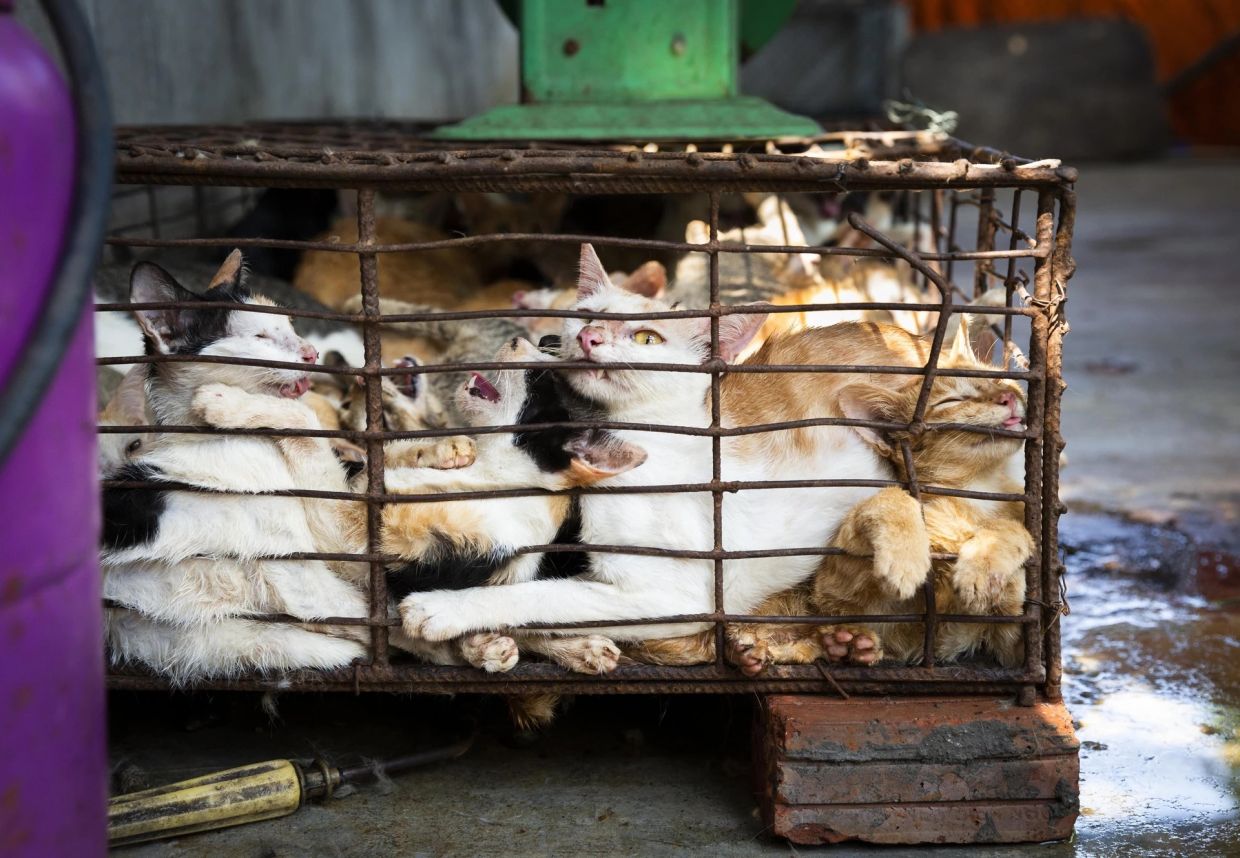
The clandestine trade in cat meat continues to flourish across Vietnam, Cambodia and Laos, with animal welfare organisations documenting the systematic theft and trafficking of felines to meet demand rooted in cultural superstitions and perceived health benefits. According to FOUR PAWS, a leading global animal protection body, approximately one million cats meet their death annually in Vietnam through this illicit commerce, while smaller but significant numbers are also killed in remote regions of Cambodia and Laos for their purported medicinal properties. The persistence of this brutal practice underscores how deeply entrenched certain traditional beliefs remain in parts of Southeast Asia, even as governments and international advocacy groups intensify efforts to eradicate the activity through awareness campaigns spanning multiple decades.
Cultural narratives surrounding cat consumption centre on beliefs about fortune and spiritual wellbeing that have been transmitted across generations. In Vietnamese communities, the consumption of cat meat is timed to specific phases of the lunar calendar, with adherents believing that eating feline flesh during auspicious periods can reverse bad fortune or attract positive outcomes. Jon Rosen Bennett, who leads dog and cat welfare advocacy at FOUR PAWS, explains that these practices are not driven by dietary necessity but rather by superstitious reasoning deeply embedded in social tradition. The belief extends to the perceived potency of different cat types, with black cats commanding premium prices due to associations with enhanced luck-bringing or healing properties. This demand has created an economic incentive structure that fuels the underground trade, as traffickers capitalise on consumers willing to pay higher prices for animals believed to possess special qualities.
The mechanics of the trade involve organised networks that prey on domestic cats stolen from households and streets. Recent police operations in Ho Chi Minh City exposed the scale of this organised activity when authorities dismantled a trafficking gang responsible for inter-provincial smuggling operations spanning three years. The operation resulted in the rescue of approximately 500 cats and the detention of nine gang members accused of systematic theft and illegal sale. Despite this enforcement action, Vietnam currently lacks a nationwide legal prohibition on the slaughter, sale or consumption of cat meat, leaving the trade operating in a regulatory grey zone where enforcement remains sporadic and inconsistent. The absence of comprehensive legislation reflects broader policy gaps that allow the practice to continue even as public sentiment has shifted decisively against it.
Public opposition to the cat meat trade significantly outpaces actual consumption, revealing a critical disconnect between cultural practices and contemporary social values. Survey data cited by Bennett indicates that approximately 90 per cent of Vietnamese respondents express support for a ban on both dog and cat meat trading. Even more striking, over 90 per cent of survey participants reject the notion that cat meat consumption constitutes an authentic part of Vietnamese culture, suggesting that many practitioners engage in the activity despite viewing it as culturally extraneous. This widespread rejection among the general population provides a foundation for policy intervention and suggests that implementation of restrictive legislation would align with the preferences of the vast majority of Southeast Asian communities. The disconnect between market activity and public sentiment indicates that the trade persists due to enforcement gaps rather than genuine cultural entrenchment or popular support.
Economic incentives embedded within the supply chain sustain the trade despite its cultural marginalisation. FOUR PAWS investigations conducted in Vietnam during 2020 documented live cats trading for approximately six to eight US dollars per kilogramme, with processed cat meat commanding ten to twelve US dollars per kilogramme. These price differentials create profit opportunities for traffickers and sellers, particularly as premium prices for black cats reflect consumer willingness to pay additional sums for animals perceived to carry special properties. The modest absolute prices nonetheless represent significant earnings within the underground economy, particularly for participants operating in rural or remote areas where alternative livelihood opportunities remain constrained. Breaking this economic cycle will require not only legal prohibition but also the development of alternative income sources for communities currently dependent on the trade.
The trading networks operate across borders, creating transnational health and security risks that extend beyond animal welfare concerns. The undocumented movement of millions of live animals across Southeast Asian borders without veterinary inspection or disease screening poses substantial public health hazards. Bennett emphasises that these trafficking operations create conditions for the spread of rabies and other zoonotic pathogens that can transmit from animals to human populations. The absence of regulatory oversight means that disease surveillance cannot track movements of potentially infected animals, and infected cats may unknowingly introduce pathogens into new geographic areas. This dimension transforms the cat meat trade from an animal welfare issue into a transnational public health emergency with potential consequences for human populations across multiple countries. Controlling the trade therefore requires regional cooperation and border enforcement mechanisms that extend beyond individual national jurisdiction.
Cambodia has begun implementing targeted interventions through digital platforms designed to facilitate reporting and awareness. In June of this year, FOUR PAWS established an online reporting mechanism within Cambodia as part of its broader campaign against both dog and cat meat trading throughout the region. This approach leverages technology to create mechanisms for public participation in enforcement and surveillance, enabling citizens to report suspected trafficking activities and animal cruelty. The digital platform represents an evolution in advocacy strategy, moving beyond passive awareness campaigns toward tools that actively engage public participation in combating the trade. Such mechanisms can generate intelligence for law enforcement authorities while simultaneously building social stigma around the practice by demonstrating organised resistance and documented violations.
The broader regional dog meat trade, while affecting larger animal numbers, exhibits similar dynamics of public opposition outpacing consumption. Animal activists estimate that more than ten million dogs are slaughtered annually for meat consumption across Southeast Asia, yet the majority of people in the region do not consume dog meat and demonstrate growing opposition to the practice. Public sentiment against dog meat consumption has intensified substantially over the past decade, driven partly by the cultural ascendancy of pet-keeping practices and changing attitudes toward companion animals. However, the dog meat trade remains a highly sensitive subject in certain societies where traditional practices retain cultural salience, complicating advocacy efforts and policy implementation. The coexistence of accelerating public opposition with persistent commercial activity suggests that enforcement and legal reform remain the critical variables determining whether these trades ultimately decline.
Addressing these intertwined issues requires comprehensive regional strategies that extend beyond individual national borders or single-issue advocacy. The geographic distribution of the trade across Vietnam, Cambodia and Laos, combined with the transnational nature of trafficking networks and disease risks, necessitates coordinated policy responses and enforcement mechanisms. Southeast Asian governments must establish and enforce national-level legislation prohibiting cat and dog meat production, sale and consumption, while simultaneously developing economic transition programs for communities currently dependent on the trade. Regional cooperation frameworks should facilitate intelligence sharing about trafficking networks and enable coordinated law enforcement operations targeting organised smuggling operations. International advocacy groups must simultaneously shift focus from awareness campaigns, which have proven insufficient to change entrenched practices, toward direct support for legislative advocacy and enforcement capacity building.
The persistence of the cat meat trade despite decades of activism highlights the limitations of education-based approaches to eliminating practices sustained by economic incentives and enforcement gaps. Awareness campaigns have demonstrably shifted public opinion, with overwhelming majorities opposing the trade, yet this attitudinal change has not translated into corresponding behavioural change or commercial decline. This gap between belief and behaviour suggests that sustained demand derives from populations unconcerned by public opinion or unaware of its prevalence, combined with inadequate legal deterrents to continued participation. Effective intervention therefore requires legislative prohibition with meaningful enforcement mechanisms, including surveillance capabilities, prosecution resources and penalties sufficient to deter participation. Without such structural interventions, advocacy efforts will remain insufficient to arrest the continued suffering of millions of animals annually throughout the Indochinese region.

