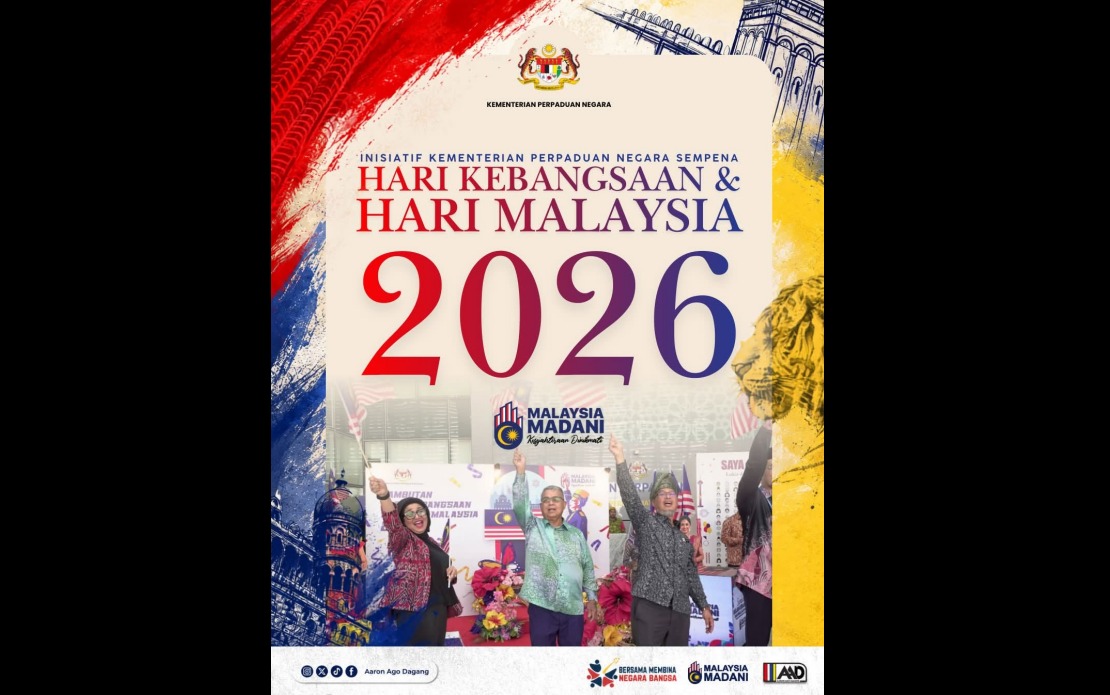
The National Unity Ministry has outlined an ambitious calendar of cultural and civic activities designed to deepen Malaysians' connection to their nation during the 2026 National Day and Malaysia Day period. Minister Datuk Aaron Ago Dagang announced the comprehensive 11-initiative programme in Putrajaya on August 18, signalling a renewed emphasis on civic engagement and historical consciousness as the country marks nearly seven decades of independence.
The strategic approach reflects a deliberate pivot toward experiential and interactive forms of civic participation rather than conventional top-down messaging. Among the headline initiatives are the 2026 National Unity Integration Movement, Malaysia's Merdeka Children Celebration, and an Exhibition on Independence that will invite citizens of all ages to engage with the nation's founding narrative. The inclusion of events like the Pesta Bola Merdeka Exhibition and Night at the Museum demonstrates an intent to make patriotic commemoration accessible and engaging across generational lines, moving beyond formal ceremonies to encompass popular culture and recreational activities.
A notable element of the programme is a dedicated initiative honouring Tun Abdul Razak, Malaysia's first Prime Minister. This targeted commemoration underscores the ministry's interest in reinforcing understanding of foundational leadership during Malaysia's formative years. For Malaysian readers familiar with the complexities of post-independence nation-building, such focus on historical figures serves as a reminder of the institutional and diplomatic scaffolding that underpinned Malaysia's survival through its early decades, particularly given the geopolitical pressures of the Cold War era and regional tensions.
The Rukun Negara, Malaysia's five-point national philosophy established in 1970, features prominently in the ministry's strategy through an dedicated oratory competition. This emphasis is significant because it signals official concern about maintaining the foundational social contract that binds Malaysia's ethnically and religiously diverse population. The Rukun Negara remains one of the most important yet underappreciated national documents, and renewed focus on public understanding of its principles—belief in God, loyalty to King and country, upholding the Constitution, rule of law, and good behaviour and morality—offers potential to strengthen civic cohesion during a period when Malaysia faces challenges around social polarization and identity politics.
Minister Ago Dagang's statement emphasises that the programmes are rooted in an explicit commitment to celebrating Malaysia's pluralism. The language used—"embracing Malaysia's diversity of ethnicities, religions, cultures and regions"—reflects an intentional repositioning of national identity as inclusive rather than majoritarian. This messaging strategy matters considerably in the Malaysian context, where questions of national belonging and constitutional arrangements have periodically become flash points. By framing patriotism as compatible with, and indeed dependent upon, respect for diversity, the ministry is attempting to construct a unifying narrative that does not require minorities to subsume their identities.
For Southeast Asian observers and Malaysian communities living abroad, this initiative demonstrates how Malaysia continues to grapple with the fundamental challenge that has defined its existence since 1957: creating a sense of shared national identity among citizens with distinct communal attachments. The proliferation of events suggests that the government recognises this cannot be achieved through rhetoric alone, but requires sustained investment in cultural production and public participation. The breadth of the initiative—spanning education, sport, entertainment, and intellectual engagement—reflects an understanding that patriotism operates across multiple registers.
The timing of the announcement, more than a year in advance of the celebrations, indicates serious planning and resource allocation. Such forward scheduling allows state and federal entities, civil society organisations, and community groups time to coordinate complementary programming, potentially creating a sustained period of national reflection rather than a brief commemorative moment. This extended temporality could enhance impact, as repeated exposure to patriotic messaging and participatory opportunities may be more effective than concentrated but fleeting campaigns.
For the business and cultural sectors, these initiatives present opportunities for partnerships and sponsorships. Malaysian companies and organisations can align themselves with officially sanctioned nation-building narratives, while artists, historians, and educators will have platforms to contribute meaningfully to public discourse on national identity. The ministry's commitment to maintaining an information presence on social media, specifically noting a Facebook page for updates, reflects acknowledgment that younger Malaysians engage with civic information through digital channels.
The wider strategic context matters too. Malaysia faces demographic changes, economic pressures, and regional competition that could potentially fragment social cohesion if unaddressed. By investing substantially in patriotic education and experiential citizenship, the government appears to be taking seriously the project of preventative nation-building. Whether these initiatives succeed in measurably enhancing national unity or deepening patriotic sentiment remains an empirical question, but the scope and diversity of programming suggests a ministry confident in its mandate and committed to ambitious outreach.
The 2026 celebrations will take place as Malaysia approaches its 70th independence anniversary in 2027, making this an important waypoint in national consciousness. The initiatives announced by the National Unity Ministry thus represent more than ceremonial observance—they constitute a statement about how the government wishes to frame Malaysia's identity and future direction at a consequential moment.

