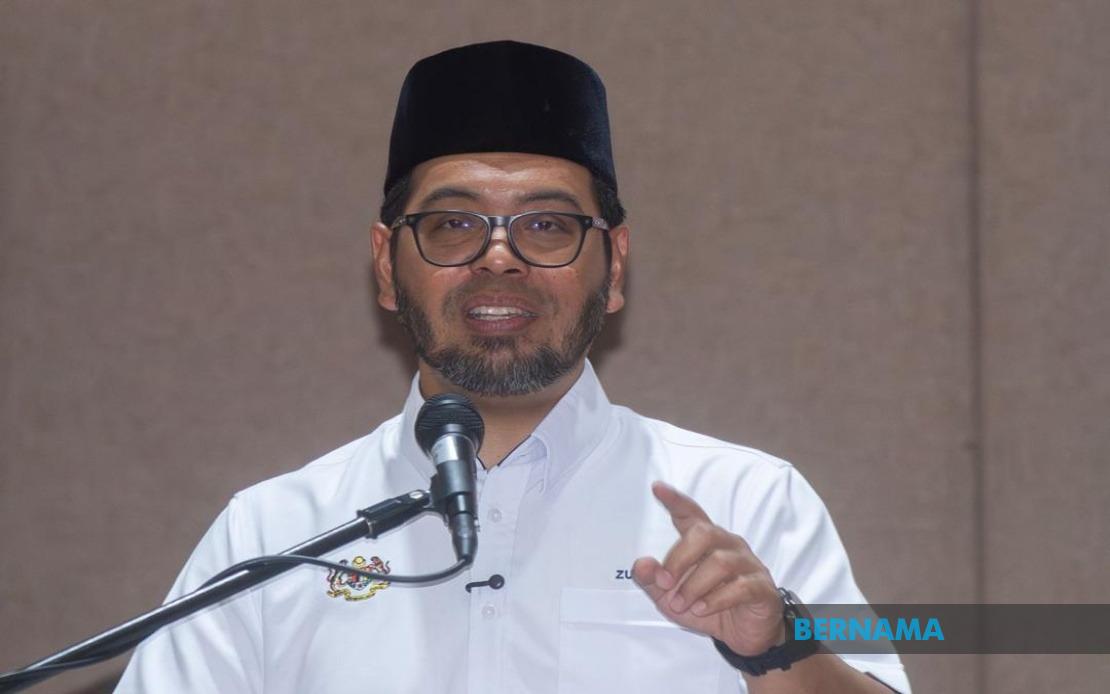
Malaysia's Minister in the Prime Minister's Department (Religious Affairs) Dr Zulkifli Hasan has issued a stark warning about the cascading consequences of unregistered marriages, highlighting how such unions leave children vulnerable to systemic disadvantages that can persist throughout their lives. Speaking at the launch of the 2026 Federal Territories Syariah Law Literacy Programme in Labuan, Zulkifli underscored that the implications of failing to register marriages formally extend far beyond administrative inconvenience, touching critical aspects of child welfare and family stability that demand urgent attention from policymakers and citizens alike.
The minister noted that despite decades of living as married couples, a concerning number of Malaysians continue to operate outside the formal marriage registration framework. Some unions are solemnised in jurisdictions beyond their registered area, while others involve unauthorised marriage registrars who bypass the procedural safeguards embedded in the Islamic Family Law (Federal Territories) Act 1984. This pattern suggests systemic gaps in awareness, accessibility, or enforcement mechanisms that allow such practices to persist within Malaysian Muslim communities, particularly in the Federal Territories.
Children emerge as the primary victims of unregistered marriage arrangements, facing tangible obstacles that ripple through their formative years and into adulthood. The absence of official marriage documentation complicates the fundamental process of obtaining birth certificates, a foundational document required for schooling, healthcare, and establishing legal identity. Without this certification, children encounter barriers accessing formal education institutions and government healthcare services, potentially leading to gaps in their development and compromising their long-term prospects for social mobility and economic participation.
Beyond educational and medical access, unregistered marriages create ambiguity around a child's legal identity and citizenship status. This uncertainty can expose young people to challenges when applying for national identification cards, passports, or employment documentation. The absence of clear lineage recognition in official records raises questions about inheritance rights and succession, matters governed by Islamic law principles that require documented marital status to function properly. For Malaysian families living in an increasingly complex bureaucratic landscape, such documentation gaps create preventable hardship.
The financial security of wives similarly suffers when marriages lack official recognition. Women in unregistered unions encounter difficulties claiming maintenance payments (nafkah) or dower compensation (mutaah) should the marriage dissolve through divorce or death. These entitlements, designed to provide economic protection under Islamic family law, become legally unenforceable without documented proof of a valid marriage. This asymmetry leaves women particularly vulnerable to financial abandonment and economic precarity at critical life junctures.
Inheritance and succession matters grow exponentially more complicated when death occurs within unregistered marriages. The Islamic law of succession (faraid) requires clear documentation of family relationships to distribute estates according to prescribed principles. Without this clarity, unregistered spouses and children may be excluded from inheritance entirely, or disputes may consume years of litigation while family wealth remains frozen. Zulkifli specifically identified these inheritance complications as potential triggers for protracted family conflicts that could have been prevented through simple registration compliance.
The government's response reflects a pragmatic shift in approach, emphasising facilitation rather than punishment for those with outstanding registration issues. The Federal Territories Syariah Prosecution Department, coordinating with multiple agencies including the Federal Territories Islamic Religious Department (JAWI), Federal Territories Islamic Religious Council (MAIWP), the Legal Aid Department, and religious courts, has launched an outreach campaign designed to encourage voluntary compliance. This collaborative framework indicates recognition that many citizens may require guidance, legal assistance, or logistical support to bring their marriages into official compliance.
Zulkifli reframed Islamic family law compliance as a protective mechanism rather than an onerous burden, arguing that formal marriage registration safeguards the interests of both spouses and offspring. By obtaining official recognition, couples activate legal remedies, inheritance protections, and administrative pathways that secure their families' futures. This messaging attempts to address potential resistance rooted in misperceptions of syariah law as restrictive or punitive, instead positioning registration as insurance against preventable family crises.
The 2026 Federal Territories Syariah Law Literacy Programme incorporates interactive counters staffed with knowledgeable officers, enabling citizens to address marriage registration concerns directly without navigating multiple government departments. This accessibility initiative acknowledges that bureaucratic complexity often deters compliance among less educated or lower-income Malaysians, precisely those whose families are most vulnerable to the negative consequences of unregistered unions. The involvement of Tabung Haji and Yayasan Pembangunan Ekonomi Islam Malaysia (YAPEIM) suggests attempts to reach Malaysian Muslims through trusted community institutions.
The persistence of unregistered marriages in Malaysia raises questions about enforcement mechanisms and awareness campaigns at the community level. While federal initiatives like the literacy programme demonstrate commitment, the underlying prevalence of such arrangements suggests that messaging has not yet penetrated sufficiently into target populations, or that structural barriers to registration remain inadequately addressed. For Malaysian policymakers, the challenge lies not merely in providing registration services but in understanding why citizens bypass them and whether cultural, economic, or informational factors require targeted intervention.
The implications for Southeast Asia's broader Muslim populations deserve consideration, as unregistered marriage patterns appear in various forms across the region. Malaysia's experience offers instructive lessons about the relationship between formal legal recognition, child welfare outcomes, and gender security within Islamic family law systems. As other nations grapple with similar challenges, the Federal Territories initiative provides a template for balancing legal compliance with community engagement.
For Malaysian families currently operating without marriage registration, the government's non-punitive approach and enhanced accessibility through the 2026 programme represent a concrete opportunity to regularise their status and protect their children's rights. Whether participation proves sufficient to address the scale of outstanding cases remains uncertain, but Zulkifli's public statements signal an institutional commitment to treating this as a priority rather than a peripheral administrative matter.

