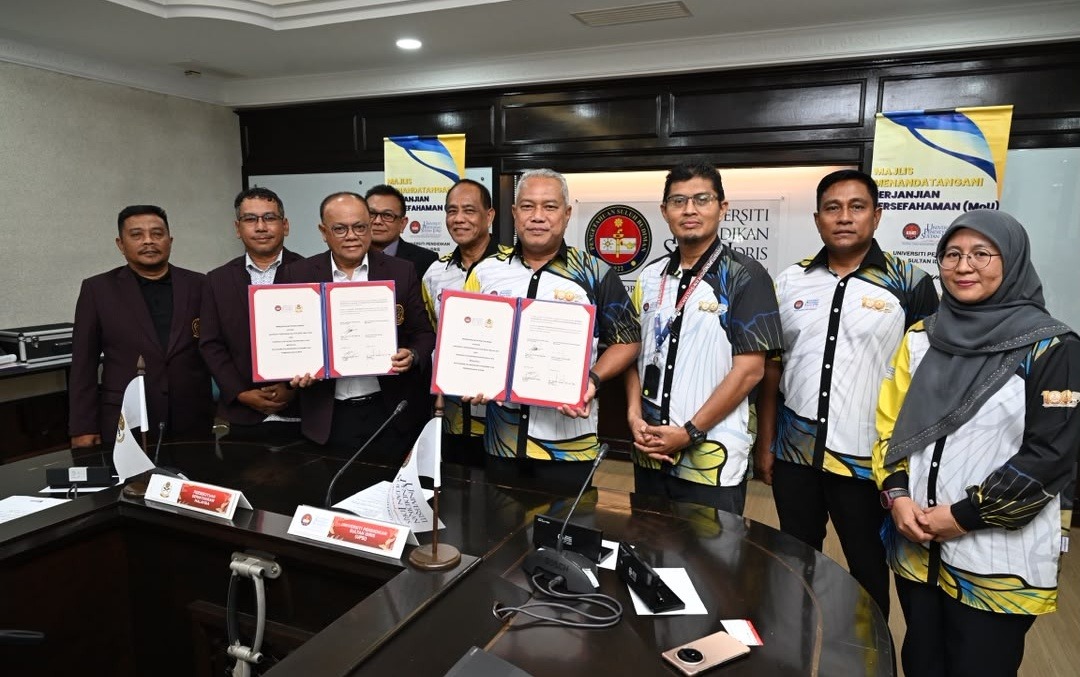
Universiti Pendidikan Sultan Idris (UPSI) and the Malaysian Sepaktakraw Federation (PSM) have entered into a strategic partnership designed to reshape how national athletes balance competitive sport with academic advancement. The Memorandum of Understanding, formalised at the Chancellery Building in Tanjong Malim, represents a significant institutional commitment to embedding sepak takraw development within Malaysia's higher education ecosystem, addressing a longstanding challenge in managing athlete welfare and career sustainability.
The partnership addresses a critical gap in the Malaysian sporting landscape. Sepak takraw athletes traditionally face difficult choices between pursuing their competitive careers and securing formal qualifications, often without institutional support systems to facilitate both simultaneously. By creating flexible pathways within UPSI's academic structure, the collaboration seeks to remove these barriers, allowing athletes from PSM at all competitive levels to access degree programmes while maintaining their training and competition schedules. This approach acknowledges that athletic and intellectual development need not be mutually exclusive pursuits.
UPSI Vice-Chancellor Prof Datuk Dr Md Amin Md Taff framed the agreement as evidence of the university's commitment to nurturing Malaysia's human capital through the integration of academic rigour with sporting excellence. Rather than positioning this as a symbolic gesture, he emphasised that the partnership would translate into actionable frameworks and measurable outcomes. The university has committed to drawing upon its substantial expertise in sports science, coaching methodology, officiating standards, and emerging sports technologies to elevate the technical calibre of sepak takraw development nationally.
A particularly significant dimension of this collaboration involves the establishment of infrastructure for talent identification and development. UPSI has pledged to share specialised facilities and resources that can support continuous monitoring of athlete progression. The partnership also contemplates the creation of a dedicated national training centre for sepak takraw, which would serve as a hub for centralised excellence while remaining integrated within the university's research and educational missions. This centralised approach contrasts with the fragmented training landscape that has historically characterised the sport in Malaysia.
The technical expertise sharing component extends beyond coaching to encompass the full ecosystem of sporting professionalism. UPSI will contribute knowledge in sports science applications, training periodisation, injury prevention, and performance analytics—domains where universities hold substantial advantages through research capacity and laboratory facilities. Meanwhile, PSM brings tactical experience, competitive intelligence, and direct knowledge of athlete needs accumulated through managing national and state-level competitions. This reciprocal exchange creates a genuine knowledge partnership rather than a unidirectional assistance model.
From the athletes' perspective, the MoU opens specific opportunities for competitors from Malaysian Sports Schools and State Sports Schools to pursue tertiary education without abandoning their sporting ambitions. This is particularly consequential for sepak takraw, a sport with deep cultural roots in Southeast Asia but limited global commercial pathways compared to basketball or badminton. By securing educational credentials while young, athletes can transition more smoothly into post-competitive careers, whether in coaching, sports administration, or entirely different professional fields.
PSM Vice-President Tengku Zaihan Che Ku Abdul Rahman positioned the collaboration as a model that could inspire similar partnerships across Malaysian sports. The convergence of UPSI's sports science infrastructure with PSM's technical expertise creates a template for how national sports bodies and universities might restructure their relationship to mutual advantage. Such arrangements could accelerate the maturation of coaching cadres, enhance the scientific rigour of training methodologies, and establish career pathways that retain talent within the Malaysian sporting ecosystem rather than losing athletes to circumstances that force them to choose between sport and livelihood.
The three-year duration of the MoU provides sufficient time to establish operational systems, measure impact, and determine whether extension is warranted. The agreement's structure also anticipates evolution toward more detailed Memoranda of Agreement that would specify departmental responsibilities, funding mechanisms, and performance indicators. This phased approach reflects realistic understanding that institutional collaboration requires time to develop effective working relationships and iron out procedural challenges.
For Malaysian sepak takraw specifically, this partnership arrives at a moment when the sport seeks to strengthen its competitive standing regionally and internationally. Countries like Thailand and Indonesia have invested substantially in athlete development infrastructure, and Malaysia's traditional strength in the sport faces pressure from better-resourced programmes. By integrating academic institutions into the talent pipeline, Malaysia creates advantages in recruitment, retention, and long-term athlete development that purely sport-focused programmes cannot easily replicate.
The implications extend beyond sepak takraw to broader patterns in Malaysian sports governance. This partnership demonstrates growing recognition that sustainable sporting excellence requires institutional depth—universities bring research capacity, facilities, coaching expertise, and the ability to support athletes through educational progression. For aspiring athletes, it signals that universities can function as genuine career partners rather than obstacles. This shift carries particular importance in a country where higher education participation is widespread and family expectations around qualification attainment remain strong.
Looking forward, the success of this collaboration will hinge on implementation quality. Effective coordination between academic and sporting calendars, genuinely flexible degree pathways rather than nominal flexibility, and sustained commitment from both institutions despite leadership changes will determine whether this becomes a meaningful transformation or a largely symbolic arrangement. If executed seriously, however, it establishes a replicable model that could reshape how Malaysian universities engage with national sports development, creating mutual benefits while strengthening athlete welfare and career sustainability.

