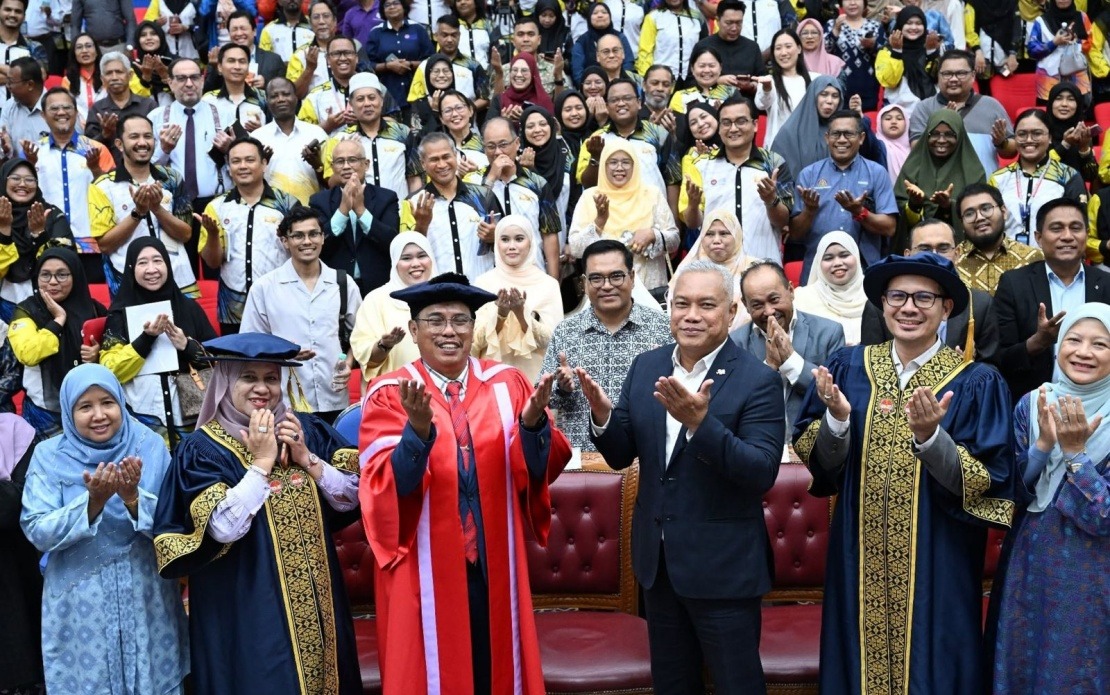
Universiti Pendidikan Sultan Idris (UPSI) is pursuing a significant expansion of its campus infrastructure by investigating the feasibility of establishing a private specialist hospital within Tanjong Malim, marking an ambitious step towards transforming the region into a comprehensive knowledge and educational centre. The initiative represents more than a simple healthcare addition; it reflects broader institutional ambitions to position UPSI as a fully integrated academic ecosystem capable of meeting contemporary global standards.
Vice-Chancellor Prof Datuk Dr Md Amin Md Taff outlined the rationale behind this exploration, emphasizing that the proposed facility would primarily serve the expanding international student population and university personnel who currently face limited specialized medical options in the area. As UPSI's international enrolment continues to grow, the absence of nearby specialist healthcare becomes an increasingly tangible constraint affecting both student recruitment and staff retention, particularly for expatriate academics and families. This gap in local infrastructure creates a competitive disadvantage against peer institutions in other Malaysian cities offering superior ancillary facilities.
The university is currently in preliminary discussions regarding potential business models and partnership structures that would make such a venture financially and operationally viable. Rather than pursuing an entirely independent development, UPSI's approach involves engaging established private hospital operators interested in expanding their presence into the Perak region. This collaborative methodology reduces capital burden on the university while leveraging professional healthcare management expertise. The institution is simultaneously offering its own campus land as a potential site for such operations, demonstrating tangible commitment to moving negotiations beyond theoretical exploration.
Tanjong Malim's positioning as an emerging educational hub has gained momentum in recent years, with UPSI at the centre of this transformation. The addition of specialist medical facilities would substantially strengthen the area's appeal to international students and academics, creating a self-reinforcing cycle that attracts higher-calibre talent seeking comprehensive living and working environments. Malaysian higher education institutions are increasingly competing on factors beyond academic reputation, including quality of life indicators and available amenities. A modern private hospital would signal UPSI's confidence in its long-term growth trajectory and commitment to providing world-class institutional support.
Beyond immediate healthcare considerations, this initiative intersects with UPSI's longer-term vision for transforming Tanjong Malim into a distinctive knowledge community. The university has articulated aspirations to develop retirement facilities specifically designed for former staff members, creating what it terms a UPSI retirees' community. This complementary initiative suggests thinking about the region's demographics and lifecycle needs, recognizing that universities increasingly function as anchors for broader community development. The synergy between medical facilities, educational institutions, and retirement amenities creates a model where different population segments—students, working professionals, and retirees—contribute to sustained local economic and social vitality.
The retirement resort concept deserves particular attention given Malaysia's aging demographic trajectory. By creating dedicated facilities enabling former academics to remain connected with their institutional community, UPSI addresses both quality-of-life considerations and knowledge preservation. Retired scholars often contribute significantly as mentors, researchers, and cultural custodians; purpose-built facilities that encourage continued engagement represent sophisticated institutional thinking about human capital utilization across generations. Such amenities also generate secondary economic benefits through construction, hospitality, and service sectors.
From a regional development perspective, these initiatives position Perak differently within Malaysia's higher education landscape. While Selangor and Kuala Lumpur dominate national attention, Tanjong Malim's emergence as a multi-functional knowledge district offers an alternative model for provincial development. This approach mirrors successful international examples where universities catalyse broader regional transformation by providing anchoring infrastructure and attracting complementary investments. Investment in healthcare and residential facilities represents strategic thinking about creating self-sufficient communities that retain talented individuals and international visitors rather than forcing them towards established urban centres.
The private hospital initiative also reflects evolving partnerships between public institutions and private enterprise in Malaysia's healthcare sector. Rather than viewing public universities and private medical providers as competitors, this collaboration suggests recognition of mutual benefits. Private hospitals gain access to university networks, research partnerships, and stable patient streams, while UPSI obtains modern healthcare infrastructure without direct operational responsibility. Such public-private arrangements are increasingly common globally and represent pragmatic responses to capital constraints facing public sector institutions.
Implementation challenges remain substantial. Regulatory frameworks governing private hospital operations, land utilization agreements, and partnership structuring require careful navigation. The business case must demonstrate sufficient demand to sustain specialist services in a relatively smaller market, necessitating patient flows beyond the university population alone. Perak's demographic and economic characteristics will influence whether such a facility achieves financial sustainability. However, positioning UPSI as the anchor tenant provides initial guaranteed demand while the facility establishes market presence.
The timing of this initiative reflects UPSI's confidence in Tanjong Malim's trajectory and its own institutional growth. Malaysian universities face increasing pressure to globalize their recruitment and enhance international competitiveness, with comprehensive campus facilities becoming differentiating factors. By proactively developing healthcare infrastructure before acute shortages emerge, UPSI demonstrates forward-thinking strategic planning. This contrasts with reactive approaches common elsewhere, where infrastructure deficits only receive attention after they constrain growth.
Looking forward, success of this initiative could generate replicable models for other Malaysian universities in provincial locations. As higher education continues decentralizing away from Klang Valley saturation, institutional leaders elsewhere will observe whether UPSI's comprehensive infrastructure approach effectively attracts and retains international talent. The specialist hospital becomes a tangible demonstration of commitment to creating genuine learning communities rather than mere academic facilities. For Malaysian higher education policy, such private-public collaborations offer templates for infrastructure development amid fiscal constraints.
Professor Md Amin's articulation of these ambitions also honoured departing Dean Prof Dr Abdul Talib Mohamed Hashim, whose two decades of service contributed to building UPSI's institutional capacity. This transition moment—acknowledging past contributions while announcing future directions—situates the hospital initiative within UPSI's broader developmental narrative. The university is simultaneously consolidating institutional gains from earlier decades while positioning itself for expansion, reflecting mature institutional thinking about both continuity and transformation.

