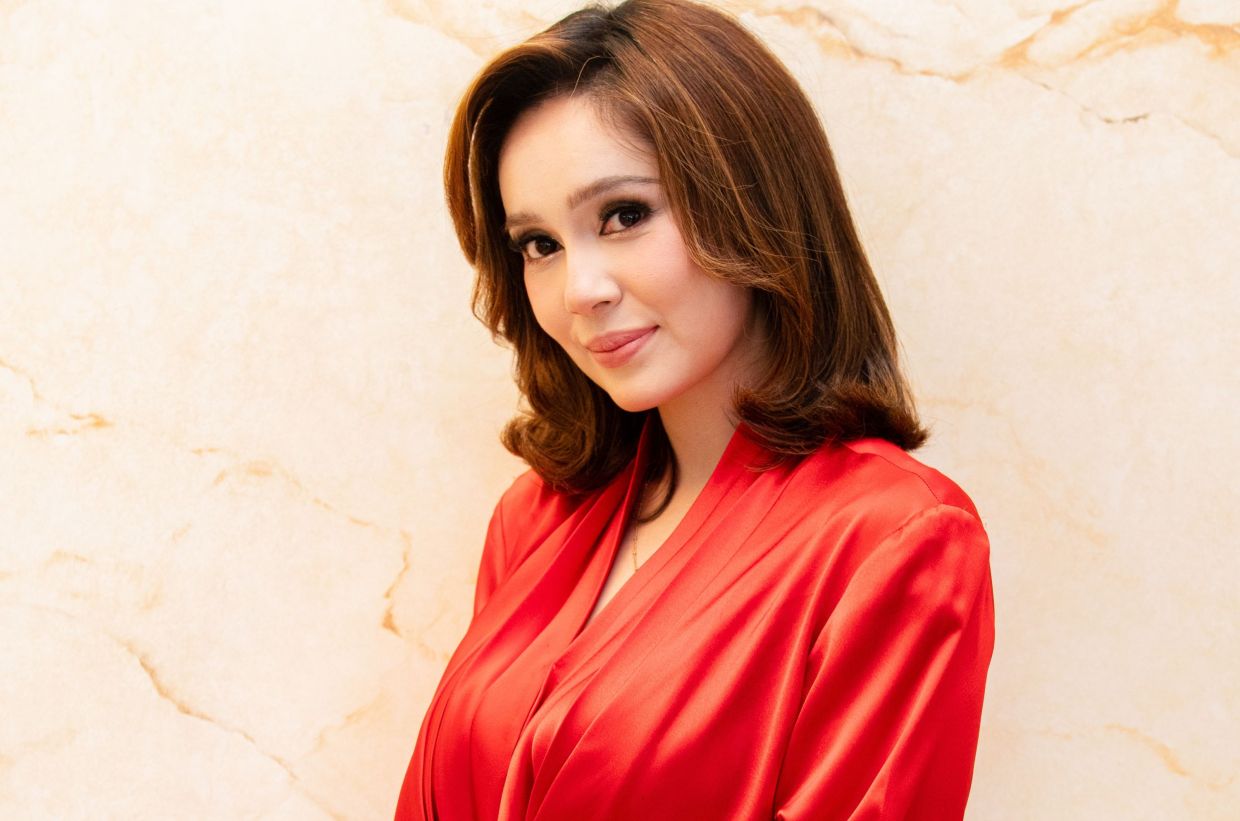
Malaysian actress Uqasha Senrose has spoken candidly about her collaboration with fellow actor Aliff Aziz on an upcoming series, drawing a clear distinction between professional boundaries and personal circumstances. Despite Aliff's highly publicized marital troubles that unfolded earlier this year, Uqasha maintained that their working relationship remained cordial and productive throughout the production schedule, with both actors maintaining their commitment to the craft.
Aliff Aziz became the subject of intense public scrutiny in March 2024 when he was implicated in a khalwat incident, a legal and religious matter that has particular significance in Malaysia's Islamic jurisprudence framework. The incident precipitated the unraveling of his marriage to singer-actress Bella Astillah, a union that had produced two children. The dissolution of their relationship played out in the public eye, intensifying media coverage and sparking widespread discussion across social platforms.
When addressing questions about whether the controversy affected their on-set dynamic, Uqasha adopted a measured and compassionate perspective. She articulated her belief that personal failings are universal, acknowledging that she herself is not without fault or past mistakes. This philosophical stance allowed her to compartmentalize the actor's personal struggles from the professional obligations they both shared during filming, creating what she characterized as a productive working environment devoid of tension or discomfort.
Uqasha emphasized that Aliff's conduct on set was exemplary, describing how he fulfilled his professional responsibilities without distraction or issue. She observed that his dedication to the role and the production remained unwavering, and that this commitment to excellence was the metric by which she evaluated their working relationship. Rather than imposing judgment based on external circumstances, she focused on the tangible reality of their collaboration, noting that both were simply executing their professional duties as actors.
Her perspective reflects a broader maturity regarding the separation of public personas from private struggles, a distinction that has become increasingly relevant in Malaysia's entertainment landscape. Uqasha's willingness to overlook personal controversy in favor of recognizing professional merit reveals a pragmatic approach to industry dynamics, particularly in a sector where personal scandals often intersect with professional opportunities. She framed her position partly through a spiritual lens, declining to obstruct someone's livelihood, which carries particular resonance in Malaysian cultural and religious contexts.
Interestingly, Uqasha herself emerged from her own significant personal crisis relatively recently. She initiated divorce proceedings against her ex-husband, actor Kamal Adli, in October 2025, with the divorce being finalized in January 2026. The couple share a daughter together. During the separation process, Uqasha made serious allegations of domestic abuse against Kamal, claims that he subsequently disputed. This personal turbulence unfolded concurrently with her professional commitments, placing her in a position where she balanced considerable emotional weight alongside demanding acting assignments.
The new series that brought Uqasha and Aliff together comprises twelve episodes and centers on the complexities of polygamous marriage, exploring the interconnected lives of three characters navigating complicated emotional terrain. Uqasha portrays Azura, while Aliff plays Adli and Elisya Sandha takes the role of Nikita. The narrative structure allows each character substantial development, examining how their individual stories intersect and clash within the framework of a non-traditional marital arrangement.
Despite the thematic overlap between her character's marital struggles and her own recent divorce, Uqasha was deliberate in maintaining psychological separation between her lived experience and her fictional role. She acknowledged the temptation to draw authenticity from personal experience but consciously rejected this approach, recognizing that conflating her own emotional baggage with Azura's character arc would compromise her portrayal. This professional discipline demonstrates sophisticated understanding of acting craft, where emotional authenticity must emerge from character development rather than autobiographical transposition.
The physical and emotional demands of portraying Azura proved substantial regardless of Uqasha's efforts to compartmentalize. Her character navigates intense emotional moments, including multiple scenes involving tears and physical confrontation. In one particularly challenging sequence, Azura experiences both a slap and physical restraint. These moments, while fictional, nonetheless registered emotionally with Uqasha, creating moments where she accessed genuine empathetic connection to her character's suffering, even as she maintained the boundary between performer and role.
Uqasha reflected on the narrative complexity of the series, noting that one of its strengths lies in refusing simplistic moral categorization. No character exists as purely virtuous or entirely reprehensible; instead, individuals present surface personas that may mask contrary inner realities, while apparently harsh actions often stem from understandable motivations. This nuanced approach to character development aligns with Uqasha's own demonstrated capacity for perspective and forgiveness in her views regarding Aliff and her professional relationships generally.
Beyond the production itself, Uqasha has recalibrated her personal priorities in the aftermath of her divorce. She has chosen to direct her energy toward her own wellbeing and that of her daughter, positioning both as central concerns that supersede other demands. She framed this reorientation not as withdrawal but as intentional focus, emphasizing that her accumulated difficult experiences have contributed to personal growth and maturity. Motherhood, she reflected, has fundamentally altered her perspective by introducing her to responsibilities that extend beyond individual concerns, creating a framework through which she now evaluates her choices and commitments.

