The Upper Rajang Development Agency is embarking on an ambitious restructuring of economic development in Sarawak's interior regions, moving beyond conventional reliance on raw material extraction towards a model centred on research-driven innovation and value-added production. URDA leadership has signalled a fundamental reorientation in rural development philosophy, recognising that sustainable prosperity in communities across the Upper Rajang depends on integrating knowledge institutions, implementing agencies, and grassroots participation in coordinated economic transformation efforts.
Datuk Seri Alexander Nanta Linggi, URDA chairman and Kapit Member of Parliament, articulated this strategic pivot during a recent visit to research facilities in Kelantan alongside counterparts from the Regional Corridor Development Authority. His remarks underscore a growing conviction among policymakers that remote regions cannot achieve meaningful development outcomes by remaining locked into commodity-dependent production chains. Instead, forward-looking strategy demands cultivating ecosystems where communities possess the technical capabilities, market information, and infrastructure access required to move up value chains and capture greater economic benefits from their resources.
The conceptual foundation for this approach rests on demonstrating tangible results from existing pilot initiatives. URDA's High Impact Community Projects have yielded encouraging metrics, with participating households recording income improvements exceeding 25 per cent. These outcomes validate the underlying thesis that targeted investment in research translation, skills development, and knowledge dissemination generates returns beyond academic publications—they produce concrete livelihood gains for participating families. The consistency of these results across multiple community cohorts provides evidence that the model can be scaled across additional locations within the parliamentary constituency.
Nanta's framing of universities as strategic economic partners rather than purely academic institutions represents a significant philosophical shift in how government agencies conceptualise development engagement. This perspective acknowledges that many rural communities possess latent agricultural and natural resource endowments that remain economically underexploited simply because the technical knowledge required to process, market, and distribute value-added products remains inaccessible. Universities possess this knowledge but historically lacked institutional mechanisms to translate research outputs into community-accessible formats. URDA's partnership approach seeks to bridge this gap through structured collaboration.
The specific focus on stingless bee cultivation and related apicultural enterprises within Kapit constituency exemplifies the practical application of this strategy. Indigenous to Southeast Asian forests, stingless bee populations offer multiple economic opportunities beyond honey production—including propolis, bee bread, and complementary agricultural services through pollination. Yet realising these opportunities requires understanding bee biology, implementing appropriate management protocols, developing food safety compliance systems, and accessing niche market channels where premium pricing reflects product quality rather than commodity metrics. These challenges cannot be overcome through traditional agricultural extension alone but require the analytical rigour and technical depth that university partnership provides.
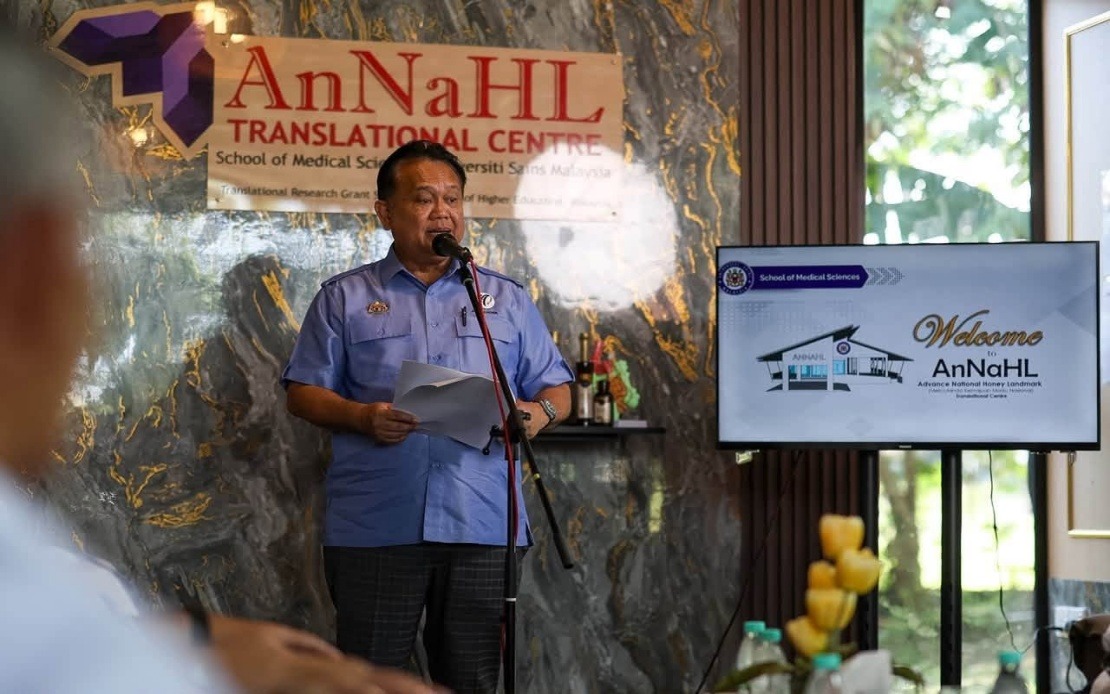
The Advanced National Honey Landmark Translational Centre at Universiti Sains Malaysia represents the institutional model underlying URDA's partnership strategy. Such centres function simultaneously as research facilities, training venues, and incubation spaces where prototype systems can be tested and refined before deployment at community scale. By hosting joint delegations from URDA and RECODA, the centre facilitates cross-agency knowledge sharing and helps align development priorities across institutional boundaries—a coordination challenge that frequently hampers rural development effectiveness in Southeast Asia.
Capacity building emerges as the linchpin connecting innovation availability to community benefit. Nanta explicitly identified knowledge, skills, technology access, and market linkages as essential preconditions for sustainable income generation. This framing recognises that merely transferring technology or introducing new production methods without simultaneously developing community capability for independent operation and problem-solving typically produces dependent relationships rather than sustainable development. Structured capacity building—encompassing training in technical production skills, basic business management, financial record-keeping, and market intelligence—creates conditions where communities can continue developing and adapting their enterprises after initial implementation support concludes.
The geographic focus on Kapit constituency, which encompasses substantial portions of the Upper Rajang region, provides a defined experimental space for testing integrated rural development approaches. Kapit's interior location, accessible primarily by river transport, creates both constraints and opportunities for innovation-driven development. Geographic isolation limits access to urban markets and supply chains but simultaneously creates premium pricing potential for products marketed as traditionally produced, ecologically authentic, or culturally distinctive. Communities capable of meeting food safety standards while preserving production methods valued by consumers can access international markets willing to pay substantially above commodity prices.
SEA regional context renders this development trajectory particularly significant. Throughout Southeast Asia, rural economies face intensifying pressure from global commodity market volatility, climate variability affecting traditional agricultural calendars, and youth outmigration to urban centres. Jurisdictions successfully implementing innovation-driven rural economy models generate demonstrable improvements in household incomes and youth retention by creating economically viable opportunities requiring knowledge and entrepreneurial skills rather than primarily labour availability. Malaysia's position as a relatively high-income Southeast Asian economy means rural communities here can potentially compete for premium market segments unavailable to lower-income neighbours, provided product quality, traceability, and marketing positioning support price differentiation.
The partnership framework URDA is developing also addresses market access bottlenecks that frequently constrain rural enterprise expansion. Individual smallholders typically lack negotiating power to secure distribution relationships with national or regional retailers, and shipping costs for small production volumes make direct export economically irrational. Coordinated aggregation of output from multiple producers, coupled with collective marketing and institutional quality assurance mechanisms, transforms unit economics and enables market access at scales previously unattainable. Universities and development agencies can facilitate this coordination and provide initial institutional credibility that retailers require before committing to novel suppliers.
Implementing this vision requires sustained commitment beyond initial project phases. Institutional partnerships between universities and rural communities typically require multiyear engagement to build trust, refine operational systems, and establish self-sustaining mechanisms. Government implementing agencies must provide stable funding frameworks and policy support that encourage universities to prioritise rural engagement despite competing institutional pressures. Community participants require assurance that capacity building represents permanent rather than temporary support, enabling them to make long-term investments in skills development and infrastructure.
The URDA initiative also implicitly acknowledges that centre-to-periphery development models—wherein policy and implementation flow from federal bureaucracies to local communities—require supplementation with innovation ecosystems integrating diverse institutional actors in collaborative problem-solving. This polycentric governance approach recognises that rural communities possess contextual knowledge about local environmental conditions, cultural practices, and market opportunities that external agencies cannot fully comprehend. Effective development partnerships structure engagement to privilege this local knowledge while contributing technical expertise and market connections that communities cannot independently access.
Looking forward, the success of URDA's partnership approach will depend significantly on demonstrating replicability across diverse community contexts and product categories. Stingless bee enterprises suit some locations and demographics but not necessarily others. Scaling the partnership model will require developing institutional capacity within URDA and collaborating universities to support parallel innovation initiatives addressing multiple commodities and communities simultaneously. This expansion also necessitates training cadres of community facilitators capable of independently managing partnerships and adapting innovations to local conditions—essentially building indigenous capacity for ongoing innovation rather than dependence on external expertise.

