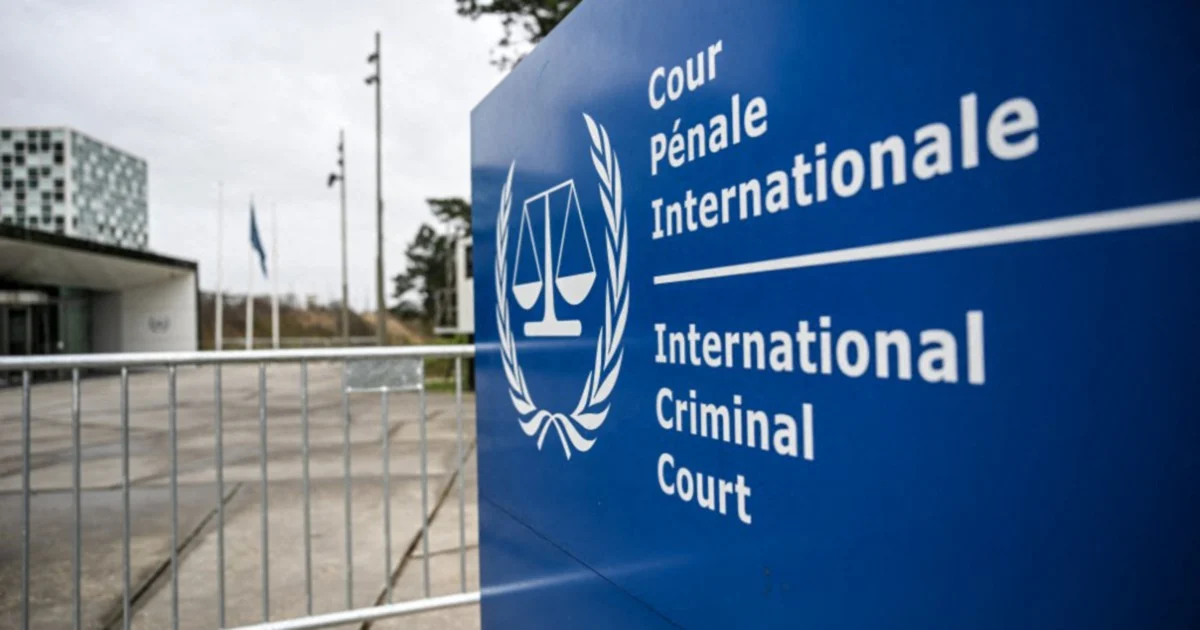
The Trump administration faces fresh legal challenges to its aggressive posture towards the International Criminal Court, with a pair of American advocacy groups filing suit in Washington this week to contest the legality of recently imposed sanctions on the judicial body. The lawsuit represents the opening salvo in what legal experts anticipate will be a protracted constitutional battle over the bounds of executive power and First Amendment protections in the realm of foreign policy.
At the heart of the dispute lies a fundamental tension: the administration's assertion that it possesses the authority to penalise organisations deemed hostile to American interests, and the plaintiffs' contention that such actions impermissibly restrict the rights of US citizens and civil society organisations to engage in lawful advocacy and free expression regarding international institutions. The sanctions, which were announced as part of a broader diplomatic offensive aimed at constraining or dismantling the ICC, have already reverberated across international legal circles and human rights communities.
The timing of the lawsuit comes as officials from the Trump administration have begun orchestrating what observers describe as a coordinated campaign to undermine the legitimacy and operational capacity of the Hague-based court. This diplomatic push represents a significant escalation in US antagonism towards the ICC, which has previously drawn criticism from American policymakers over investigations into potential war crimes and crimes against humanity involving US personnel and allies.
For Malaysian readers and Southeast Asian observers, the implications merit close attention. The ICC's authority and perceived independence carry weight across a region where questions of accountability for atrocities, whether involving state actors, military forces, or armed groups, remain contested and often unresolved. The weakening of international judicial mechanisms could reshape the landscape for justice-seekers throughout Asia, particularly in contexts involving Myanmar, Cambodia, and other jurisdictions where transitional justice remains incomplete.
The advocacy groups challenging the sanctions argue that restricting financial flows and imposing punitive measures against the ICC functions indirectly as a constraint on American citizens' rights to support, fund, or cooperate with the institution. This reasoning extends constitutional jurisprudence into uncertain terrain, where the line between legitimate foreign policy tools and unconstitutional infringement of free expression becomes blurred. Legal scholars remain divided on whether courts would sustain such arguments, given the traditionally broad deference afforded executive authority in international relations.
The Trump administration's position reflects a longstanding American ambivalence towards the ICC, an institution established under the Rome Statute which the United States signed but never ratified. This peculiar status has historically permitted Washington to maintain a critical distance from the court while retaining rhetorical influence in international forums. The current administration's escalation beyond diplomatic criticism into sanctions represents a qualitative shift in hostility.
Historical context illuminates the stakes. Previous Republican administrations employed threats of sanctions and withdrawal of military assistance to discourage ICC investigations involving American allies and personnel. The George W. Bush administration famously demanded immunity agreements for US citizens. Yet the current approach appears more sweeping, targeting the institution itself rather than specific investigations or individuals. This difference potentially exposes the administration to legal vulnerability on the domestic front.
The broader constitutional question—whether foreign policy decisions can violate First Amendment protections—touches on rarely tested ground. While courts have recognised that executive power in foreign affairs enjoys substantial latitude, they have also held that such power is not unlimited and must conform to constitutional constraints. The plaintiffs will bear the burden of demonstrating that the ICC sanctions specifically and impermissibly restrict free speech rather than merely regulating commerce or imposing consequences related to foreign relations.
For regional policymakers and observers in Southeast Asia, this American legal dispute carries geopolitical significance. Should the sanctions withstand constitutional challenge, the precedent would signal that powerful nations can employ economic pressure against international institutions without facing meaningful domestic legal constraint. Conversely, if courts overturn the sanctions on free speech grounds, the decision would affirm limits on executive unilateralism in the foreign policy sphere—a principle with broader implications for how states interact with multilateral institutions generally.
The lawsuit also intersects with ongoing debates within the Trump administration regarding the proper role of international law and institutions in American foreign policy. Some officials view the ICC as inherently threatening to American sovereignty and strategic flexibility, while others argue that maintaining engagement with international judicial mechanisms serves long-term American interests by reinforcing norms that ultimately constrain adversaries. This internal tension frequently manifests in contradictory policy signals and legal actions that sometimes undercut each other.
As the case develops, observers should watch for several key procedural moments: whether courts accept jurisdiction over what could be characterised as a purely political question beyond judicial reach; whether the advocacy groups can establish standing by demonstrating concrete injury to their organisational missions and members' constitutional rights; and whether the administration can successfully argue that foreign policy imperatives justify the sanctions regardless of their incidental effects on domestic speech. Each determination will shape the contours of permissible executive action in international affairs.

