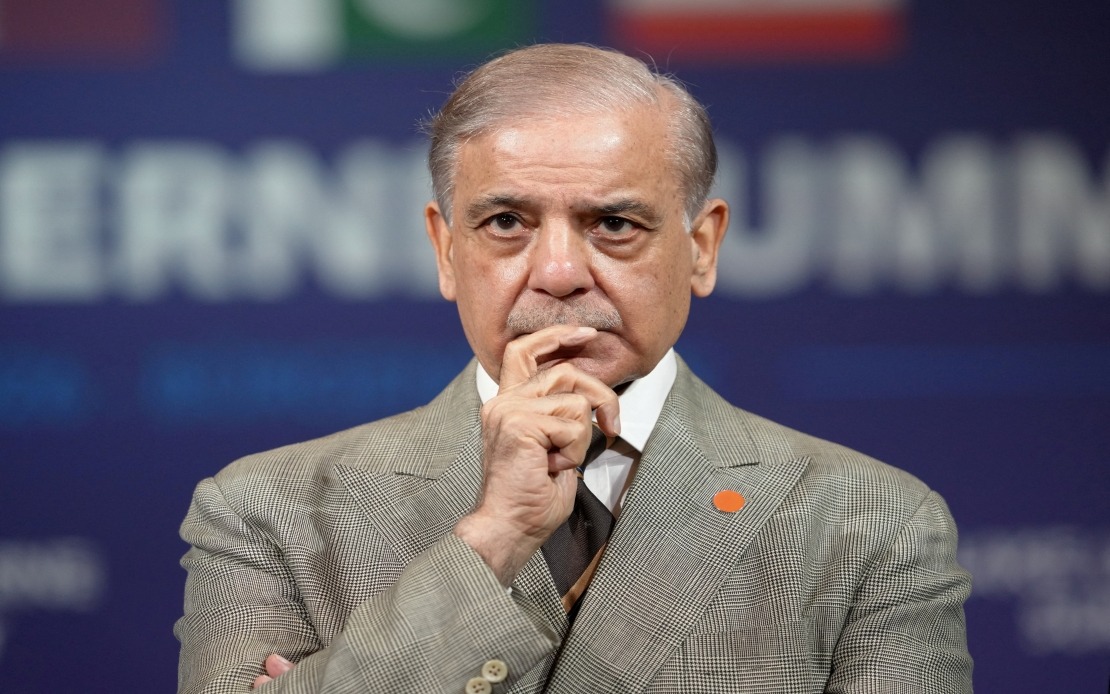
Pakistan's Prime Minister Shehbaz Sharif has announced an ambitious timeline for resolving decades of tension between Washington and Tehran, declaring that the two adversaries will engage in intensive negotiations over the next six weeks to settle longstanding disputes over nuclear weapons, ballistic missile development, and billions of dollars in frozen Iranian assets. Speaking to the National Assembly in Karachi on Tuesday, Sharif outlined the framework emerging from recent diplomatic breakthroughs, signalling that a memorandum of understanding signed just days earlier could be transformed into a durable, long-term accord if both sides maintain momentum through the forthcoming talks.
The diplomatic architecture took concrete shape when the US and Iran concluded three days of negotiations in Burgenstock, Switzerland, on Monday, with representatives agreeing on procedural mechanisms designed to facilitate genuine progress toward a permanent settlement. Pakistan, positioned as a crucial mediator alongside Qatar, became a signatory to the Islamabad Memorandum of Understanding adopted on June 17, cementing Islamabad's role as an indispensable broker in one of the world's most intractable geopolitical conflicts. For Malaysia and the broader Southeast Asian region, which has long been exposed to the spillover effects of Iran-US hostility—from shipping disruptions to energy price volatility—any stabilization represents a welcome development that could reduce unpredictability in international markets and security calculations.
Sharif's characterization of the Switzerland discussions as "historic" reflects optimism that has been largely absent from US-Iran relations for over a decade. The Prime Minister emphasized that both nations have committed to a structured agenda over the next 60 days, with the technical talks focusing on three critical areas: Iran's nuclear programme, the ballistic missile arsenal that has long alarmed Western powers and their Gulf allies, and the substantial volume of Iranian state assets frozen in international banks due to successive rounds of American sanctions. His confidence that the MoU could evolve into a permanent agreement hinges on whether negotiators can bridge the fundamental gaps that have previously derailed similar efforts.
However, Iran's immediate response suggested that Tehran maintains a more restrictive interpretation of what is negotiable. The Islamic Republic's Foreign Ministry spokesman, Esmaeil Baghaei, issued a swift clarification stating categorically that missile capabilities were never part of the Switzerland discussions and should not be viewed as open to future compromise. This discrepancy between Sharif's announcement and Tehran's position highlights a potential fault line in the negotiations: while the Pakistani premier frames ballistic missiles as a legitimate component of the technical talks, Iranian officials appear to regard them as a red line that falls outside the scope of discussion.
The question of International Atomic Energy Agency access represents another contentious dimension. Baghaei declared that Iran will not permit IAEA inspectors to visit nuclear facilities that were targeted during the recent US-Israeli military strikes against Iranian infrastructure. This stance complicates the verification mechanisms that Western powers typically demand as a cornerstone of any credible nuclear agreement. Any sustainable accord would ordinarily require robust international monitoring, yet Tehran's refusal to grant access to sites it views as having been subjected to foreign aggression creates an immediate obstacle to the transparency that confidence-building measures necessitate.
For Malaysia's strategic interests, the outcome of these negotiations carries particular weight given the region's dependence on stable energy supplies and freedom of navigation through critical chokepoints. An unresolved Iran-US crisis perpetuates uncertainty that dampens global economic growth and strains Southeast Asian economies already contending with inflationary pressures and supply chain fragility. The possibility of escalating military confrontation between Washington and Tehran would almost certainly ripple through maritime commerce in ways that directly affect Malaysian trade and investment flows.
Pakistan's elevation as a lead mediator alongside Qatar reflects both Islamabad's strategic location on the arc connecting the Middle East to South Asia and its demonstrated willingness to maintain channels of communication with both Washington and Tehran despite being a longtime US security partner with deep historical ties to the Gulf's Sunni monarchies. Sharif's public announcement of the 60-day framework serves multiple purposes: it demonstrates Pakistan's diplomatic relevance to international statecraft, it provides domestic political benefit by showcasing Islamabad's constructive role in global affairs, and it potentially increases pressure on both negotiating parties to maintain forward momentum by placing commitments in the public sphere.
The structural ambition underlying the Islamabad MoU—creating a pathway from temporary understandings to permanent normalization—echoes previous diplomatic initiatives that foundered on the rocks of mutual suspicion and conflicting regional interests. Whether the current iteration can succeed depends on factors beyond the technical teams: domestic political tolerance within Iran for concessions on sensitive security issues, American willingness to provide sanctions relief commensurate with Iranian nuclear compliance, and the degree to which Gulf Arab states can be persuaded to accept an accommodation between their security guarantor and their regional rival.
The frozen assets question introduces its own complexities. Billions of dollars held in foreign banks represent both a powerful incentive for Iranian cooperation and a prize that Washington has historically used as leverage in negotiations. How these funds are released—gradually tied to verifiable steps, or in larger tranches as confidence builds—will significantly influence whether both sides view the process as reciprocal and fair. From Tehran's perspective, immediate unfreezing of assets demonstrates American good faith; from Washington's standpoint, staged releases tied to compliance milestones provide assurance against Iranian backsliding.
The next 60 days will test whether the current diplomatic momentum can overcome the structural obstacles that have repeatedly stalled previous negotiations. Pakistan's continued mediation, combined with Qatar's parallel efforts, suggests that regional actors believe resolution remains achievable. Yet the divergence between Pakistan's framing of the agenda and Iran's immediate pushback on missile discussions indicates that contentious topics remain unresolved even in principle. For observers across Southeast Asia monitoring developments that could affect regional stability and prosperity, the technical talks ahead will determine whether the recent Switzerland breakthrough represents the beginning of genuine reconciliation or merely another cycle of hopeful negotiation followed by disappointing stalemate.

