The United States has taken a significant diplomatic step by formally notifying Congress of financial support for the International Stabilisation Force destined for Gaza, marking what American officials characterise as a foundational move in advancing President Donald Trump's ambitious Middle East peace agenda. The State Department confirmed the July 30 notification to legislators, though specifics regarding the funding amount remain undisclosed at this stage. According to State Department spokesman Tommy Pigott, Washington views the stabilisation force as an integral component of Trump's comprehensive 21-point peace framework for the region, signalling sustained American commitment to the initiative's full realisation.
The Trump administration has framed the ISF proposal within the context of broader regional diplomatic momentum. Officials point to the establishment of the Board of Peace, a multilateral coordinating body assembled through extensive international negotiations, as evidence of widespread coalition-building around the peace agenda. The administration claims this unified approach has already produced tangible results, including the release of hostages and commitments from various parties toward conflict resolution. State Department officials have expressed cautious optimism about progress being made through the Board of Peace's mediation efforts, suggesting that the pace of diplomatic advancement justifies continued American financial commitment to the stabilisation force framework.
The core of Trump's proposal centres on disarmament and security restructuring in Gaza. According to statements made on July 31, the Board of Peace negotiated an agreement whereby Hamas and other armed factions would undergo complete disarmament, Israeli military forces would withdraw according to a phased timeline, and the ISF would operate in coordination with a reconstituted Palestinian police apparatus. This arrangement envisions a security architecture fundamentally different from the current situation, with international forces filling the gap created by Israeli withdrawal and Palestinian forces assuming primary responsibility for internal order. The framework represents an attempt to address Israeli security concerns whilst simultaneously enabling Palestinian self-governance in Gaza.
However, significant obstacles have emerged that threaten implementation. Prime Minister Benjamin Netanyahu has publicly rejected the peace plan, explicitly stating to his Cabinet that Israeli forces will maintain their military presence in Gaza until Hamas is completely disarmed—a condition he views as not yet satisfied. This Israeli position directly contradicts the premise of the Trump plan, which envisages phased Israeli withdrawal proceeding in parallel with disarmament efforts verified through Board of Peace mechanisms. Netanyahu's firm stance reflects deeper Israeli concerns about the security guarantees embedded within the framework and the reliability of international enforcement mechanisms.
The divergence between American and Israeli positions became apparent during recent high-level visits to the region. Jared Kushner, a senior White House advisor and key architect of Trump's Middle East strategy, travelled to meet both Hamas officials in Egypt and Netanyahu in Israel, accompanied by Board of Peace envoy Nikolay Mladenov. These talks revealed fundamental disagreements, particularly regarding ongoing Israeli military operations. Kushner reportedly opposed continued Israeli strikes in Gaza, while Netanyahu maintained that military operations would persist regardless of diplomatic progress—a position that effectively undermines the ceasefire mechanism established on October 10, 2025.
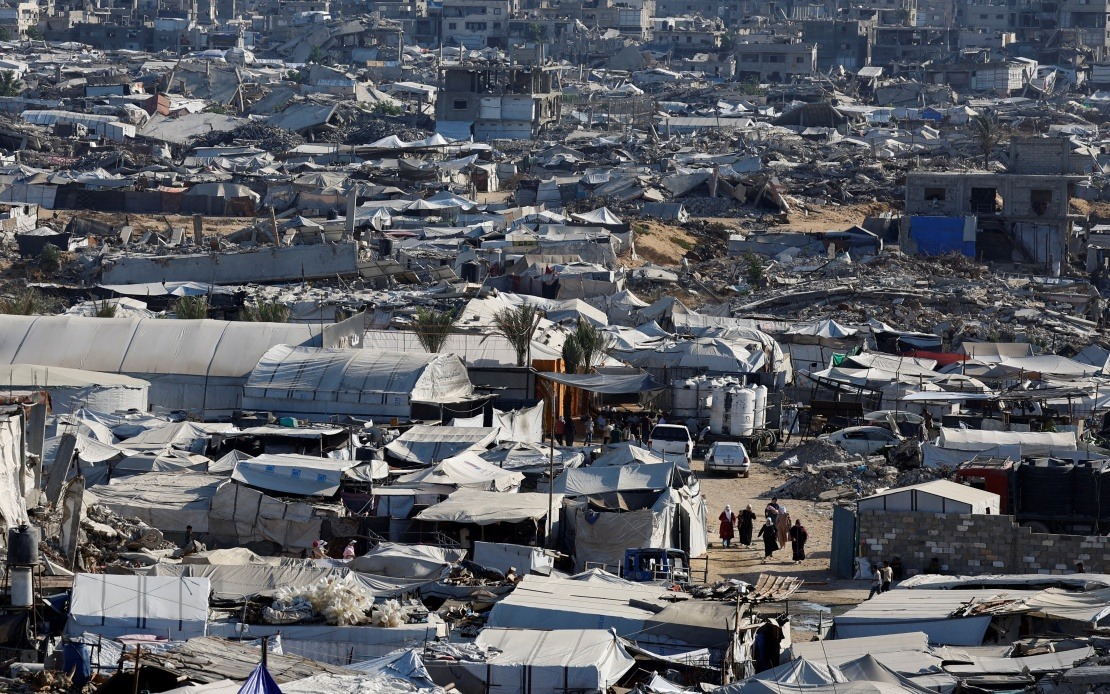
The human toll of these operational disagreements remains substantial. Since the ceasefire agreement took effect in October, Israeli military actions have resulted in 1,283 Palestinian deaths and 4,248 wounded according to Gaza's Health Ministry. These figures underscore the practical consequences of the dispute between Netanyahu and Kushner, with civilians bearing the cost of unresolved security questions. Beyond the post-ceasefire period, the broader conflict that commenced on October 8, 2023, has claimed more than 73,000 Palestinian lives and wounded over 174,000, whilst approximately 90 per cent of Gaza's physical infrastructure has been destroyed—a scale of devastation that complicates any stabilisation effort.
Hamas has publicly reaffirmed its commitment to the proposed roadmap, positioning itself as the more cooperative party in negotiations. This contrasts sharply with Netanyahu's explicit rejection and suggests that Israeli objections may prove the primary impediment to implementation. The positioning is significant for regional diplomacy, as it portrays Hamas as willing to accept international constraints and disarmament in exchange for Israeli withdrawal, potentially shaping international perceptions of responsibility for diplomatic failure. However, implementation remains contingent on Israeli agreement, giving Netanyahu effective veto power over the framework's advancement regardless of other parties' willingness to participate.
For Malaysian and Southeast Asian observers, this situation illustrates the complexities of great-power mediation in deeply entrenched regional conflicts. The Trump administration's investment in the ISF concept reflects a broader American strategy to position itself as the architect of Middle Eastern stability, following years of military involvement and withdrawal. The Congressional notification of funding serves domestic political purposes as well, demonstrating to American legislators and constituents that the administration is translating diplomatic rhetoric into concrete resource commitments. However, the gap between American diplomatic ambitions and Israeli security demands reveals the limits of financial commitment without underlying political alignment among key regional actors.
The Board of Peace mechanism represents an attempt to create institutional structures that transcend bilateral negotiations, potentially offering models relevant to other regional disputes. By assembling a broader coalition committed to implementation oversight, the framework seeks to distribute responsibility for enforcement and verification beyond individual governments. This approach echoes elements of multilateral peacekeeping architecture familiar in Southeast Asia through ASEAN mechanisms, though applied to a more militarised and contentious context. The question of whether such institutional frameworks can succeed where bilateral negotiation has failed remains unresolved.
The funding notification also signals American determination to maintain diplomatic initiative regardless of immediate obstacles. Rather than abandoning the plan in response to Netanyahu's rejection, the administration has proceeded with congressional notification, effectively locking itself into a course of action and potentially complicating future American-Israeli relations if the plan stalls. This approach may reflect confidence that Israeli security concerns can eventually be accommodated within the framework, or alternatively, a willingness to absorb friction in the bilateral relationship in pursuit of broader regional objectives. The coming weeks will test whether American diplomatic pressure, combined with Hamas cooperation and international coalition support, can overcome Israeli objections to implement the first phases of Israeli withdrawal.
For Malaysia and the broader Muslim world, the trajectory of this peace initiative carries symbolic significance beyond its immediate practical implications. A successful implementation would demonstrate American capacity to broker comprehensive Middle Eastern settlements, whilst failure would reinforce perceptions that American diplomacy lacks leverage to constrain Israeli military actions. The International Stabilisation Force concept itself, if realised, would mark a significant evolution in international peace operations, potentially establishing precedents for future interventions in similar conflicts. Meanwhile, the continued violence despite ceasefire agreements highlights the persistent gap between diplomatic frameworks and security realities on the ground.

