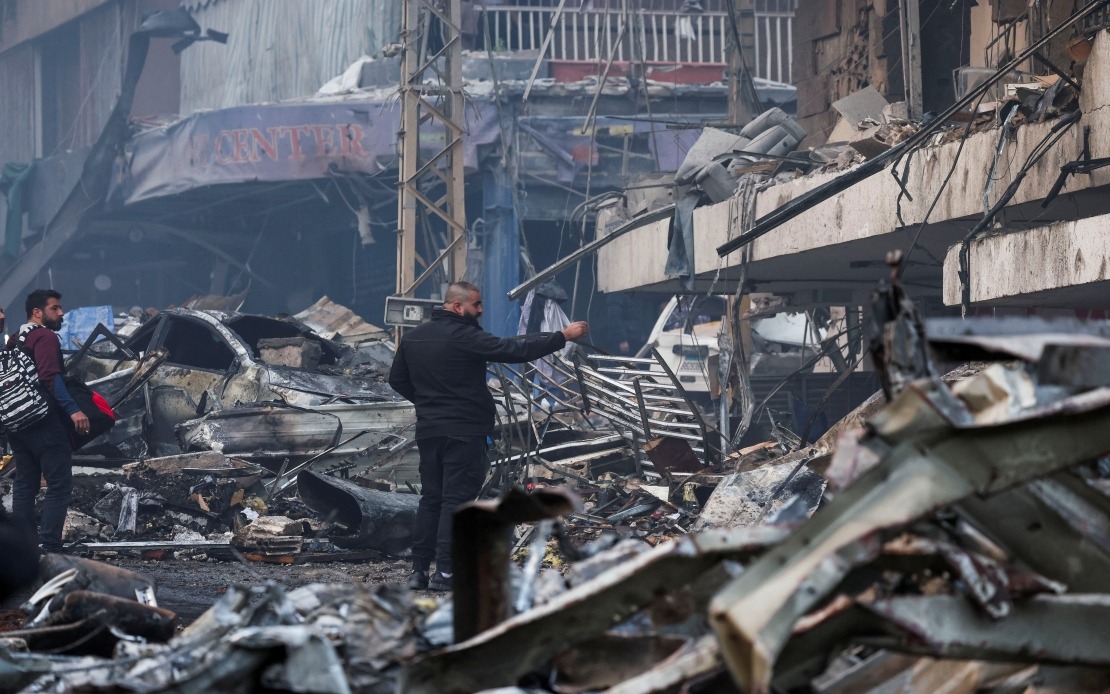
The United States has established a dedicated monitoring mechanism operated through its military's Central Command to observe and track active combat operations between Israel and Hezbollah in Lebanon on a real-time basis, according to statements from US officials on Monday. The announcement marks a significant step in American diplomatic efforts to manage the volatile conflict and create conditions for sustainable peace negotiations between the two parties.
The initiative was formally launched following high-level telephone discussions held on Friday between US Secretary of State Marco Rubio and both Israeli Prime Minister Benjamin Netanyahu and Lebanese President Joseph Aoun. These conversations focused on reinforcing the existing ceasefire arrangement and laying groundwork for broader negotiations aimed at achieving a durable peace and security accord. The US official emphasised that the primary objective remains breaking the cycle of recurrent violence that has characterised relations between Israel and Lebanon for decades.
The mechanism represents a practical application of American military capabilities to support diplomatic efforts. By enabling real-time monitoring of military activities on both sides, the system creates transparency that facilitates negotiation and reduces the risk of misunderstandings or escalation. This approach reflects broader lessons learned from previous Middle Eastern peace processes, where independent verification systems have proven essential for confidence-building between hostile parties.
Israeli and Lebanese delegations were scheduled to arrive in Washington from June 23 to 25 to engage in direct talks mediated by American officials. These discussions represent a critical phase in negotiations, as both countries work toward establishing comprehensive frameworks covering peace arrangements and security guarantees. The US positioning itself as an active facilitator and monitor demonstrates Washington's commitment to preventing renewed conflict in a region of significant strategic importance.
The announcement emerged alongside parallel diplomatic developments involving broader regional stakeholders. Qatar and Pakistan jointly released a statement following the conclusion of US-Iran negotiations held at the Burgenstock resort in Switzerland. This statement referenced establishment of a "de-confliction cell" that would include the United States, Iran, and Lebanon, with Qatar and Pakistan serving as facilitators. The mechanism aims to ensure all parties adhere to military ceasefire terms specified in the Islamabad Memorandum of Understanding.
The Islamabad Memorandum represents a separate but complementary diplomatic track. The United States and Iran remotely signed this document the previous week, establishing a 60-day window for negotiations on contested issues including Iran's enriched uranium reserves, its broader nuclear programme, and other longstanding disputes between Tehran and Washington. This parallel process reflects the interconnected nature of Middle Eastern security challenges, where conflicts in Lebanon cannot be resolved in isolation from broader regional dynamics.
The 14-point memorandum articulates several foundational principles guiding the negotiation period. It calls for an immediate and indefinite end to military operations across all active conflict zones, explicitly including Lebanon. The agreement also addresses longstanding American sanctions against Iran, specifically the naval blockade that has severely restricted Iranian maritime commerce. Additionally, the memorandum commits parties to ensuring unobstructed passage for commercial shipping through the Strait of Hormuz, one of the world's most critical maritime chokepoints and a persistent flashpoint for regional tensions.
For Malaysian and Southeast Asian observers, these diplomatic initiatives carry important implications. The Middle East remains a crucial market for regional economies and a vital shipping corridor for trade. Lebanon's stability directly affects broader Mediterranean and Middle Eastern security architecture, which in turn influences shipping routes and regional commerce that affect Southeast Asian nations. Any escalation in Israel-Hezbollah fighting risks disrupting these critical economic arteries and creating humanitarian crises that affect international stability.
The multi-layered diplomatic approach involving both direct US-mediated Israel-Lebanon negotiations and parallel US-Iran discussions reflects a recognition that sustainable peace requires addressing multiple interconnected conflicts simultaneously. The monitoring mechanisms serve not only as verification tools but as confidence-building measures that reduce the likelihood of accidental escalation. By maintaining constant observation of military activities, both sides can be assured that any breach of ceasefire terms would be immediately detected and reported.
The involvement of Qatar and Pakistan as facilitators for the de-confliction cell demonstrates the importance of trusted regional players in Middle Eastern diplomacy. Both countries maintain relationships across the divided parties and possess credibility as neutral mediators. This approach contrasts with purely US-led efforts and reflects recognition that sustainable regional solutions require input from countries with deeper cultural and historical understanding of local dynamics.
The timing of these announcements, with officials publicly acknowledging the monitoring system even as Israeli and Lebanese delegations prepared to travel to Washington, suggests confidence in the diplomatic process. Transparency about monitoring arrangements can paradoxically increase compliance, as all parties understand that violations will be detected. This psychological dimension complements the technical aspects of real-time observation.
The success of these initiatives will significantly influence the trajectory of Middle Eastern stability over the coming months. The 60-day negotiating window and the scheduled direct talks represent critical opportunities to move from conflict management toward sustainable conflict resolution. For Malaysia and the broader international community, the outcome will help determine whether the region moves toward greater stability or faces renewed cycles of violence with broader consequences for global security and economic stability.