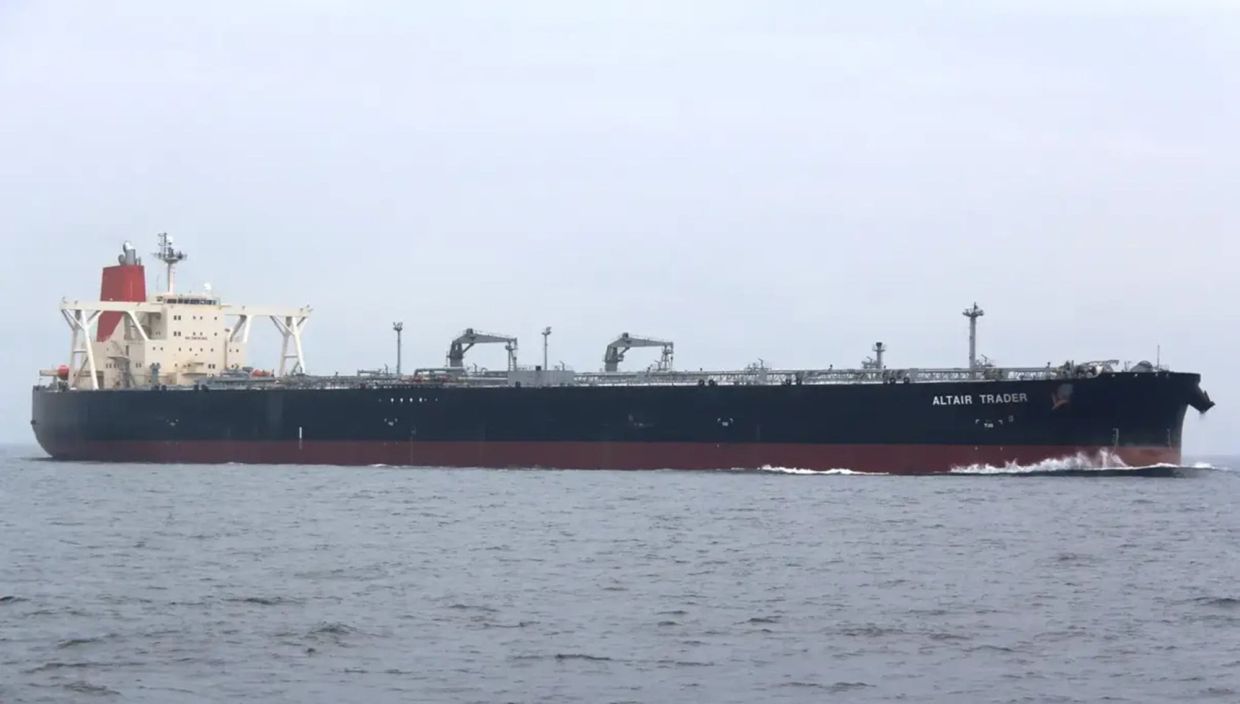
Washington has escalated its economic assault on Iran by targeting a network of Chinese and Hong Kong shipping operators accused of facilitating covert crude oil transfers that circumvent international restrictions. The State Department announced sanctions against eight companies on Wednesday, with the Treasury Department identifying six vessels that reportedly transported millions of barrels of Iranian petroleum products to China and the United Arab Emirates throughout 2026. These designations represent a broadening of America's longstanding effort to isolate Iran's economy, now extending directly to the intermediaries enabling Tehran's trade relationships across Asia.
The penalties freeze any assets the targeted companies hold within US jurisdiction and generally bar American individuals and enterprises from conducting business with them. The reach extends further than direct American interactions: foreign financial institutions and other international companies face potential sanctions exposure if they continue facilitating transactions involving the designated firms. This secondary sanctions mechanism has become a cornerstone of Washington's strategy to enforce global compliance with its Iran policy, creating incentives for third countries and private actors to voluntarily exclude themselves from dealings with sanctioned entities rather than risk their own access to the American financial system.
The action represents an integrated economic and military approach to constraining Iran's oil exports. State Department spokesman Tommy Pigott explicitly connected the commercial designations to the US Navy's enforcement operations along Iran's coastline and ports, framing the sanctions as supporting navigational freedom in critical waterways. Treasury Secretary Scott Bessent characterised the Iranian regime as economically desperate, citing free-falling GDP and triple-digit inflation as motivations for seeking revenue from oil sales. The Treasury statement specifically accused Iran's Islamic Revolutionary Guard Corps of leveraging international shipping networks to finance what Washington characterises as terrorism and regional aggression.
One designated company, Qi Hang Ship Management Limited based on mainland China, owns and operates the Marshall Islands-flagged Well Sail, which carried hundreds of thousands of barrels of Iranian petroleum to the United Arab Emirates during 2026. Hong Kong-based Confident Apex Limited operates the Mozambique-flagged Lily, which Treasury claims transported millions of barrels of Iranian oil since 2025. Additional Hong Kong operators identified include Billion Nexus International, Nevada Spirit Company, and Marinova Freight, each connected to vessels allegedly delivering substantial volumes to China in recent years. The Al Salmi, Breeze V, Natsumi, Crystal, Nireta, and Yehope represent the broader shadow fleet infrastructure that enables Iran to obscure the origin and destination of its hydrocarbon shipments.
China has responded with categorical rejection of the allegations and accusations of American overreach. Liu Pengyu, spokesman for the Chinese embassy in Washington, asserted that Beijing's cooperation with Iran operates transparently and within legal frameworks, deserving respect rather than sanctions pressure. The Chinese government characterised the designations as groundless smears and improper application of unilateral sanctions, emphasising that Washington lacks legitimate authority to penalise Chinese companies for conducting lawful international commerce. Beijing pledged to continue protecting its enterprises' interests and to pursue what it described as necessary measures to defend the rights of Chinese businesses facing American restrictions.
The sanctioning of shipping operators reflects broader strategic American concerns about Iran's ability to circumvent the international oil embargo through deceptive practices. By dispersing shipments across multiple vessels, changing vessel flags and names, disabling automatic identification systems, and routing through intermediary ports, Iran's shadow fleet obscures the origin of crude reaching global markets. Chinese importers have proven willing participants in these arrangements, purchasing Iranian oil at discounted prices that compensate for the logistical complexity and sanctions risks involved. The scale of operations—millions of barrels annually reaching China through companies now under American sanctions—demonstrates the established nature of these commercial networks.
For Malaysia and Southeast Asia, the sanctions have significant implications for regional shipping and energy markets. As a major maritime hub with substantial shipping services and financial infrastructure, Malaysia faces exposure to secondary sanctions if its companies inadvertently facilitate transactions involving designated entities. The Strait of Hormuz remains critical to Asian energy security, with roughly one-third of seaborne traded oil passing through its narrows. Washington's enforcement actions, coupled with Iranian countermeasures, create operational risks for regional shipping companies transiting these waters, potentially affecting insurance costs, transit times, and the broader availability of shipping capacity.
The sanctions also target a separate Iranian insurance scheme operating through the Strait of Hormuz, which Treasury describes as an extortion mechanism. The Persian Gulf Marine Insurance Company and Hormuz Safe Marine Services Authority allegedly impose mandatory insurance charges on commercial vessels seeking passage, with policies purportedly protecting against seizure and other risks that Treasury argues Iran itself manufactures. Hormuz Safe, developed by Iran's Ministry of Economy, accepts bitcoin and other digital assets as payment while generating revenue for the Islamic Revolutionary Guard Corps. Treasury characterises these arrangements as coercive schemes in which Iranian entities create artificial dangers then extract payment for protection.
The insurance component reveals a secondary dimension of American sanctions strategy targeting Iran's unconventional financing mechanisms. By restricting access to traditional international banking and insurance markets, Western sanctions have pushed Iranian entities toward digital currencies, alternative financing structures, and direct commercial extraction schemes. The mandatory insurance charges on Hormuz passage represent Iran's attempt to directly monetise its control over maritime chokepoints, effectively taxing global commerce passing through its territorial waters. Washington contends this constitutes economic coercion, though Tehran views it as legitimate compensation for providing security and maritime services.
Bijing's defence of its Iranian relationship as lawful and transparent glosses over the operational reality that shadow fleet activities depend on deliberate concealment, false documentation, and misdirection. Chinese shipping companies and importers maintain plausible deniability regarding ultimate cargo origins while benefiting from substantial price discounts on Iranian crude. The sanctions designation forces Chinese businesses to either abandon profitable Iranian contracts or accept American financial penalties. This creates friction between Beijing's assertion of legitimate commerce and Washington's determination to enforce comprehensive Iranian isolation.
The designations signal that Washington intends to progressively identify and penalise shipping intermediaries enabling Iran's oil exports regardless of their nationality or operational sophistication. Companies already sanctioned face full asset freezes and transaction prohibitions, while their commercial partners confront the calculation of whether continued business relationships justify secondary sanctions exposure. This iterative approach aims to gradually contract the pool of international operators willing to facilitate Iranian transactions, progressively squeezing Iran's export capacity without requiring direct military intervention.
Regional audiences should monitor the implications for shipping costs, insurance premiums, and port operations across Southeast Asia. If secondary sanctions deter financial institutions from processing transactions involving entities connected to Iranian commerce, costs could cascade to legitimate regional operators. Conversely, opportunities may emerge for regional shipping companies and financial services providers willing to operate outside American-compliant frameworks, potentially attracting sanctioned Iranian business at premium rates. The maritime sector faces a strategic choice between maximum sanctions compliance and accessing lucrative but legally risky business opportunities.
The broader pattern reflects Washington's strategy of combining military enforcement—through naval presence and blockade—with economic coercion targeting the commercial infrastructure enabling sanctions evasion. By progressively designating shipping companies, Iran's counterparts face mounting pressure to abandon these relationships. Chinese resistance to American sanctions authority, however, suggests Beijing will continue selectively supporting Iranian commerce when perceived strategic interests align with Tehran's needs, setting up an ongoing cycle of designation, evasion, and renewed enforcement actions.

