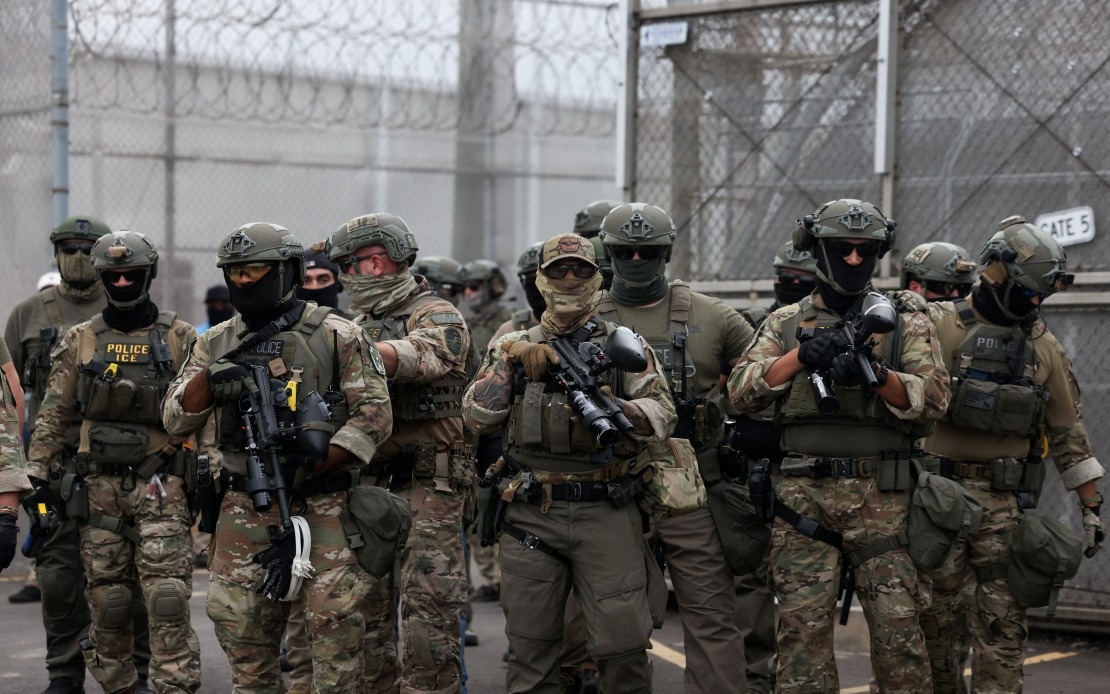
A federal judge in California has issued a sweeping order preventing United States Immigration and Customs Enforcement officers from conducting arrests at immigration courthouses across the country, dealing a significant setback to the Trump administration's enforcement agenda on migrant deportations. The ruling marks a direct judicial challenge to intensified immigration enforcement efforts that had resumed following the start of the president's second term earlier this year.
The practice under challenge involved ICE officers stationed at or near immigration court facilities to apprehend migrants, often while legal proceedings were still underway or before scheduled hearings. Immigration courts are specialized judicial venues where deportation cases proceed, with migrants potentially facing removal from the United States. The arrests at these locations had created a chilling effect, with immigrant advocates warning that people were avoiding court appearances altogether out of fear of immediate detention and deportation, thereby undermining the basic functioning of the judicial process.
ICE had intensified its courthouse arrest operations across the country beginning in Trump's second term, introducing revised enforcement guidelines that emphasized the operational advantages of detaining migrants during their court appearances. Agency officials had framed the strategy as an efficiency measure, arguing that apprehending individuals at courthouses consolidated enforcement resources and reduced the need for separate field operations. However, the judge found that the agency had failed to grapple adequately with the serious constitutional and procedural complications inherent in such a policy.
The judicial criticism centered on what legal experts call the "reasoned explanation" requirement—a cornerstone of administrative law that obligates government agencies to articulate a rational basis for policy shifts, particularly when new approaches conflict with established safeguards or public interests. The court determined that ICE had not met this burden, having introduced the expanded courthouse arrest practice without adequately considering or addressing its deleterious impacts on migrants' fundamental right to legal representation and due process.
For Southeast Asian readers and the broader regional context, this ruling carries implications beyond the United States. Malaysia and other ASEAN nations have observed increased cooperation with American immigration authorities, and bilateral deportation agreements depend partly on confidence that migrants receive fair legal treatment. The legitimacy of deportation frameworks rests on perceptions that individuals have access to judicial remedies and that enforcement does not preclude their day in court. A US court's finding that the government had sidestepped procedural safeguards may reinforce regional scrutiny of how bilateral immigration enforcement is conducted.
The decision also reflects deeper tensions in American administrative governance. Courts have increasingly scrutinized executive agencies' latitude in pursuing enforcement priorities, particularly when such priorities potentially conflict with statutory protections or constitutional principles. Immigration enforcement has become a flashpoint in these disputes, with judges balancing deference to executive immigration authority against obligations to ensure that policy changes rest on adequate factual and legal foundations.
Immigrant advocacy organizations had challenged the courthouse arrest practice strenuously, arguing that it transformed courts into enforcement traps and discouraged migrants from exercising their legal rights. They contended that the policy fundamentally corrupted the judicial process by making courthouses unsafe spaces for people facing removal proceedings. Legal scholars noted that such arrests can occur even before a judge has ruled on a case, meaning individuals might be detained without having had meaningful opportunity to present their legal defenses.
The California-based judge's order is nationwide in scope, barring ICE from the contested practice across all US immigration courts. This breadth demonstrates the court's view that the constitutional and administrative law problems were systemic rather than isolated to particular jurisdictions. Immigration enforcement officials will now need to pursue other strategies for apprehending migrants, potentially requiring them to locate and detain individuals outside courthouse settings.
The Trump administration may seek to appeal the ruling or to promulgate new guidelines that attempt to address the judge's concerns while preserving enhanced enforcement operations. Legal observers anticipate that revised guidance could focus on providing clearer notice to migrants about risks of arrest, establishing specific circumstances where courthouse arrests are permissible, or modifying procedures to ensure greater due process protections. However, any revised approach will face the same judicial scrutiny regarding adequate reasoned explanation.
This decision comes amid broader litigation challenging various Trump administration immigration policies. Courts have already blocked other enforcement initiatives on similar grounds, suggesting that judges are actively constraining the scope of executive immigration authority. The judicial pushback appears driven by concerns that administrative agencies are using emergency powers or policy changes to circumvent statutory procedures and constitutional protections without adequate deliberation.
For migrants themselves, the practical impact is significant. Those facing deportation proceedings can now attend immigration court hearings without the immediate threat of ICE apprehension at the courthouse entrance. This restoration of access to judicial forums may encourage more individuals to appear and present their legal cases, potentially altering the outcomes of many removal proceedings. Immigration attorneys report that courthouse arrest fears had caused many clients to abandon their cases entirely.
The broader implications concern the sustainability of immigration enforcement in democratic systems. When enforcement mechanisms undermine confidence in judicial fairness, they may generate resistance, reduce cooperation, and delegitimize the legal framework itself. This ruling suggests that American courts view protecting access to judicial process as a foundational requirement even within the contentious domain of immigration enforcement.

