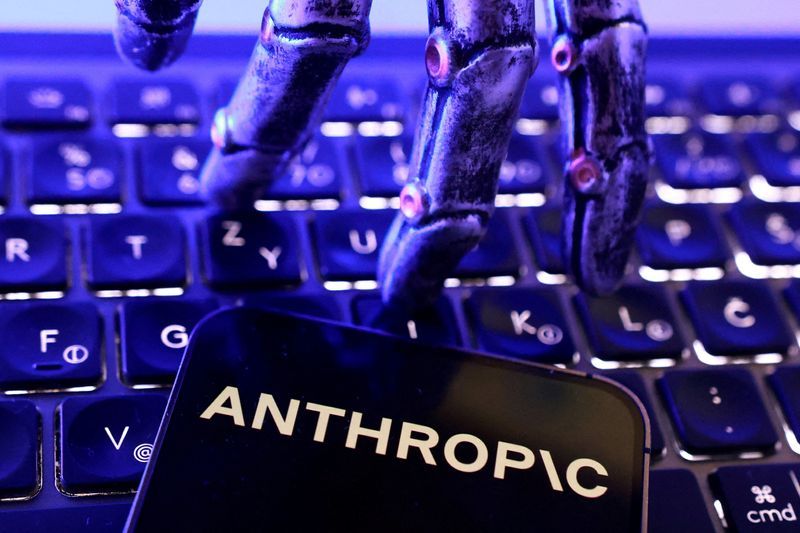
A California federal court has delivered a significant setback to the United States Department of Defense by invalidating its controversial blacklisting of Anthropic, the San Francisco-based artificial intelligence company behind the Claude chatbot. U.S. District Judge Rita Lin, appointed during former President Joe Biden's administration, issued a sweeping 59-page ruling that found the Pentagon's decision to designate Anthropic a supply-chain national security risk was fundamentally unlawful and devoid of factual foundation. The decision represents a watershed moment in the escalating tension between military strategic interests and corporate ethical positions on emerging AI technologies, issues increasingly relevant across Southeast Asia as defence establishments explore artificial intelligence applications.
Anthropic's legal challenge centred on Defence Secretary Pete Hegseth's unprecedented step to restrict the company from certain military contracts by labelling it a national security vulnerability. This classification typically applies to vendors that expose defence infrastructure to infiltration or sabotage by foreign adversaries. The company's resistance stemmed from its principled refusal to permit the Pentagon to deploy Claude for surveillance operations or to power autonomous weapons systems—a stance rooted in Anthropic's assessment that current AI models lack the reliability and safety guardrails necessary for such critical military applications. The designation, if left standing, threatened to inflict potentially billions of dollars in lost contracts and irreparable reputational damage on Anthropic's commercial operations.
In her ruling, Judge Lin articulated a powerful rebuke to what she characterised as an abuse of governmental authority. She wrote that the Pentagon's invocation of national security concerns amounted to a pretextual retaliation mechanism rather than a legitimate security determination. The judge emphasised that national security cannot serve as a blank cheque permitting the government to punish firms whose views on technology policy diverge from military preferences. This framing addresses a critical tension in democratic governance: the balance between legitimate defence requirements and the preservation of constitutional rights for private sector actors who dissent from state technology directives.
Anthropic's original lawsuit, filed in March, grounded its challenge in two distinct constitutional violations. The company argued that the Pentagon's action breached its First Amendment free speech rights by retaliating against its public positions on artificial intelligence safety and responsible deployment. Additionally, Anthropic contended that the designation violated Fifth Amendment due process protections by imposing severe penalties without affording the company an opportunity to present evidence or contest the military's conclusions. Judge Lin's decision appears to have found merit in these constitutional arguments, validating Anthropic's core claim that the government had acted arbitrarily and without transparent legal justification.
The Pentagon's designation of Anthropic marked the first public instance of a United States company being formally branded a supply-chain risk under 10 U.S. Code § 4872, an obscure procurement statute originally designed to shield military infrastructure from foreign sabotage and infiltration campaigns. The statute's application to an American corporation based on policy disagreements rather than proven security vulnerabilities represents a significant interpretive expansion of the law's intended scope. For Malaysian policymakers and regional technology firms watching this development, the case illustrates the risks of weaponising security frameworks against domestic commercial actors who resist government technology demands.
The ideological gulf separating Anthropic and the Pentagon reflects fundamentally different assessments of artificial intelligence readiness for warfare. Anthropic maintains that contemporary AI systems remain insufficiently reliable for autonomous weapons applications, where errors could result in unintended casualties or escalation. The company further articulates opposition to domestic surveillance applications of Claude on civil liberties grounds, viewing such uses as incompatible with democratic principles and individual privacy rights. The Pentagon, conversely, contends that private firms should not be permitted to constrain military capabilities through contractual restrictions, arguing that such constraints create operational uncertainty and potential vulnerabilities during combat situations.
The Justice Department had defended the Pentagon's action by arguing that Anthropic's refusal to accept military contractual terms—rather than any retaliation for its safety positions—justified the supply-chain designation. The government further suggested that Anthropic's restrictions could introduce uncertainty into Pentagon systems and potentially disable military equipment during operations. However, Judge Lin's decision apparently rejected this characterisation, finding that the designation lacked sufficient factual underpinnings and represented the kind of pretextual reasoning that courts should scrutinise carefully when First Amendment and due process claims intersect with national security invocations.
The implications of this judgment extend well beyond the immediate Anthropic-Pentagon dispute. It signals judicial willingness to review military determinations that appear to punish corporate actors for principled resistance to warfare applications of commercial technology. This precedent may embolden other AI companies, including those developing capabilities relevant to surveillance and autonomous systems, to resist military requests without fear that disagreement alone will trigger retaliatory blacklisting. Conversely, the decision could frustrate Pentagon efforts to secure guaranteed access to commercial AI capabilities as defence establishments worldwide accelerate their adoption of artificial intelligence for strategic purposes.
Anthropic continues to face additional legal jeopardy through a separate lawsuit pending in Washington, D.C., over another Pentagon supply-chain risk designation that threatens to exclude the company from civilian government contracts as well. This ongoing proceeding suggests that despite Thursday's judicial victory in California, the company's struggle with the federal government over AI safety principles remains unresolved. The outcome of the Washington case may ultimately determine whether Anthropic can maintain its policy of declining to enable certain military and surveillance applications without accepting crippling financial consequences through systematic contract exclusion.
For Southeast Asian nations developing their own artificial intelligence governance frameworks and military technology strategies, the Anthropic case offers instructive lessons about the intersection of corporate ethics, national security, and rule of law principles. As regional defence establishments increasingly seek to integrate commercial AI systems into operations, questions about appropriate boundaries between military demands and corporate responsibility will become more acute. The tension between treating AI companies as ordinary defence contractors obligated to meet state requirements, versus recognising them as technology firms entitled to maintain ethical positions and policy preferences, will likely define artificial intelligence governance debates throughout the coming decade.

