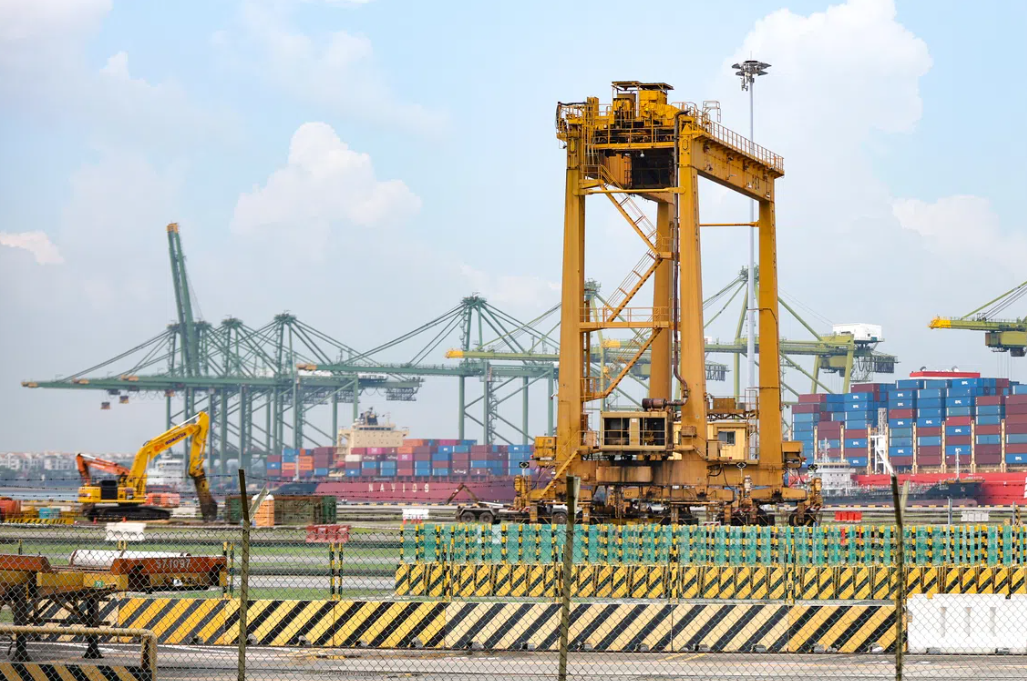
The Trump administration has identified Singapore alongside 39 other countries as vulnerable nodes in what it calls a covert scheme enabling Chinese exporters to bypass American tariffs through strategic rerouting of goods. The White House report, released in August and titled "The Great Transshipment Scam", paints a portrait of a sophisticated evasion architecture where products manufactured largely in China undergo minimal processing in intermediate jurisdictions before being relabeled and shipped to the United States under false origins. The timing and scale of this trade realignment suggest a calculated response by Beijing to earlier tariff regimes, though the administration acknowledges that not all trade shifts necessarily represent illegal activity.
The financial stakes disclosed in the White House analysis are substantial. By aggregating estimates from government agencies and independent research firms, officials contend that tariff-evading transshipments may have deprived US customs authorities of between US$40 billion and US$303 billion in legitimate revenue. This wide range reflects inherent measurement challenges in tracking goods through opaque supply chains, yet the lower bound alone exceeds the budgets of many Southeast Asian nations. The scale of suspected evasion underscores why Washington has escalated enforcement mechanisms, particularly following a court decision that had undermined the administration's earlier tariff architecture and necessitated a policy reset.
To combat these tactics, the Trump administration intends to deploy advanced surveillance tools, including an artificial intelligence-powered "Detective Border" system designed to identify suspicious transshipment patterns and flag goods with inconsistent documentation or suspicious origin claims. This technological approach reflects a broader shift toward algorithmic enforcement in global trade, with implications extending beyond bilateral US-China relations. The administration has already signaled its willingness to impose additional 40 per cent tariffs on goods identified as illegally transshipped, creating financial incentives for companies to ensure compliance and transparency throughout their supply chains.
The report's classification system reveals layered vulnerability across the targeted economies. Tier 1 nations—Canada, the European Union, India, Israel, Japan and Taiwan—are characterized as major export platforms where transshipment risks become embedded within legitimate broader trade flows, making them difficult to isolate through enforcement. Tier 2 economies including Brazil, Indonesia, Malaysia, Thailand, Turkey and Vietnam face particular exposure due to their deep economic integration with China, which provides both the proximity and infrastructure necessary for efficient rerouting operations. Singapore's placement in Tier 3, alongside Cambodia, Laos, Myanmar and the Philippines, reflects Washington's assessment that the city-state functions as an opportunistic target despite its sophisticated regulatory environment.
Tier 3 designation carries specific implications for Southeast Asia's smaller economies. The White House characterizes these jurisdictions as possessing "weak-link advantages" that make them attractive to Chinese operators: low-cost labor, free zones, strategic port access, bonded warehousing facilities, specialized assembly capacity and limited customs enforcement resources relative to trade volumes. What distinguishes Tier 3 from more developed economies is not necessarily worse regulation but rather the mismatch between administrative capacity and trade complexity. Singapore's classification, despite its world-class customs infrastructure, suggests that Washington believes even robust systems can be exploited through sophisticated schemes that exploit the inherent opacity of legitimate transshipment activity.
The White House warning carries a geopolitical dimension that extends beyond trade mechanics. As Southeast Asian and other developing economies become increasingly reliant on Chinese inputs, logistics networks and capital investment, the report cautions that Beijing accumulates leverage—both commercial and political—while maintaining indirect access to American markets through tariff circumvention. This dynamic creates a structural dilemma for policymakers in the region: cracking down on Chinese-linked transshipment invites economic retaliation from an increasingly important trading partner, while tolerating evasion risks confrontation with the United States and potential secondary sanctions.
Singapore's response reflects the delicate balance required of major transshipment hubs. Singapore Customs has emphasized that the Republic's regulatory framework aligns with World Customs Organization standards and explicitly prevents goods from being relabeled with Singaporean origin. The agency has underscored that all companies utilizing transshipment services must maintain full compliance with local laws and that Singapore works with international partners to detect and prosecute illicit activity. This defensive posture acknowledges Washington's concerns while asserting that Singapore has not deliberately enabled evasion—a critical distinction for a city-state whose prosperity depends on maintaining trust with multiple major trading partners simultaneously.
The mechanics of transshipment through Singapore illustrate why the activity exists in legal gray zones. Goods legitimately change conveyances in Singapore daily as part of normal global commerce, with products moving from origin to destination through multiple intermediate points. The challenge for customs authorities lies in distinguishing between ordinary reshipping of goods and coordinated schemes designed specifically to conceal origin and evade tariffs. Chinese exporters deploying transshipment for evasion may use the same ports, warehousing facilities and documentation procedures as legitimate traders, making detection fundamentally difficult without sophisticated intelligence regarding supply chain intent.
Indonesia, Malaysia, Thailand and Vietnam—all classified in Tier 2—occupy similarly vulnerable positions within Southeast Asia's trade architecture. Their growth as export platforms reflects genuine investment, manufacturing expansion and regional integration, yet the same characteristics that drive legitimate development also create opportunities for tariff evasion. Unlike Tier 3 economies which the report suggests serve primarily as rerouting hubs, Tier 2 countries operate as substantive manufacturing centers where Chinese inputs enter production processes. The distinction matters for enforcement: determining whether a Vietnamese-assembled product genuinely represents local value-addition or constitutes disguised Chinese manufacturing presents genuine technical and legal challenges.
The underlying data cited by the White House documents a clear pattern: as China's direct share of US imports declined following 2018 tariffs, the combined export share from the 40 identified transshipment countries increased proportionally. This correlation suggests deliberate sourcing reallocation rather than random market shifts. However, the report itself acknowledges that such reallocation may partially reflect legitimate production reorganization—companies moving manufacturing facilities to avoid tariffs, establishing regional distribution networks or adjusting supply chains for commercial reasons unrelated to evasion. This caveat complicates enforcement responses, as distinguishing legal restructuring from illegal concealment requires granular investigation of individual supply chains rather than broad policy interventions.
The July imposition of an additional 12.5 per cent tariff on approximately one-third of Singapore's domestic exports, justified by alleged failures to enforce forced labor prohibitions, demonstrates that Washington's trade enforcement arsenal extends beyond tariff evasion concerns. The multiplicity of trade compliance issues—forced labor, environmental standards, transshipment transparency—creates cumulative pressure on Southeast Asian exporters and intermediaries. Companies must now navigate overlapping American enforcement regimes while managing relationships with Chinese suppliers and customers across the region, a balancing act that tests the operational sophistication of even large multinational corporations.
For Malaysia and other Tier 2 economies, the White House report signals that Washington will increasingly scrutinize value chains and supply chain integrity. Port authorities, customs agencies and trade associations should anticipate enhanced documentation requirements and deeper audits of transshipment-adjacent activities. The deployment of AI-powered detection systems suggests that evasion schemes relying on pattern-based concealment—regular shipments of similar products through identical corridors with consistent documentation anomalies—face elevated detection risk. Companies engaged in legitimate transshipment should ensure meticulous record-keeping and transparent sourcing documentation, as the burden of proving compliance will likely increase as American agencies expand enforcement capacity.
The broader strategic context involves American efforts to enforce a tariff regime that had been undermined by court decisions, necessitating policy recalibration and renewed enforcement focus. Southeast Asia occupies an uncomfortable position as both a crucial alternative sourcing region for American importers and a potential enabler of Chinese tariff evasion. How regional governments respond to American pressure while maintaining relationships with China will shape trade dynamics across Southeast Asia for years to come. Singapore's emphasis on regulatory compliance and international standards alignment reflects a template that other regional economies may adopt, though effectiveness ultimately depends on sufficient administrative resources and political will to enforce standards consistently.

