The United States has moved to tighten its financial pressure on Iran by designating a network of individuals and entities allegedly facilitating illicit transactions through shadowy currency exchanges. The Office of Foreign Assets Control, the Treasury Department's sanctions enforcement arm, announced the designations on Friday following a series of incidents involving Iranian military action against commercial shipping in one of the world's most strategically vital waterways. The latest measures represent Washington's continued effort to isolate Iran's financial system and disrupt the flow of capital to entities connected to the country's security apparatus.
At the centre of the new sanctions is Ali Ansari, an individual whom American officials characterise as closely connected to both Iran's Supreme Leader Mojtaba Khamenei and the Islamic Revolutionary Guard Corps, the country's most powerful military institution. This characterisation underscores the US view that the targeted financial network serves the interests of Iran's highest authorities rather than operating as an independent commercial enterprise. By singling out Ansari for his alleged proximity to these power centres, Washington seeks to demonstrate that disrupting financial flows will inevitably implicate the senior leadership directing Iran's strategic policies.
Three Iranian-based exchange houses have been added to the Specially Designated Nationals List, effectively freezing any American assets they may hold and barring US entities from conducting business with them. The Mohammad Darbani and Partners Exchange, the Mohsen Khandan and Partners Exchange, and the Lavasani and Partners Exchange are all structured as general partnership companies with headquarters in Tehran and Shiraz, Iran's second-largest city. These establishments, while ostensibly ordinary financial intermediaries, are alleged by Washington to form part of a coordinated system designed to circumvent international sanctions through opacity and deliberate obfuscation of beneficial ownership and transaction flows.
Beyond the Iranian entities themselves, sanctions have extended to Smart Global Limited, a holding company incorporated in Saint Kitts and Nevis, a Caribbean island nation known for its lenient corporate registration standards. The designation of this offshore vehicle illustrates how sanctioned actors frequently employ jurisdictional arbitrage, establishing shells in jurisdictions with weak beneficial ownership disclosure requirements. By linking Smart Global Limited to Ansari, US officials are attempting to dismantle the international infrastructure through which Iranian operatives have historically moved capital and obscured its origins from regulatory scrutiny.
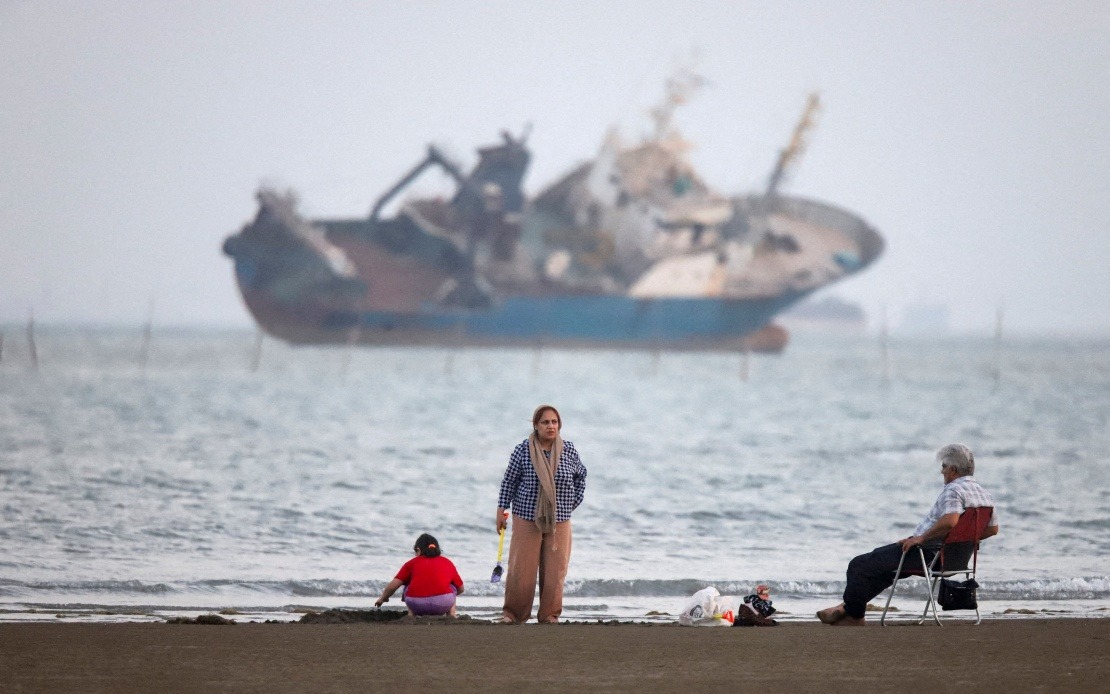
The timing of these sanctions reflects heightened tensions following Iranian military operations targeting commercial shipping in the Strait of Hormuz, a waterway through which roughly one-third of global seaborne oil passes daily. Three commercial vessels were attacked in incidents that underscored the vulnerability of international maritime traffic to Iranian actions and the fragility of regional stability. For Southeast Asian nations, particularly Malaysia, Singapore, and Indonesia, whose economies depend heavily on unobstructed passage through these waters and stable energy supplies, such incidents carry direct implications for trading routes, insurance costs, and energy security.
Tehran has responded with defiance, with Foreign Minister Seyed Abbas Araghchi invoking what he characterises as violations of a prior understanding between the nations. On the social media platform X, Araghchi accused the Treasury Secretary of breaching paragraph 9 of what appears to be a memorandum of understanding, suggesting that US actions contravene a negotiated commitment. This rhetorical framing allows Iran to position itself as the aggrieved party forced to defend its interests against unilateral American action, a narrative intended to mobilise domestic support and appeal to third parties who might view the sanctions as escalatory and destabilising.
Araghchi's statement emphasising "mutual compliance" implies that Iran views continued restraint as contingent upon reciprocal American forbearance. This formulation suggests that further US sanctions could trigger additional Iranian military responses, creating a potential cycle of escalation unlikely to benefit any party. The broader context involves months of tense exchanges following the previous US administration's withdrawal from the 2015 nuclear agreement and subsequent reimposition of comprehensive sanctions, followed by attempted diplomatic restoration under the current administration. Each round of sanctions and Iranian retaliation incrementally erodes the possibility of negotiated resolution.
For Malaysia and its neighbours in the Association of Southeast Asian Nations, these dynamics create multiple policy challenges. ASEAN nations have long sought to maintain balanced relationships with both the United States and Iran while prioritising unimpeded maritime commerce. The Strait of Hormuz incident and subsequent American response threaten to polarise the region and force countries to choose sides or risk being caught between competing geopolitical pressures. Insurance premiums for vessels transiting the strait have already risen substantially, effectively raising the cost of doing business for companies throughout Southeast Asia dependent on Persian Gulf oil and petrochemical imports.
The financial sanctions apparatus used against Iran demonstrates how the United States leverages its dominance of global banking systems and the dollar-denominated financial infrastructure to project power beyond its borders. By designating exchange houses and holding companies, Washington can disrupt economic activity without direct military action, though this approach creates friction with nations and companies that view such measures as overreach. Many Southeast Asian businesses have complex supply chains and financial relationships that could inadvertently entangle them with sanctioned entities, requiring careful compliance efforts and creating operational costs.
Iranian officials have repeatedly denied that their military operations constitute unprovoked aggression, instead framing them as proportionate responses to what they characterise as American hostility and provocations. This divergence in interpretation between Washington and Tehran regarding who bears responsibility for escalation remains fundamental to their relationship. The absence of communication channels and mutual trust means that each side interprets the other's actions through a lens of assumed malevolence rather than seeking to understand underlying concerns or find common ground.
The broader pattern of tit-for-tat sanctions and incidents suggests that neither economic pressure nor military posturing has successfully compelled either party to alter its behaviour in directions the other desires. Iran continues developing its military capabilities and pursuing regional influence, while the United States maintains sanctions and military presence in the Gulf. This equilibrium, while neither party's preferred outcome, appears stable enough that neither side currently sees the benefits of capitulation as outweighing the costs of continued confrontation.
For Malaysian policymakers and regional leaders, the imperative is clear: protecting maritime trade corridors and energy security requires sustained diplomatic engagement aimed at de-escalation, even as nations maintain their individual relationships with Washington and Tehran. The economic costs of regional instability far exceed any benefits that might accrue from alignment with one side or the other in this larger strategic competition. ASEAN's traditional emphasis on non-interference and respect for sovereignty provides a diplomatic framework through which Southeast Asian nations can maintain their commercial interests without becoming embroiled in conflicts between distant powers.

