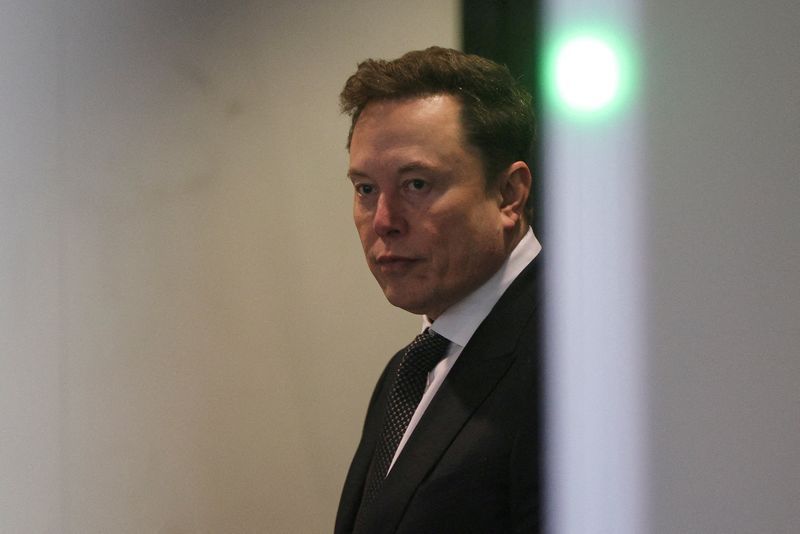
A federal judge in Washington, D.C., has given her approval to a settlement between the U.S. Securities and Exchange Commission and Elon Musk regarding his acquisition of Twitter shares, though her decision came wrapped in pointed criticism of what she characterized as troubling aspects of the accord. U.S. District Judge Sparkle Sooknanan acknowledged granting her assent on Wednesday while simultaneously questioning whether the Trump administration's regulatory agency had held Musk adequately accountable for the alleged violations at the heart of the case.
The crux of the dispute concerns Musk's failure to promptly disclose his early purchases of Twitter stock in March and April 2022. According to the SEC's allegations, Musk delayed the mandatory notification by eleven days—a lapse that proved financially advantageous to him, allowing Musk to accumulate shares at depressed prices before market participants became aware of his intentions. The regulator estimates this delay resulted in a $150 million benefit for Musk by enabling him to complete purchases before the broader investment community recognized his accumulating stake in the company. Under the settlement structure, a trust established in Musk's name will pay $1.5 million to satisfy the SEC's claims. Musk has previously contended the postponement occurred unintentionally, though his assertion has done little to quell broader scrutiny of the regulatory process.
Judge Sooknanan's written decision reveals deep reservations about the settlement's appropriateness and whether it sets a problematic precedent for how federal regulators handle enforcement actions against wealthy and influential figures. She articulated concern about the SEC's decision to abandon its customary demand for disgorgement—the requirement that violators forfeit ill-gotten gains—and instead accept a relatively modest financial penalty. The judge's language suggested skepticism about the agency's justification that it had historically refrained from seeking disgorgement in comparable cases, implying the explanation might mask a more troubling capitulation to pressure.
A particularly striking element of Sooknanan's critique focused on the SEC's choice to settle directly with the trust rather than with Musk himself, a technical arrangement that has allowed Musk to publicly claim he was exonerated of wrongdoing. This distinction carries meaningful implications for how the resolution is perceived and the signals it sends about regulatory seriousness. The judge pointedly questioned whether this structural choice was intentional or merely inadvertent, noting the departure from standard enforcement practice raised red flags about the settlement's legitimacy.
The timing of the settlement has also drawn judicial skepticism. The accord was announced in May following the March departure of Margaret Ryan, who had served as the SEC's enforcement chief for only six months before her exit. Ryan's brief tenure was marked by internal friction, with the former enforcement chief clashing with senior agency leadership over enforcement priorities and direction. The coincidence of Ryan's departure and the subsequent settlement announcement led Sooknanan to wonder aloud whether the resolution reflected genuine regulatory consensus or represented a weakening of enforcement resolve once a more aggressive leader had departed.
Sooknanan expressed particular concern that the SEC may have afforded Musk treatment unavailable to other alleged securities violators, suggesting the settlement might constitute a singular accommodation designed specifically for him rather than reflecting consistent regulatory practice. She noted that during an earlier court hearing in May, SEC lawyers appeared visibly surprised when Musk's legal team disclosed that settlement discussions had already been underway—a revelation that raised questions about whether the agency's litigation team had been kept informed of, let alone consulted about, the negotiation process.
Despite these reservations, the judge acknowledged the limited scope of judicial authority when reviewing settlement agreements approved by both parties. Sooknanan articulated the delicate balance facing the courts: while judges cannot simply rubber-stamp consent decrees without scrutiny, neither can they function as ombudsmen second-guessing every regulatory decision. She suggested that questions about whether the Trump administration's SEC had adequately held Musk accountable ultimately belong to the American electorate rather than the judiciary, a framing that somewhat deflected broader accountability questions while simultaneously acknowledging the political dimensions of the dispute.
The settlement does impose an injunction that constrains Musk's activities when acting through the trust structure, which the SEC argued represents a meaningful constraint given that this investment vehicle apparently manages much of his substantial wealth. The agency also characterized the $1.5 million penalty as the largest of its category, an assertion suggesting the settlement represented genuine enforcement activity rather than a mere token gesture. However, these arguments appeared to carry limited weight with the presiding judge.
Musk's financial empire remains vast and multifaceted. Having purchased Twitter in October 2022 for $44 billion, he subsequently rebranded the social media platform as X and integrated it into his broader business holdings. The platform now operates within his organizational ecosystem that includes SpaceX, his rocket and satellite venture, alongside Tesla, the electric vehicle manufacturer. According to Forbes magazine's current assessment, Musk's net worth stands at $927.2 billion, making him the world's wealthiest individual by a considerable margin.
For Malaysian and Southeast Asian observers, this settlement raises important questions about the nature of regulatory enforcement in major developed economies and how wealthy global figures navigate legal and compliance challenges. The case illustrates tensions between formal regulatory authority and the practical limitations courts face in scrutinizing politically sensitive settlements, particularly when they involve individuals with substantial influence over major platforms and significant wealth. The settlement's approval despite the judge's evident misgivings suggests that even when judicial skepticism emerges, the combination of executive branch prerogatives and consent-based dispute resolution can produce outcomes that satisfy formal legal requirements while leaving substantive fairness questions unresolved—a dynamic with potential implications for how multinational corporations and billionaire-controlled entities operate across different jurisdictions.
Neither the SEC nor Musk's legal representatives provided immediate comment on the judge's decision, leaving Sooknanan's cautionary language as the most substantive public assessment of the settlement's propriety. The decision stands as an unusual instance of formal approval coupled with serious reservations, suggesting that questions about the accord's fairness and implications for regulatory consistency will likely persist beyond the courtroom.

