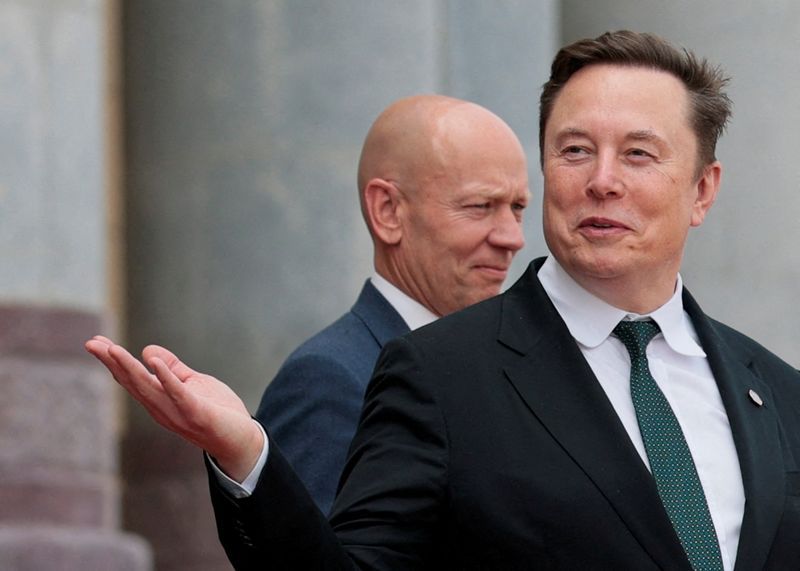
A federal judge in San Francisco has firmly rejected Elon Musk's efforts to overturn a jury verdict that found the billionaire entrepreneur liable for defrauding Twitter investors during his contentious acquisition of the social media platform. U.S. District Judge Charles Breyer's decision, handed down on Monday, represents a significant setback for Musk's legal team, which had sought to have the March jury verdict dismissed entirely and to decertify the class of investors bringing the case. The ruling underscores the challenges facing wealthy defendants attempting to reverse jury determinations in high-stakes securities fraud cases, particularly when substantial damages are at stake.
The case centres on Musk's conduct in 2022 as he navigated the $44 billion takeover of Twitter, a transaction that proved more contentious than initially anticipated. Following months of public statements and legal manoeuvring, Musk was found liable by jurors in March for attempting to manipulate Twitter's stock price downward, ostensibly to either renegotiate the purchase terms or extricate himself from the deal entirely. The strategy reportedly involved a series of public statements questioning the prevalence of automated accounts, or bots, on the platform—claims that allegedly lacked factual foundation and served to undermine investor confidence in the company's value.
Judge Breyer's decision on Monday presented a nuanced outcome that simultaneously vindicated certain aspects of Musk's position while affirming the core jury verdict. The judge determined that while Musk bore liability for tweets posted on May 13 and May 17, 2022, his responsibility did not extend uniformly across both statements. Specifically, Breyer found "substantial evidence of falsity" in the May 13 tweet, which coincided with a notable decline in Twitter's stock price, establishing a clear causal link between Musk's statement and market impact. However, the May 17 tweet received a different assessment, as the judge noted an absence of measurable market reaction following that particular statement, thus removing Musk from liability for that specific claim.
This measured approach by the judge reflects the intricate nature of securities fraud litigation, where courts must weigh not only the truthfulness of public statements but also their demonstrable effect on market behaviour. The distinction Judge Breyer drew between the two tweets highlights how investor reliance and market impact form essential components of securities fraud cases. A statement may be false, but without corresponding market movement or investor harm, establishing liability becomes legally more complex. This principle has profound implications for public figures and corporate executives, as it suggests that not every misleading statement carries the same legal consequences in securities litigation.
Musk's legal team faced additional setbacks beyond the rejection of the motion to dismiss. Judge Breyer also denied Musk's motion to decertify the investor class, meaning the case will proceed on behalf of all investors who suffered losses during the period when Twitter's stock price declined following Musk's public statements. Simultaneously, the court granted the investors' motion for prejudgment interest, a decision that will substantially increase the ultimate financial exposure Musk faces. Prejudgment interest accumulates from the date of the original harm, compounding the base damages award over time, which in this instance spans from 2022 to the present day.
Plaintiffs' counsel had previously estimated that total damages could reach approximately $2.5 billion, a figure that likely represented the award plus accrued interest at the time of that assessment. The precise final amount will depend on various calculations and the specific interest rates applied, but the magnitude underscores the financial stakes of securities fraud liability in major corporate transactions. For context, such damages dwarf the legal costs typically associated with defending against these claims, making settlement negotiations a rational consideration for defendants in comparable situations. The award size also illustrates how a single strategic miscalculation during high-pressure negotiations can generate liability far exceeding the tactical advantage initially sought.
The Twitter acquisition itself has become emblematic of Musk's aggressive negotiating style and his willingness to employ public statements as leverage in corporate dealings. His later management of the platform, which included significant workforce reductions and controversial policy changes, has drawn scrutiny from regulators, advertisers, and users across multiple jurisdictions. Yet this civil case focuses narrowly on conduct preceding the acquisition's completion, not subsequent operational decisions. The verdict therefore isolates the period when Musk's statements about bots and platform quality served to undermine investor confidence ahead of a transaction he was ostensibly committed to completing.
For Malaysian and broader Southeast Asian business leaders and investors, the case presents instructive lessons about the legal ramifications of public communication during corporate negotiations. Many regional entrepreneurs operate in environments with less mature securities law frameworks than the United States, yet increasingly face cross-border litigation and regulatory scrutiny as their companies expand internationally or list on multiple exchanges. The verdict demonstrates how courts in major financial jurisdictions regard misleading statements about asset quality and market conditions, particularly when such statements serve the speaker's financial interests during critical commercial negotiations.
The decision also carries implications for how corporate executives manage disclosure obligations and public communications in the digital age, where statements posted on social media platforms reach global audiences instantaneously and create permanent records accessible to regulators and plaintiffs' counsel. Musk's experience illustrates the risks of employing inflammatory or misleading rhetoric as a negotiating tactic, as such statements generate contemporaneous evidence that courts can later evaluate for truthfulness and market impact. The litigation also underscores how investor protections, when properly enforced through the civil courts, can impose substantial costs on executives who exploit information asymmetries or misrepresent asset conditions.
Musk has not publicly commented on Judge Breyer's decision, and his legal representatives did not provide immediate statements regarding the judge's ruling. The lack of immediate response suggests the legal team may be evaluating options for further appeals or settlement discussions, as the case now faces potential appellate review. Future developments in this litigation will likely focus on the precise calculation of damages and interest owed, as well as potential appeal filings challenging either the underlying verdict or the judge's denial of motions to overturn it. The case remains significant for corporate law precedent and for demonstrating how US securities courts enforce investor protections even against defendants of substantial wealth and influence.

