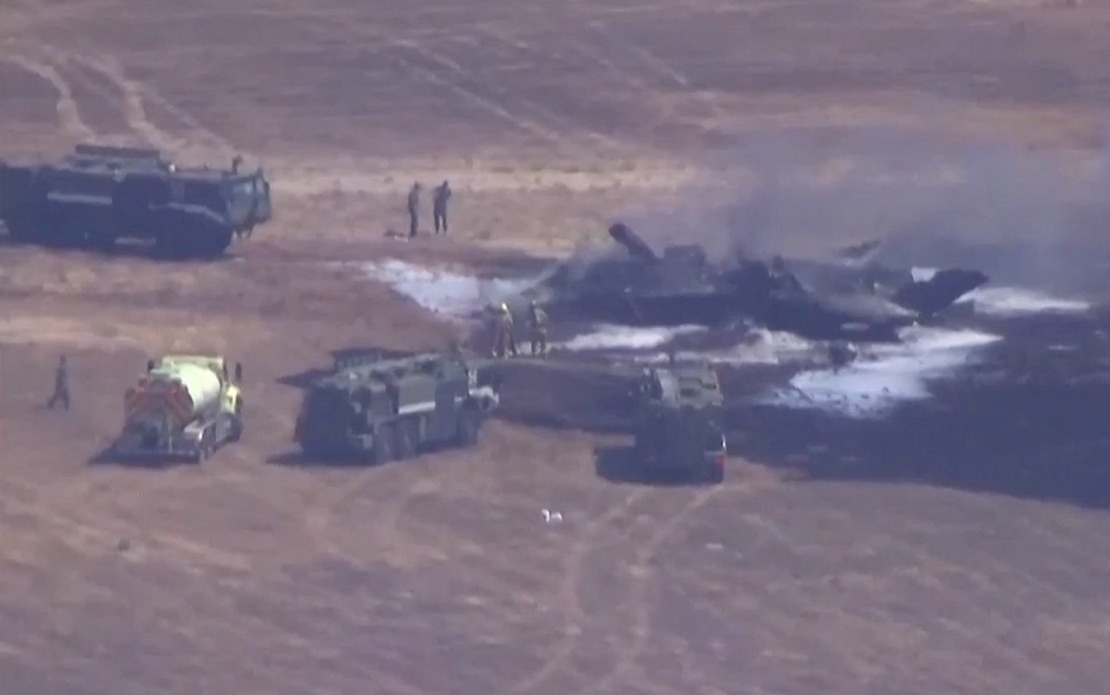
A US Marine Corps F-35B fighter jet experienced a serious mishap near Marine Corps Air Station Miramar in San Diego, California, on Friday morning, with military officials moving quickly to confirm the incident and account for the aircrew involved. Emergency personnel responded to the scene after the aircraft went down in the vicinity of the major naval air facility at approximately 10 am local time, according to statements from base authorities and reports carried by American media outlets.
The pilot successfully ejected from the stricken aircraft and was located by recovery teams shortly after the emergency, avoiding what could have been a catastrophic loss of life. Military officials confirmed that the aircrew member was transported to a medical facility for evaluation, though the statement indicated the pilot was in stable condition following the ejection sequence. The swift recovery operation reflected the preparedness protocols maintained at one of the United States military's most strategically important air installations on the Pacific coast.
Marine Corps officials released a brief statement acknowledging the crash without immediately providing extensive operational details. "We can confirm a mishap involving a Marine Corps F-35B in the vicinity of MCAS Miramar. The pilot ejected, was recovered, and is enroute to a medical facility," a base spokesperson stated in the official notification. The measured response suggested that while the incident was serious, no secondary emergencies or complications had emerged in the immediate aftermath.
The F-35B variant represents the Marine Corps' primary investment in fifth-generation fighter aircraft capability, designed specifically for short takeoff and vertical landing operations. This configuration allows the aircraft to operate from forward bases and amphibious assault ships, providing tactical flexibility that distinguishes the Marine variant from the Air Force's conventional F-35A model. The loss of such an advanced platform, even temporarily, underscores the operational significance of the incident and the stakes involved in maintaining readiness across the service's aviation fleet.
The aircraft that crashed belonged to the 3rd Marine Air Wing's Marine Air Group 11, one of the Pacific Fleet's primary combat aviation organizations. This unit has historically maintained continuous deployment rotations and forward-positioning responsibilities, making operational continuity a pressing concern. The loss of a single aircraft from such an active unit can have ripple effects on training schedules, deployment timelines, and the broader air power balance the Marines maintain across their area of operations.
MCAS Miramar functions as a major hub for United States military aviation, hosting approximately 15,000 service members drawn from all branches of the armed forces. The installation near San Diego represents a critical node in the defence infrastructure of Southern California and serves as a home base for some of the nation's most advanced aviation platforms. The concentration of personnel and equipment at the facility meant that the crash occurred within a densely populated military complex, yet proper emergency protocols appear to have contained the incident effectively.
The precise cause of the mishap has not been determined, with military investigators initiating a formal investigation into the circumstances surrounding the crash. Such inquiries typically examine multiple factors including mechanical performance, pilot actions, weather conditions, maintenance records, and any potential software or systems anomalies. Given the advanced nature of the F-35B platform, which incorporates sophisticated digital systems and avionics, technical investigators would be expected to conduct a thorough technical examination of the recovered wreckage.
The incident carries broader implications for the F-35 programme, which remains one of the Pentagon's most expensive and closely scrutinized defence acquisition efforts. While individual aircraft losses, though regrettable, are not uncommon in military aviation operations, each incident generates renewed interest in the programme's overall safety record and operational readiness. The transparency demonstrated by Marine Corps officials in this instance reflects the military's recognition that such events attract public and congressional attention.
For Southeast Asian defence observers, incidents involving US military platforms stationed along the Pacific coast merit attention as indicators of operational readiness and strategic posture in the region. The Pacific Fleet's aviation capabilities directly influence the security dynamics across the Indo-Pacific, making the operational status of units like those based at MCAS Miramar relevant to regional strategic calculations and alliance relationships throughout Asia.
The swift recovery of the pilot and the professional response from military personnel demonstrated established safety protocols and emergency procedures in action. These measures reflect decades of experience in managing aviation incidents at large military installations and underscore the training investments that military personnel receive. As the formal investigation proceeds, military officials will work to determine whether systemic factors contributed to the mishap or whether the incident resulted from isolated circumstances.

