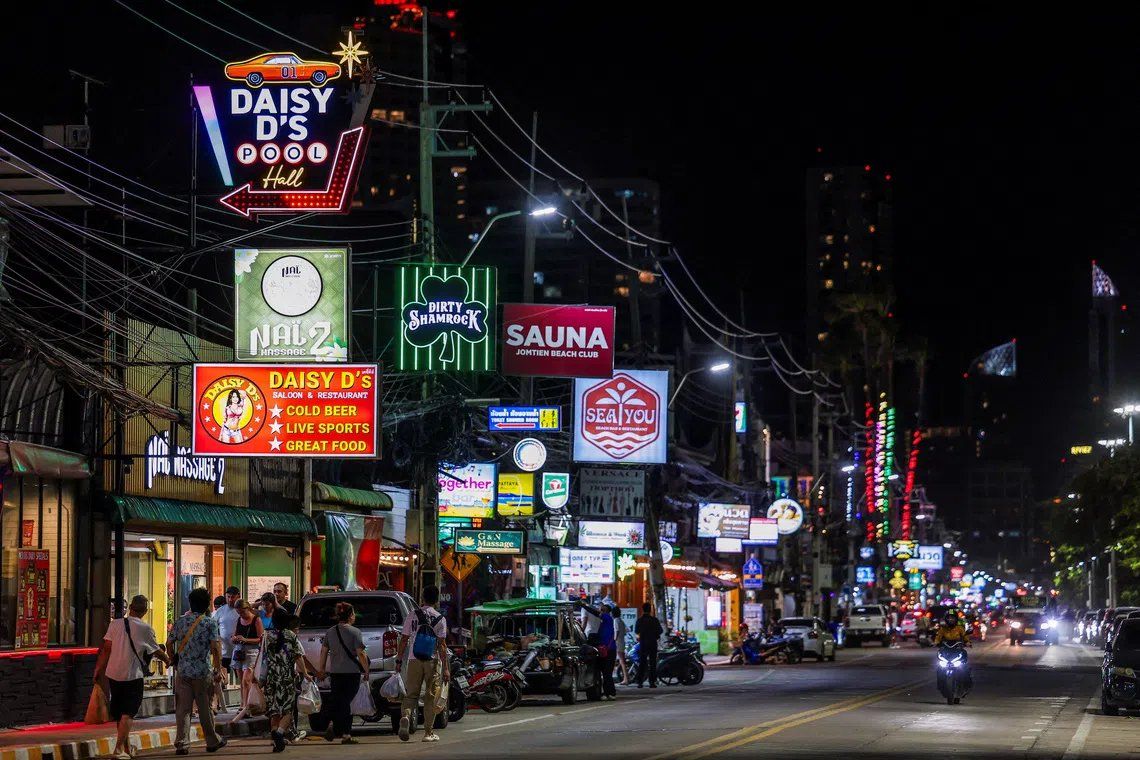
The USS Abraham Lincoln, returning from an extended deployment across the Middle East, is set to arrive in Pattaya this week, bringing with it a potential economic windfall for the Thai resort city and its beleaguered hospitality sector. The aircraft carrier and its two escort vessels will dock at Laem Chabang, near Pattaya, allowing close to 5,000 sailors and Marines to step ashore for rest after spending more than 200 consecutive days at sea—a modern record for sustained deployment that has drawn concern from American lawmakers. The timing of the visit coincides with what local business leaders describe as one of the most challenging periods for Pattaya's tourism economy in recent memory, making the arrival of thousands of uniformed personnel a potential lifeline for merchants and service providers struggling to recover from prolonged travel disruptions.
The strategic value of this port call extends beyond immediate commerce. The United States has long prioritized deepening military ties with Thailand through naval visits and joint exercises, reinforcing regional stability partnerships in Southeast Asia. These routine deployments serve dual purposes: they provide crew members with essential downtime and psychological respite from months of operational demands, while simultaneously projecting American naval presence and reaffirming commitment to regional security architecture. For Thailand, such visits strengthen defence relationships and demonstrate the country's importance within the broader Indo-Pacific strategic calculus, particularly as geopolitical tensions persist across multiple fronts.
Local authorities have mobilized significant resources ahead of the sailors' arrival, recognizing both the economic opportunity and the potential for social complications. Police units have expanded patrols around Pattaya's beachfront entertainment zones and announced intensified monitoring of nightlife districts where illicit activities have historically flourished. Recent enforcement operations resulted in dozens of detentions on suspected prostitution charges, signalling official commitment to containing the most visible manifestations of the sex trade. However, Pattaya Police Chief Anek Srathongyoo acknowledged during a press briefing that enforcement efforts face inherent limitations, as sex workers can operate clandestinely without police detection, making total suppression impossible.
Prostitution exists in an ambiguous legal space throughout Thailand. Officially prohibited under Thai law, the sex industry nevertheless operates with remarkable openness across major tourist destinations including Bangkok, Chiang Mai, and Pattaya, where commercial sexual services constitute a substantial portion of the entertainment economy. This disconnect between law and practice reflects complex socioeconomic realities, including poverty in rural regions that drives migration to urban centres, weak enforcement capacity, and economic incentives that tolerate rather than eliminate the trade. International observers, including the United States Federal Bureau of Investigation, have characterized Pattaya as among the world's most significant sex tourism destinations, a distinction that carries profound implications for human rights and exploitation concerns.
Economic projections for the carrier visit suggest meaningful short-term benefits. According to Pattaya Mayor Poramase Ngampiches, individual sailors could spend between 1,000 and 3,000 baht daily ($30 to $91 USD), depending on length of stay and accommodation choices. Across nearly 5,000 personnel with staggered shore rotations, this spending could inject significant liquidity into local hospitality, restaurants, retail, and entertainment venues. Thanet Supornsahasrungsi, president of the Association of Chonburi Tourism Federation, emphasized that the precise economic impact will depend partly on whether personnel remain concentrated in Pattaya or disperse to Bangkok and other destinations. Lisa Hamilton, president of the Pattaya Nightlife Business Association, expressed palpable relief at the prospect, describing the past year as economically devastating for the entertainment sector and calling the naval visit a source of renewed hope for recovery.
Yet this economic optimism masks serious humanitarian concerns. Dr. Pipatpong Fakfare, an associate professor at Bangkok University's School of Humanities and Tourism Management, warned that concentrating large numbers of service personnel in a destination notorious for sexual exploitation creates elevated risks of human trafficking, forced prostitution, and disease transmission. The influx of 5,000 sailors with disposable income and limited time ashore historically correlates with intensified demand for commercial sexual services, potentially pushing vulnerable individuals—many from impoverished regions and sometimes trafficked against their will—into dangerous situations. The public health dimension extends beyond conventional sexually transmitted infections to encompass psychological trauma, substance abuse, and violence associated with exploitative transactions.
The timing of this deployment raises additional concerns given documented mental health challenges aboard the USS Abraham Lincoln itself. Multiple military-focused publications reported in recent weeks that crew members have experienced suicide attempts and declining morale, consequences of the record-breaking 200-plus-day deployment extended specifically to support American military operations in the Middle East. The carrier was redirected from its original schedule to reinforce US-Israeli military capabilities amid regional tensions with Iran, stretching crew endurance to unprecedented levels. Some sailors and Marines arriving in Pattaya will already be psychologically vulnerable, experiencing depression, stress, or trauma-related conditions that might increase susceptibility to high-risk behaviour or exploitation by unscrupulous operators in the entertainment industry.
Pattaya's historical relationship with American military presence stretches back decades to the Vietnam War era, when the coastal fishing village was systematically developed as a rest-and-recreation destination for combat troops. That wartime origin shaped the city's character and economy in ways that persist today, establishing path dependencies in tourism infrastructure and business models. The transformation from small fishing community to major international destination created opportunities for some residents while establishing exploitative dynamics that continue defining the city's reputation. Contemporary visits by naval personnel represent both continuities and changes in this long relationship, maintaining military ties while highlighting the persistent tension between economic development and social harm.
Pattaya's hospitality sector currently operates approximately 300,000 rooms, positioning the city as Thailand's largest beach resort destination. Yet despite this enormous capacity, occupancy rates have languished amid pandemic aftereffects, geopolitical uncertainty, and shifting travel patterns. The arrival of 5,000 personnel with guaranteed spending capacity provides temporary stimulus, but business leaders recognize this relief will be fleeting unless broader tourism patterns recover. The city faces structural challenges in diversifying its economic base beyond entertainment and service sectors, particularly those segments historically dependent on exploitative practices. Building sustainable tourism that generates employment and income without perpetuating human trafficking and sexual exploitation requires coordinated policy reform, enforcement capacity enhancement, and economic restructuring.
The visit also underscores broader strategic realities in Southeast Asian geopolitics. Thailand remains a crucial American ally, hosting significant US military presence through established bases, training partnerships, and regular naval visits. These deployments reinforce Washington's commitment to regional stability and strengthen bilateral relationships amid competition with other major powers. However, the routine nature of such visits can obscure underlying tensions and complexities, including questions about the long-term sustainability of American military commitments, environmental impacts of naval operations, and social consequences of military tourism in host communities.
Authorities will likely experience the next several days as a delicate balancing act. Enhanced police presence and enforcement actions may successfully minimize the most visible exploitative activities while the sailors are ashore, though this represents containment rather than elimination. Business operators will pursue commercial opportunities within ethical boundaries, though the nature of Pattaya's economy makes such distinctions difficult to maintain. Crew members will seek appropriate recreation and cultural engagement, though some will inevitably gravitate toward venues and activities causing social harm. The challenge facing Thai officials extends beyond immediate law enforcement to encompassing longer-term questions about economic development models, labour standards, human rights protections, and community welfare in tourism-dependent cities.
The USS Abraham Lincoln's visit crystallizes enduring tensions between economic necessity and human dignity in developing regions hosting significant international military or commercial traffic. While the carrier's arrival offers genuine economic benefits to struggling communities, it simultaneously concentrates risks of exploitation and harm. Malaysian and broader Southeast Asian policymakers observing this situation might reflect on how their own nations balance military partnerships and tourism development against labour standards and human rights protections, recognizing that economic growth achieved through exploitation represents a false prosperity that ultimately undermines regional stability and social cohesion.

