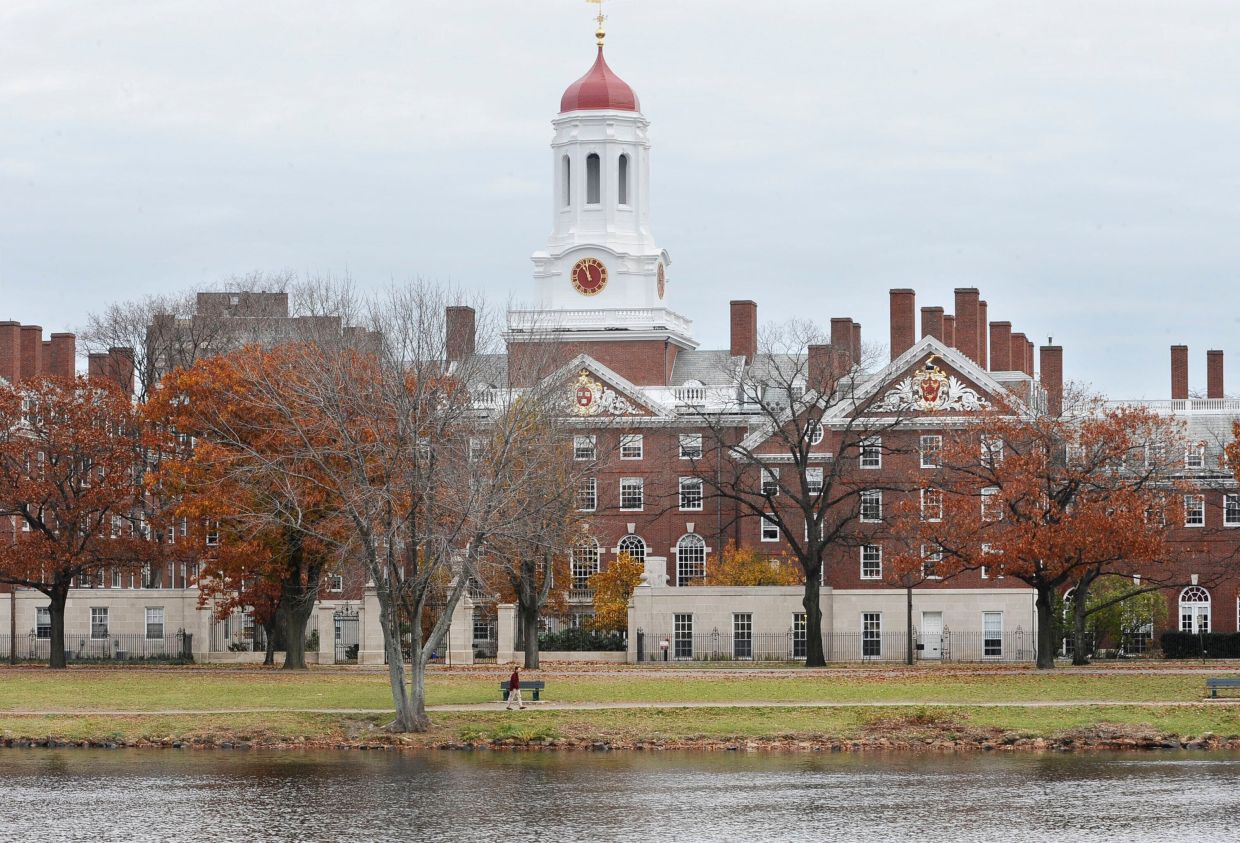
The United States Department of Defence has directed thirty prominent American universities to undertake comprehensive reviews of their academic and research collaborations with China, marking an escalation in Washington's efforts to tighten oversight of scientific partnerships that officials believe pose national security risks. Harvard University, the Massachusetts Institute of Technology, and Johns Hopkins University are among the institutions that received formal notifications, according to American government sources. The directive encompasses elite research centers across the country, including Cornell University, Duke University, Georgetown University, New York University, and multiple University of California campuses located in Berkeley, Los Angeles, and San Diego, reflecting the breadth of American higher education now under scrutiny.
The Pentagon has established August 31, 2024, as the deadline for participating universities to complete their audits. During this compressed timeframe, institutions must evaluate all academic, financial, and research relationships with what the government classifies as foreign "entities of concern," determine whether any sensitive or export-controlled research information may have been compromised, and implement corrective strategies. These mitigation measures could extend to terminating existing partnerships with Chinese institutions or researchers. The prospect of losing federal research funding eligibility looms as a significant penalty for non-compliance, creating considerable pressure on universities that depend heavily on government grants and contracts to support their research enterprises.
The Pentagon's initiative specifically targets relationships connected to institutions identified under Section 1286 of the 2019 National Defence Authorisation Act, alongside organisations the department characterises as "rebranded Confucius Institutes." An updated Section 1286 list released last month catalogued 130 academic and research institutions deemed potential research-security threats. However, Pentagon officials have not publicly disclosed whether the selection of these thirty universities resulted from evidence of actual technology transfers and violations, or simply reflects the existence of institutional connections to entities on the government's list. This ambiguity has generated considerable debate about the appropriateness of the audit demands.
University leaders and higher education advocates have responded with sharp criticism of both the audit order and the underlying characterisations. Sarah Spreitzer, vice-president of the American Council on Education, which represents college and university presidents nationwide, pushed back against what she characterised as an unfair implication that academic institutions have breached their national security responsibilities. Spreitzer pointed out that universities themselves had collaborated with federal officials in developing the initial version of the Pentagon's foreign-institutions list and have consistently worked with government agencies when legitimate national security concerns emerged. She noted that most council members had subsequently distanced themselves from partnerships with listed institutions, suggesting that universities have been proactive in addressing legitimate security issues without requiring coercive audit mandates.
A particularly contentious aspect of the directive concerns retroactive accountability. Spreitzer emphasised that universities may now face consequences for research collaborations established before the government restrictions took effect, creating potential liability for decisions made in good faith during periods when such partnerships were considered routine and beneficial. This retroactive application of standards raises fundamental questions about due process and fairness in federal regulation of academic institutions, issues that could resonate strongly with university governing boards and legal counsel nationwide.
Congressional Republicans have provided intellectual support for the Pentagon's position. Representative John Moolenaar's House Select Committee on the Chinese Communist Party has noted that many of the thirty universities subjected to audits appeared previously in its own research-security investigations. These earlier inquiries had identified concerns regarding American universities' relationships with Chinese military-linked research institutions, participation in programmes supported by the China Scholarship Council, and collaboration on federally funded research involving Chinese scientists. However, the committee has not publicly identified which specific universities appeared in its previous investigations or clarified how many institutions it means when it references "many" past cases. Last week, Moolenaar's committee, working with the House Education and Workforce Committee, released a report specifically criticising Harvard University for allegedly inadequate oversight of collaborations with institutions connected to China's military and defence-industrial sectors, alleging that Harvard-affiliated researchers had co-authored over 140 academic papers with scientists linked to Chinese military institutions.
China's official response has emphasised the damage to international scientific cooperation. A spokesperson for the Chinese embassy in Washington criticised what Beijing characterises as an unjustified expansion of national security concepts and the politicisation of routine scientific and educational exchanges. The Chinese government's statement stressed that genuine scientific innovation and academic progress require open and collaborative international research environments, and suggested that restrictions on normal academic partnerships ultimately harm all participants, including American researchers and institutions themselves. This framing positions Beijing as defending principles of academic freedom while portraying American actions as ideologically driven rather than security-focused.
The Pentagon's handling of the audit announcement has itself drawn scrutiny. The department initially withheld the identities of the thirty universities while providing only a two-week notice period for compliance, raising questions about whether this opacity and compressed timeline reflected genuine national security urgency or represented a strategic choice to maximise pressure on institutions. The lack of public explanation for this approach has contributed to broader skepticism about whether the audit process represents a proportionate response to documented security breaches or a more expansive assertion of federal control over academic research conducted at private universities.
The thirty universities receiving audit orders represent a significant cross-section of America's research establishment, ranging from the Ivy League and other elite institutions to state university systems and technical colleges. Beyond Harvard, MIT, and Johns Hopkins, the full list includes Georgetown, the University of Texas at Austin, Emory University, Oklahoma State University, Penn State University, the Universities of Cincinnati, Minnesota, North Carolina at Chapel Hill, and South Carolina, the University of Southern California, Virginia Tech, Worcester Polytechnic Institute, Bryant University, Drake University, Illinois Institute of Technology, Northeastern State University in Oklahoma, Portland State University, Southern Illinois University Carbondale, Stony Brook University, the University of Delaware, and the University of Illinois Urbana-Champaign, along with the three specified University of California campuses.
For Malaysian and Southeast Asian observers, this American initiative carries significant implications. The United States is establishing a template for government intervention in academic research partnerships that could influence policy discussions throughout the region regarding technology security, foreign research collaboration protocols, and the balance between scientific openness and national security protection. The precedent set by these audits may also affect how regional universities calibrate their own relationships with both Chinese and American research institutions, as policymakers in Southeast Asia navigate their own positions within the broader U.S.-China technological and geopolitical competition. The expansion of security requirements in American academia could also influence where international research talent chooses to conduct scientific work and collaborate across borders.
The tension between national security imperatives and academic freedom remains unresolved in this dispute. While legitimate concerns exist regarding the protection of sensitive research and the prevention of technology transfer that could enhance military capabilities, the implementation of broad audit mandates without clear evidentiary standards or transparent selection criteria raises important questions about proportionality and fairness. Universities operate as engines of international collaboration and knowledge exchange, roles that have historically generated substantial benefits across borders. Finding appropriate mechanisms to protect genuine security interests while preserving the collaborative research environments that universities require represents an ongoing challenge for American policymakers.

