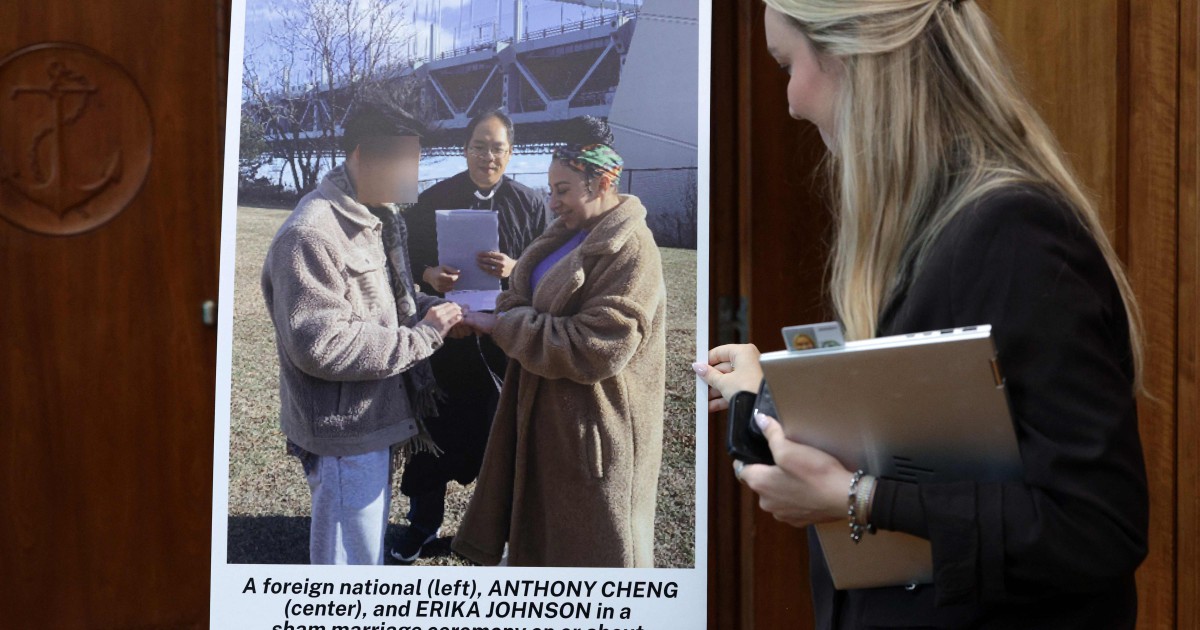
Authorities in Washington have filed criminal charges against 11 people implicated in an elaborate marriage-fraud operation that operated over ten years and involved approximately 1,000 counterfeit unions, primarily facilitating immigration for Chinese nationals seeking permanent residency in the United States. The indictment, detailed in court filings released Wednesday, marks a significant enforcement action against a network that systematised the arrangement of fraudulent marital partnerships to circumvent standard immigration procedures.
The scheme represents a particularly structured approach to immigration fraud, wherein operators essentially industrialised the matchmaking process by pairing foreign nationals—predominantly from China—with American citizens or permanent residents willing to participate in fake marriages of convenience. By obtaining spousal status through these artificial unions, the Chinese participants could subsequently apply for legal permanent residency, a pathway that would otherwise require meeting stringent immigration criteria or enduring lengthy waiting periods through conventional family reunification channels.
The operation's longevity and scale underscore how determined actors can exploit gaps in immigration enforcement over extended periods. Court documents reveal the network maintained operational continuity across a full decade, suggesting sophisticated management practices and established financial arrangements that kept participants engaged despite the legal risks involved. The sheer volume—approximately 1,000 fraudulent marriages—indicates this was no small-time operation but rather a service-provision enterprise with substantial clientele and revenue generation.
The timing of the prosecution announcement carries particular significance within the current American political context. The Trump administration has signalled heightened immigration enforcement priorities, recently issuing executive orders targeting what officials frame as birth tourism and other forms of immigration circumvention. This case aligns with the administration's narrative regarding inadequacies in immigration controls and serves as a tangible demonstration of enforcement capability against schemes designed to exploit American immigration law.
For Malaysia and the broader Southeast Asian region, such cases merit careful attention. The prominence of Chinese nationals in this network reflects broader patterns of migration aspiration within Asia, where many citizens seek pathways to Western residency and citizenship. Similar arrangements likely exist across multiple jurisdictions, and the willingness of some American citizens to participate in fraudulent schemes for financial compensation represents a persistent vulnerability in enforcement systems worldwide.
The consequences for participants extend beyond immediate criminal liability. Those convicted face potential imprisonment and financial penalties, while foreign nationals involved will almost certainly face immigration consequences including deportation and permanent bars to future legal entry. The American citizens who facilitated these arrangements by providing their citizenship status or residency to the scheme also face federal fraud charges, signalling that authorities view assistance providers as equally culpable rather than treating them as passive participants.
This prosecution reveals the infrastructure supporting such operations. Typically, marriage-fraud schemes require coordinators who identify willing American participants, arrange the pairings, manage documentation, coordinate with immigration lawyers (some of whom may knowingly participate), collect fees from the foreign nationals, and distribute payments to the American participants. The scale here suggests a fairly sophisticated operation with multiple specialised roles and possibly cells operating across different geographic regions.
From an enforcement perspective, the case demonstrates that sustained investigative work can uncover and prosecute even large-scale, long-running schemes. Authorities likely gathered evidence through immigration record analysis, interviewing participants, tracing financial flows, and coordination between federal immigration and law enforcement agencies. The fact that charges reached 11 individuals suggests prosecutors built a comprehensive case that enabled them to identify key organisers and facilitators rather than merely charging peripheral participants.
The broader immigration policy debate in America often oversimplifies the mechanisms through which people circumvent legal processes. Cases like this illustrate that fraud involves willing participation from multiple sides—not merely foreign nationals desperate for entry, but American citizens and sometimes immigration professionals motivated by financial gain. This complexity complicates simple enforcement narratives that emphasise border security as the primary solution.
For regional observers, the incident underscores that wealthy Asian nations continue to face outflow pressure from citizens seeking overseas residency, resettlement, and citizenship. This migration aspiration, combined with the availability of willing partners in destination countries and sometimes complicit professionals, creates persistent vulnerabilities that even rigorous enforcement struggles to completely eliminate. Malaysian readers, particularly those familiar with immigration issues or expatriate communities, will recognise these patterns as reflecting broader regional migration dynamics.
The prosecution also reflects evolving American immigration enforcement priorities. Whereas previous administrations may have concentrated resources on border security and visa overstay tracking, current enforcement explicitly targets fraud within the legal immigration system itself. This shift potentially signals intensified scrutiny of family-based immigration pathways, which constitute the largest category of legal immigration to the United States and represent the entry point for many Asian migrants.
Moving forward, this case may prompt immigration authorities across multiple countries to examine their own vulnerabilities to similar schemes. The ten-year operational window suggests substantial time elapsed before prosecution, indicating that detection mechanisms require improvement. For countries with significant diaspora communities and regular movement to developed nations, strengthening verification procedures for marriage-based immigration claims becomes increasingly important.

