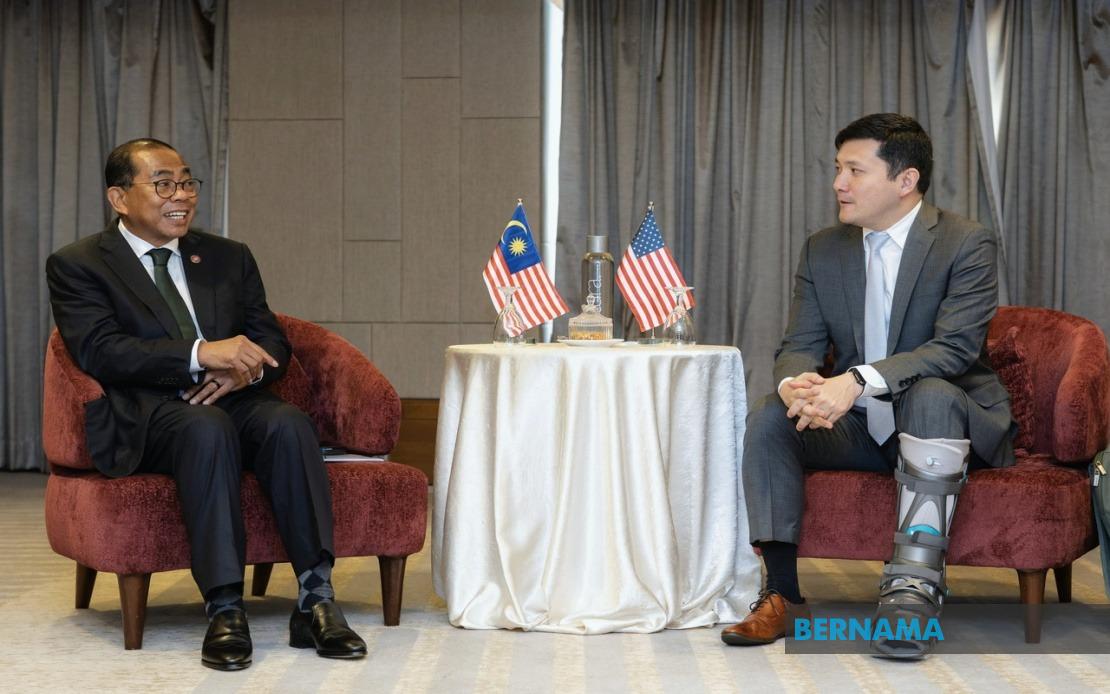
Malaysia's Defence Minister Datuk Seri Mohamed Khaled Nordin has underscored the United States' continued commitment to deepening bilateral defence cooperation, signalling Washington's strategic focus on Southeast Asia at a critical juncture for regional security. The assurance came during a courtesy visit by US Ambassador to ASEAN Kevin Kim on the sidelines of the 37th Annual Military Law and Operations Conference (MILOPS) held in Kuala Lumpur. The timing of this diplomatic engagement reflects broader efforts by both nations to sustain momentum in their military relationship amid evolving geopolitical dynamics across the Indo-Pacific region.
During their discussion, the Defence Minister emphasised that strengthening security ties remains a cornerstone of US foreign policy towards Malaysia and the wider ASEAN community. Rather than delving into specific policy propositions, the meeting focused on consolidating existing defence arrangements and exploring avenues for enhanced collaboration. This pragmatic approach suggests a relationship grounded in steady institutional development rather than reactive crisis management, which typically characterises more volatile partnerships in the region.
The MILOPS conference itself serves as an important platform for regional militaries and defence establishments to examine contemporary security challenges. Bringing together government and military officials from more than 30 countries, the gathering addresses legal and operational dimensions of military cooperation—a particularly relevant focus given the complexity of maritime disputes, terrorism threats, and transnational crime affecting Southeast Asia. Malaysia's role in hosting this annual event underscores its positioning as a neutral arbiter and respected voice within ASEAN's collective security framework.
Beyond the American engagement, Mohamed Khaled's diplomatic calendar reflected the multilayered nature of regional security architecture. His meeting with ASEAN Secretary-General Dr Kao Kim Hourn centred on the institution's foundational principles and defence sector contributions to regional stability. Both interlocutors recognised that as member states confront shared threats—ranging from maritime security challenges to cyber threats—the defence establishments must play an active role in upholding ASEAN Centrality, the consensus-based approach that has kept the bloc united despite divergent strategic interests among its ten members.
The conversations between Malaysia and Singapore's newly appointed Permanent Secretary for the Ministry of Defence Joseph Leong illustrated another layer of regional cooperation. Singapore, as a smaller nation with outsized strategic influence, has consistently championed enhanced defence mechanisms within Southeast Asia. The commitment to strengthen bilateral ties extends beyond traditional two-country frameworks, encompassing both ASEAN-level initiatives and the Five Power Defence Arrangements (FPDA), a legacy framework including Australia, New Zealand, Singapore, and the United Kingdom alongside Malaysia. This multi-tiered engagement structure reflects how contemporary regional security increasingly requires simultaneous action across bilateral, sub-regional, and broader international platforms.
The Five Power Defence Arrangements hold particular significance for Malaysia's defence strategy. Established in 1971 following British withdrawal from the region, FPDA has evolved into a mechanism for conducting joint exercises, intelligence sharing, and coordinated responses to maritime security threats. Malaysia's participation bridges its role within ASEAN—where consensus requires sensitivity to varying perspectives on great power engagement—and its historical partnerships with Western democracies. This balancing act has become increasingly delicate as geopolitical competition intensifies between established and rising powers in the region.
America's emphasis on strengthening ties with Malaysia takes on added significance given Washington's broader Indo-Pacific strategy, which positions Southeast Asian nations as critical partners for maintaining freedom of navigation and rules-based international order. The US maintains considerable strategic interests across the region, including substantial military presence in allied nations and vital sea lanes through which trillions of dollars in global commerce transit annually. Malaysia, with its geographic position astride some of these critical waterways and its respected regional standing, remains strategically valuable to American interests.
For Malaysia specifically, cultivating robust defence relationships with established powers while maintaining its independent foreign policy stance represents a carefully calibrated strategy. The nation must navigate relationships with the United States, China, Japan, India, and Russia—each offering different security perspectives and competing for influence. By participating actively in multilateral defence forums like MILOPS and reinforcing partnerships through mechanisms like FPDA, Malaysia attempts to hedge its security interests without appearing overly aligned with any single power.
The institutional nature of these defence dialogues—rather than headline-grabbing announcements—reflects how regional security cooperation actually functions in Southeast Asia. The focus on legal frameworks, military operations protocols, and coordination mechanisms builds the unglamorous but essential infrastructure that enables quick, effective responses when crises occur. This quiet diplomacy also respects the sensitivities of nations concerned about great power competition in their region.
Looking ahead, the defence sector's role in supporting ASEAN's broader goals faces mounting pressures. Climate change, pandemics, irregular migration, and technological disruption increasingly demand defence establishments to contribute beyond traditional security paradigms. Malaysia's participation in ongoing international defence discussions positions it to shape how regional militaries address these multifaceted challenges while protecting national and collective interests. The convergence of traditional security cooperation with emerging threats suggests that partnerships like those emphasised during MILOPS will remain essential to Southeast Asia's stability.

