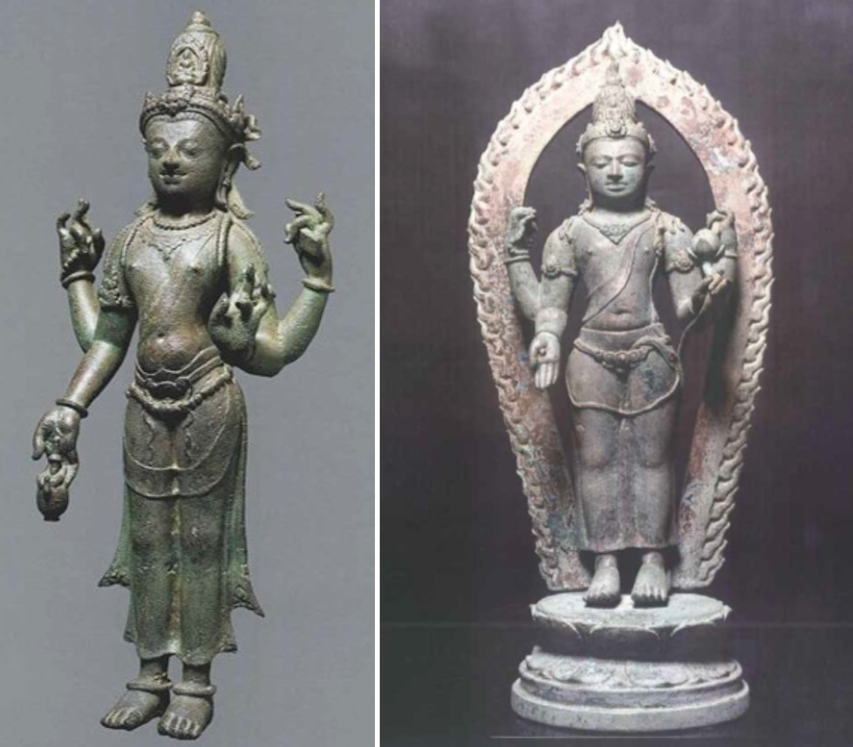
Indonesia has recovered two priceless eighth-century bronze statues depicting the bodhisattva Avalokiteshvara, marking another significant victory in the ongoing battle against international antiquities trafficking. The sculptures, formally returned during a ceremony at the Indonesian Consulate in New York, were seized as part of a sweeping investigation into the criminal network of Douglas Latchford, a British dealer whose career became synonymous with the systematic looting of Southeast Asian cultural heritage.
Latchford's operation represents one of the most extensive illicit antiquities trafficking schemes in modern history. Based primarily in Bangkok, where he obtained Thai citizenship in the 1960s, Latchford spent over four decades methodically acquiring and selling looted artefacts from Cambodia, Indonesia, and across the region. His activities came to light when US prosecutors indicted him in 2019 for orchestrating what they described as a decades-long conspiracy to traffic and sell looted antiquities to wealthy private collectors and major international museums. Latchford consistently denied the allegations, but his death in 2020 prevented any trial or formal conviction.
The two returned bronze sculptures are standing representations of the four-armed Avalokiteshvara, a revered figure in Buddhist tradition revered for embodying compassion and mercy. According to US authorities, these statues were looted from archaeological sites across Indonesia generations ago, then passed through Latchford's hands before entering the US market between 2003 and 2007. The precise sites from which the pieces were excavated illegally remains undetermined, a common challenge in antiquities recovery cases where looting often erases archaeological context and historical information. Latchford deliberately concealed the illicit origins of the objects, falsifying their provenance documentation and withholding critical information from American collectors to legitimise their entry into the international art market.
The breakthrough in recovering these Indonesian pieces came through the cooperation of a US collector who, in 2021, voluntarily surrendered 34 Cambodian and Southeast Asian antiquities that had been acquired from Latchford. This voluntary repatriation demonstrates how persistent investigation and international cooperation can penetrate trafficking networks, even after dealers have passed away. Jay Clayton, the US Attorney for the Southern District of New York, emphasised his office's commitment to disrupting such schemes, noting that the repatriation represents successful collaboration between American law enforcement and international partners to end what he characterised as the "callous profiteering from stolen artworks."
The return of these Indonesian statues reflects a broader pattern of Southeast Asian nations recovering their looted cultural heritage from American institutions and collectors. Just last year, US authorities returned three other Indonesian artefacts valued at approximately Rp6.5 billion that had been trafficked into the country. That recovery included a stone relief from the Majapahit period, a seated bronze Buddha, and a standing bronze statue of the Hindu deity Vishnu. These objects were seized during investigations into the international trafficking network operated by Indian-American dealer Subhash Kapoor and his associate Nancy Wiener, who sold looted antiquities through their Manhattan gallery, the Art of the Past.
The Kapoor investigation has proven even more expansive than the Latchford case in terms of sheer volume of recovered items. Between 2011 and 2023, investigators from the Manhattan District Attorney's Office and the US Department of Homeland Security recovered over 2,500 antiquities allegedly trafficked by Kapoor and his network, with a combined estimated value surpassing $143 million. That single operation also led to the recovery of 27 Cambodian artefacts, underscoring how these trafficking networks operated across multiple countries and targeting multiple cultural traditions simultaneously. Such statistics illustrate the industrial scale at which organised antiquities looting has functioned.
Latchford's legacy extended particularly to Cambodia, where his activities caused immense damage to the nation's archaeological heritage. Following his death, his daughter agreed to return his entire collection, valued at over US$50 million, to Cambodia. That decision unleashed a cascade of repatriations as museums and private collectors across the United States, Europe, and Australia recognised their moral and legal obligations to return Khmer artefacts linked to his network. Each repatriation has strengthened Cambodia's efforts to recover its looted cultural patrimony while simultaneously sending a message to the international art market that provenance matters and that acquiring looted antiquities carries increasing legal and reputational risk.
For Southeast Asian nations including Indonesia, these recoveries carry profound significance beyond the monetary value of individual pieces. Each returned artefact represents a tangible connection to civilisational heritage, religious tradition, and archaeological knowledge that looting had severed. The Avalokiteshvara statues, in particular, embody centuries of Buddhist artistic and spiritual development across the Indonesian archipelago. Their absence from their places of origin for decades meant that scholars, communities, and future generations lost access to these objects as teaching tools and as anchors for cultural identity. Repatriation restores not merely property but historical narrative.
The American legal system has increasingly become a tool for combating this illicit trade rather than merely serving as a market for stolen goods. The involvement of Homeland Security Investigations, a component of the Department of Homeland Security, indicates that trafficking in cultural property is now recognised as a serious federal crime comparable to other forms of organised smuggling. This institutional commitment reflects evolving attitudes within the United States toward its role in the global art market and its responsibility to prevent its territory from becoming a haven for traffickers.
The path forward for Indonesia and other Southeast Asian nations involves sustained diplomatic pressure to ensure that repatriation becomes standard practice rather than exceptional. Malaysia, Thailand, and Vietnam face similar challenges in recovering their looted heritage, and they can draw valuable lessons from Indonesia's successes in partnering with American law enforcement. The voluntary surrender by the US collector in the Latchford case also suggests that transparent dialogue with collectors and institutions can yield results without requiring protracted legal battles, an encouraging development for future recovery efforts.
As these cases accumulate and more artefacts return home, Southeast Asian governments must simultaneously address the underlying conditions that made looting profitable in the first place. Strengthening domestic protections for archaeological sites, training local communities to resist looting pressure, and developing robust national inventories of cultural property remain essential long-term strategies. The return of the Avalokiteshvara statues represents a victory, but it also serves as a reminder of the vast quantities of cultural heritage still missing and still awaiting recovery from markets and collections around the world.

