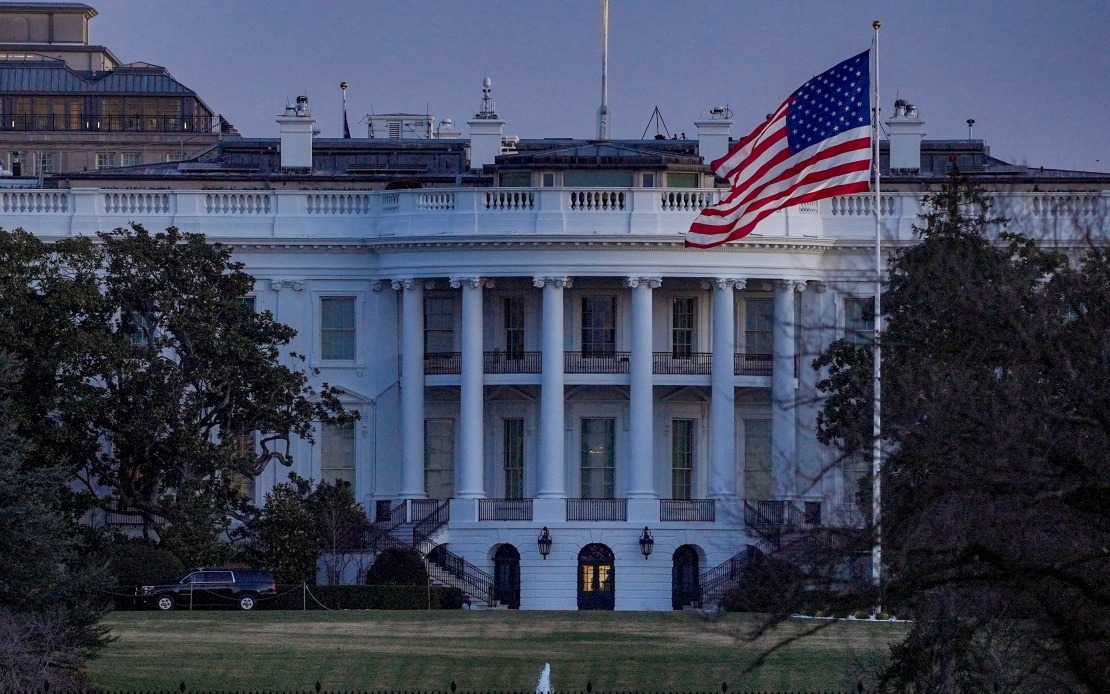
The United States Secret Service is navigating an exceptionally dangerous security landscape, according to agency leadership. Sean Curran, who directs the federal protection agency, made this assessment during a Wednesday briefing preceding the rescheduled White House Correspondents' Association dinner. His candid acknowledgment underscores the intensified vigilance required to protect senior American leaders, particularly President Donald Trump, who has become the focal point of multiple violent plots since 2024.
The threat assessment carries serious implications not merely for the United States but for international observers monitoring American political stability. Southeast Asian governments and security analysts track such developments closely, recognising that instability in the world's largest economy reverberates through global markets and geopolitical alignments. Malaysia, as a trading partner and regional actor with significant American diplomatic engagement, maintains interest in US domestic security and political continuity.
Trump's personal security predicament has become remarkably acute. The president has survived three separate assassination attempts over a 24-month period, beginning with a July 2024 shooting during a Pennsylvania campaign rally where he sustained a wound to his ear. A second attempt materialised in September 2024 at Trump's golf club in Florida. Most recently, in April 2026, a shooting disrupted the White House Correspondents' Association Dinner, which Trump attended. These incidents represent an extraordinary cluster of violence against a sitting American president, substantially exceeding historical precedent.
Trump himself has publicly characterised the threat level as severe. In July, he identified Iran as his principal adversary, asserting that he represents the primary target for Iranian assassination operations. More provocatively, he cited statistical analyses suggesting that sitting US presidents face a 5.2 percent mortality risk during their tenure. Yet despite acknowledging these extraordinary dangers, Trump initially maintained that he perceived no genuine safety concerns, a position that sits uneasily with the documented threat environment that Curran described.
The Iranian dimension adds considerable complexity to the security calculus. While Trump made claims regarding Iranian intentions, the FBI and Department of Justice have documented specific plots requiring active law enforcement intervention. In June 2026, federal authorities uncovered and disrupted a conspiracy targeting a UFC event at the White House, which the Department of Justice formally classified as another assassination attempt against the president. These discoveries indicate that threats extend beyond isolated extremists to organised networks with stated targeting objectives.
The April 2026 shooting proved particularly significant because it occurred during a high-profile, heavily publicised event attended by senior American leadership. The suspect faced multiple criminal charges, including attempted assassination of the president. This incident forced postponement of the White House Correspondents' Association dinner, a venerable institution dating to the early twentieth century. That a major ceremonial event required rescheduling due to security breaches demonstrates how profoundly these threats have disrupted American civic life and governance routines.
Curran's public acknowledgment of the heightened threat environment represents a significant departure from the historical tendency of security agencies to minimise public anxiety about leadership protection. His candour suggests that threat levels have genuinely exceeded normal parameters, requiring extraordinary measures and resources. The willingness to discuss these matters openly likely reflects both the intensity of documented plots and the operational necessity of signalling seriousness to potential adversaries.
The clustering of assassination attempts raises important questions about causation and motivation. Some analysts attribute increased threats to polarised domestic political environment and inflammatory rhetoric. Others emphasise state-directed activities, particularly from adversarial nations seeking to destabilise American governance. The Iranian connection, though contested, introduces questions about whether hostile foreign powers view American leadership as sufficiently vulnerable to warrant assassination operations. Such calculations could reflect assessments of American institutional resilience, intelligence capabilities, or perceived international isolation.
For Malaysian policymakers and security professionals, these developments merit careful monitoring. Regional stability often depends on American strategic commitments and the coherence of American decision-making. Leadership continuity and the ability of the US government to function effectively directly impact bilateral relationships, security partnerships, and regional balance of power calculations. When senior American officials face extraordinary security threats, the capacity of the US to maintain consistent foreign policy engagement necessarily becomes constrained.
The Secret Service's operational challenges illuminate broader questions about protecting democratic leaders in contemporary threat environments. Advancing technology, ideological radicalisation, and potential state-sponsored operations have complicated protection protocols substantially. The agency must balance accessibility with security, recognising that excessive isolation of leaders undermines democratic legitimacy and public confidence. Curran's acknowledgment reflects this tension, admitting elevated danger while maintaining presidential engagement with public events.
Looking forward, the sustainability of current security arrangements remains uncertain. The financial and operational costs of maintaining extraordinary protection measures indefinitely impose significant burdens on both the Secret Service and broader government resources. Moreover, the psychological and professional toll on protected individuals and security personnel compounds as threat levels remain elevated. These practical constraints may eventually necessitate policy adjustments regarding public presidential appearances and accessibility.
The situation also raises questions about legislative and institutional responses to the threat environment. Congress and security agencies face decisions about resource allocation, legal authorities for prevention operations, and cooperation with foreign intelligence services regarding potential state-sponsored threats. These considerations extend beyond operational security to encompass constitutional questions about surveillance, due process, and balancing liberty against safety. The threat environment, while driven by security imperatives, ultimately forces deliberations about the nature of American democracy itself.

