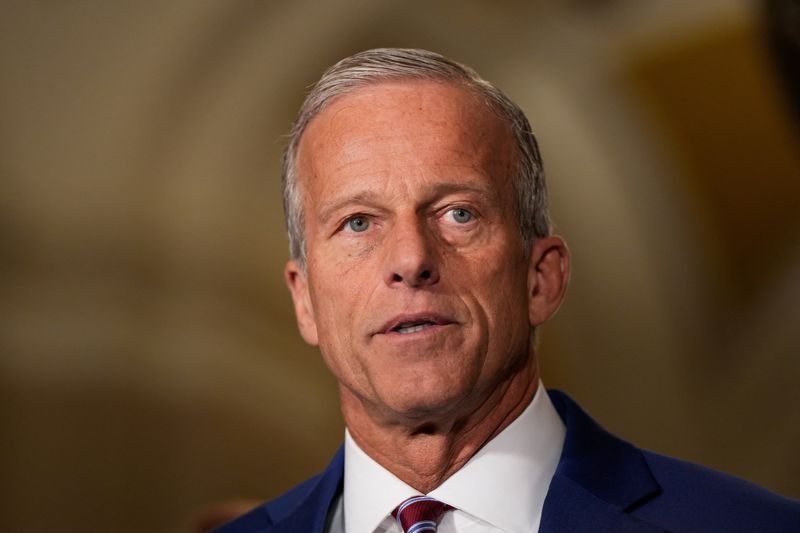
Senate Majority Leader John Thune initiated procedural steps on Saturday to schedule a critical vote on the Clarity Act after Congress reconvenes from its August recess in mid-September, indicating that Republican leadership believes the legislation may have sufficient support to clear the chamber. The filing with the Senate Press Gallery suggests that supporters of the measure believe they can assemble the 60 votes required for passage, a threshold that has historically posed challenges for the cryptocurrency sector given persistent Democratic skepticism toward the industry.
The proposed legislation would fundamentally reshape how digital assets are regulated across the United States by establishing the first comprehensive federal framework governing cryptocurrencies. Currently, responsibility for oversight is fragmented across multiple regulatory agencies, creating legal ambiguity that has hindered industry development and deterred mainstream adoption. The Clarity Act would delineate the precise circumstances under which digital tokens qualify as securities or commodities, thereby determining which regulatory authorities—the Securities and Exchange Commission, the Commodity Futures Trading Commission, or others—would exercise jurisdiction over particular assets and activities.
Crypto industry advocates have long characterised such regulatory clarity as essential for sustainable growth. Proponents argue that the lack of a coherent federal rulebook has chilled investment, complicated compliance efforts for legitimate companies, and driven American crypto activity overseas where regulation may be more permissive but also riskier for consumers and investors. The industry mobilised unprecedented campaign spending to advance this objective, channelling more than $119 million into pro-crypto candidates during the 2024 election cycle, underscoring how substantially the sector prioritises this legislative goal.
The timing of the Senate's advancement of the bill reflects broader political momentum supporting cryptocurrency reform. President Donald Trump has made crypto policy a cornerstone of his second administration, and the White House has actively lobbied Congress in favour of the Clarity Act. Trump's personal financial interests in the sector are substantial and publicly documented—his family's crypto ventures generated more than $1.4 billion in reported income during the prior year, making crypto policy directly relevant to his personal wealth alongside its broader economic implications.
Democrats have raised concerns about the bill, including questions regarding conflict of interest arising from government officials' direct participation in crypto markets. The president's substantial financial stake in digital assets has intensified calls from opposition lawmakers for stronger restrictions governing the crypto activities of elected and appointed officials. These negotiations on governance safeguards remain active, and the fluidity of these discussions suggests that the bill's final form may incorporate modifications addressing Democratic objections regarding transparency and ethical standards.
Passage of the Clarity Act would represent a second consecutive legislative victory for Trump on cryptocurrency matters, following his signing of separate legislation supporting stablecoins—digital tokens anchored to the US dollar—into law during his first term. These successes would underscore the crypto industry's growing political influence and the sector's ability to translate financial contributions into concrete policy outcomes. The achievements would validate the industry's substantial investment in political channels and demonstrate that sustained lobbying and campaign spending can reshape regulatory landscapes at the federal level.
Conversely, the legislation poses challenges to traditional banking institutions, which have mobilised counter-lobbying efforts to resist certain provisions. Banks fear that permissive language in the Clarity Act could allow crypto companies to offer yield-bearing products based on stablecoins, effectively competing with banks for customer deposits and disrupting traditional financial intermediation. This banking sector opposition introduces a countervailing political force that could complicate the path to 60 Senate votes, particularly among centrist Democrats who typically receive substantial support from financial institutions.
The requirement for 60 affirmative votes in the 100-member Senate means that bill supporters must secure backing from across partisan lines. With Republicans controlling the chamber, the arithmetic requires support from at least eight Democratic senators, representing a cross-party coalition that reflects neither pure party-line voting nor overwhelming consensus. This supermajority threshold has made comprehensive crypto legislation elusive in previous congressional sessions, and the ability to assemble sufficient votes remains uncertain despite leadership's procedural manoeuvres.
For Malaysian and Southeast Asian observers, the US legislative trajectory on cryptocurrency carries regional significance. American regulatory decisions typically influence global approaches to digital assets, as international investors, compliance frameworks, and institutional adoption patterns often follow US regulatory guidance. A comprehensive federal framework establishing clear rules for crypto assets in the world's largest economy would likely accelerate similar regulatory reforms across the Asia-Pacific region, including Malaysia, where policymakers have been carefully evaluating how to balance innovation with consumer protection in the digital asset sector.
The Clarity Act's advancement also reflects broader shifts in American political economy regarding technological regulation. The crypto industry's capacity to mobilise campaign resources and shape legislative outcomes demonstrates how emerging technology sectors can exercise political influence comparable to or exceeding that of established industries. This pattern has implications for how regulation develops across digital domains, from artificial intelligence to blockchain technology, potentially favouring frameworks that minimise restrictions and enable rapid market development over approaches prioritising precautionary safeguards.
The Senate's procedural vote scheduled for mid-September will serve as the critical inflection point for this legislation. Success in advancing past this juncture would substantially improve prospects for eventual passage, while failure could signal that Democratic opposition remains insurmountable despite Republican control of the chamber. Either outcome will shape not only American crypto policy but also the regulatory environment for digital assets globally, influencing how jurisdictions from Malaysia to Singapore approach cryptocurrency oversight in coming years.

