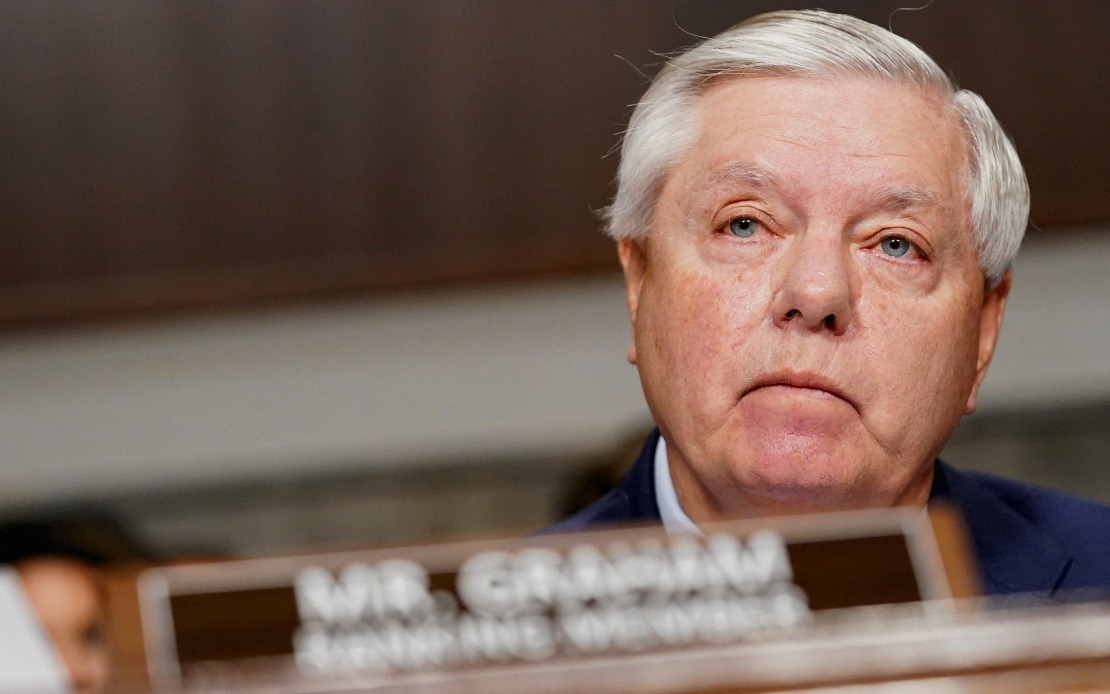
US Senator Lindsey Graham, the South Carolina Republican who served as a steadfast political ally of President Donald Trump and held significant influence within the Republican-controlled Senate, has died at the age of 71. According to a statement released by his office on Sunday, Graham passed away on the evening of Saturday, July 11, succumbing to what his staff described as a brief and sudden illness. The announcement came without prior public indication that the senator had been facing serious health concerns, shocking Washington and the wider political establishment.
Graham's political career spanned more than two decades in the nation's upper chamber, having first been elected to the Senate in 2002 from his home state of South Carolina. He successfully defended his seat through subsequent elections in 2008, 2014, and 2020, establishing himself as a reliable conservative voice within the Republican Party. His tenure in the Senate saw him evolve from a sometimes-independent thinker to a fierce advocate for Trump's policies and a prominent figure in Republican leadership circles. At the time of his death, Graham held the chairmanship of the Senate Budget Committee, positioning him as a key player in determining the party's fiscal priorities and legislative agenda.
The timing of Graham's death carries particular significance for the political calendar, as he had been preparing for reelection to a fifth six-year Senate term in the upcoming November election. His anticipated campaign would have represented another chapter in his long political career, with the Senate seat considered a safe Republican stronghold in South Carolina's conservative political landscape. The sudden nature of his passing leaves the party facing questions about succession and the shape of the upcoming election cycle in what had been viewed as a non-competitive race.
One of Graham's most notable roles in recent years involved his close relationship with President Trump, with whom he became allied despite earlier differences during the 2016 presidential campaign. Graham emerged as one of Trump's most vocal defenders during various political controversies and legislative battles. This alignment with the former president and current political frontrunner had made Graham a central figure in contemporary Republican politics, influencing party direction on foreign policy, judicial appointments, and broader ideological matters. His influence extended beyond domestic politics into America's international relations and strategic positioning.
Graham had maintained an active schedule in his official duties despite his age, with one of his last notable public activities involving a visit to Kyiv, Ukraine's capital. During this trip on Friday, he met with Ukrainian President Volodymyr Zelenskyy, continuing his involvement in discussions surrounding American support for Ukraine amid its ongoing conflict with Russia. This engagement demonstrated his continued commitment to foreign policy matters, particularly regarding American military assistance and strategic partnerships in Eastern Europe. Such high-profile diplomatic activities underscored his continued relevance and energy in political life.
The senator's family released a brief statement requesting privacy during what they described as an incredibly difficult period, while also asking for the prayers and well-wishes of the American public. The family's emphasis on discretion suggested they would not be providing extensive details about the circumstances surrounding his illness or final days. This approach is common among prominent political families seeking to process grief away from the intense scrutiny that typically follows the death of a major public figure.
Graham's passing marks a significant moment in American politics, removing from the Senate a figure who had shaped policy discussions for more than twenty years. His death comes at a particularly consequential time in the American political calendar, with elections approaching and the Republican Party navigating its direction following the 2020 election cycle. His role on the Senate Budget Committee and his influence within Republican circles meant his absence would create a notable vacuum in legislative leadership.
For Malaysian and Southeast Asian observers of American politics, Graham's death represents a shift in the landscape of Republican foreign policy leadership. His strong positions on international engagement, military support for allies, and strategic partnerships had influenced American approach to regional security matters. His advocacy for robust international commitments and skepticism toward isolationist positions within the Republican Party had implications for American involvement in global affairs that extend beyond the United States' borders to affect countries throughout the Indo-Pacific region and beyond.
The circumstances of Graham's death remain unclear, with the description of a brief and sudden illness suggesting an acute medical event rather than a prolonged struggle with chronic disease. The lack of prior public knowledge about any serious health condition makes his passing particularly striking, as he had appeared to be maintaining full legislative duties and an active travel schedule. Medical details have not been disclosed, and none are likely to be shared given the family's request for privacy.

