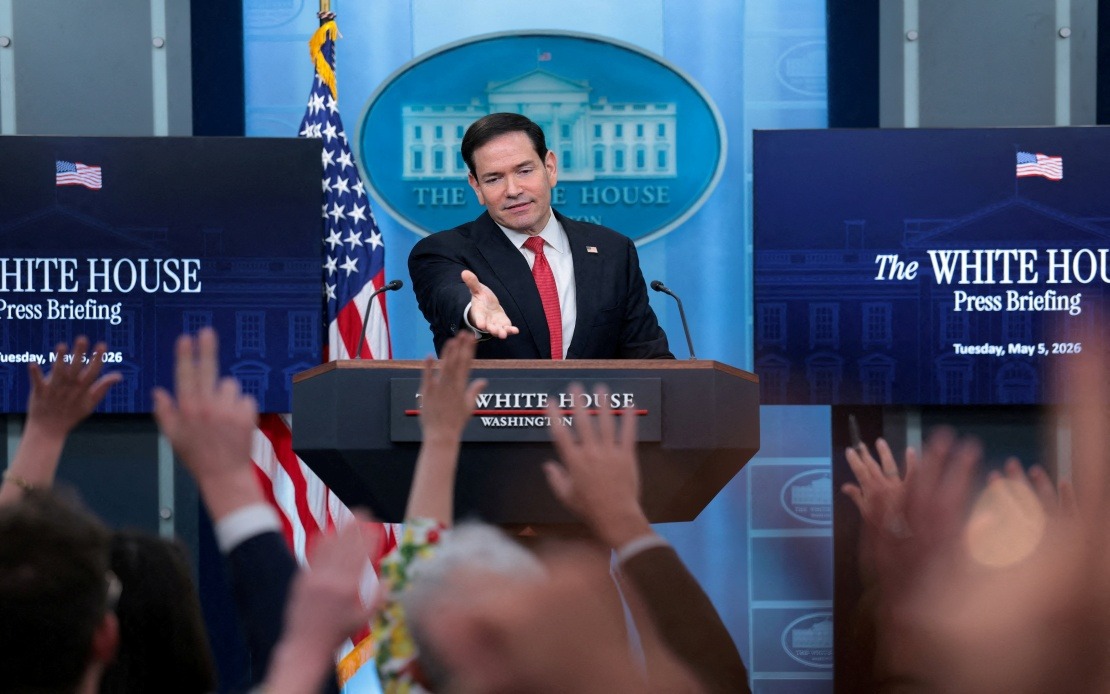
The United States remains committed to exploring diplomatic pathways with Iran despite decades of mistrust and escalating tensions between the two nations, according to remarks made by US Secretary of State Marco Rubio during an ASEAN ministerial meeting in Manila this week. Speaking at the gathering of Southeast Asian foreign ministers, Rubio sought to underscore the Trump administration's preference for negotiated settlements while simultaneously applying pressure on the Iranian government to demonstrate genuine commitment to the negotiation process.
Rubio's comments reflect a nuanced diplomatic position that balances openness to dialogue with conditional scepticism about Iran's willingness to engage meaningfully. He explicitly stated that the United States remains "open-minded and always willing to engage in negotiated settlements of differences" when addressing the assembled diplomatic corps, framing this stance as a core principle of American foreign policy rather than a position unique to current Iran policy. This framing carries significance for regional powers including Malaysia and other ASEAN members who maintain delicate balancing acts between their relationships with Washington and Tehran.
The Secretary of State's assertion that Iran has been communicating with the US through both direct and indirect channels suggests an ongoing diplomatic infrastructure, despite the absence of formal diplomatic relations between the two capitals. These back-channel communications represent a crucial safety valve in US-Iran relations, particularly during periods of elevated military and political tensions. The existence of such channels, even when formal relations remain severed, indicates that neither side has completely closed the door to eventual dialogue, though mutual suspicion continues to complicate substantive negotiations.
Critically, Rubio introduced a condition into Washington's diplomatic overture by insisting that Iran must demonstrate "serious" intentions about engaging in talks. He drew a clear distinction between rhetorical openness to negotiation and the concrete commitment required for productive diplomacy. This conditional framing allows the administration to maintain the appearance of diplomatic flexibility while establishing a high evidentiary bar for Iranian seriousness, effectively placing the burden on Tehran to prove its willingness through observable actions rather than statements.
The Secretary of State's warning that Washington "will do what is necessary to protect our interests and also the interests of our allies" if Iran fails to engage seriously carries implicit threat. For Southeast Asian nations like Malaysia, which maintain trade relationships with both the US and Iran while navigating regional security dynamics, such statements underscore the potential consequences of miscalculation in the broader geopolitical environment. The reference to protecting allied interests also signals potential military or economic actions against Iranian interests, a concern that affects regional stability and maritime security throughout the Indian Ocean and Persian Gulf.
Rubio's emphasis on the importance of honouring diplomatic commitments stems directly from Washington's withdrawal from the Joint Comprehensive Plan of Action (JCPOA) in 2018, an agreement that Iran had entered into with six world powers. From the American perspective, Iran's subsequent actions—including uranium enrichment beyond JCPOA limits—constituted a breach of commitments, justifying the reimposition of sanctions and heightened tensions. This historical grievance continues to shape American scepticism about any future Iranian pledges, making verification mechanisms and enforcement mechanisms central concerns in any potential new negotiations.
The timing of these remarks at an ASEAN forum holds particular relevance for Southeast Asian observers. ASEAN members, including Malaysia, have historically advocated for constructive engagement and multilateral dialogue as means of resolving international disputes. Rubio's reaffirmation of America's openness to diplomacy, even while expressing scepticism about Iranian intentions, aligns with principles that ASEAN nations generally support, though it also reflects American exceptionalism in reserving the right to take unilateral action if negotiations fail.
For Malaysian policymakers and analysts, Rubio's comments highlight the persistent challenges in managing US-Iran relations at a time when regional tensions over maritime security, energy supplies, and proxy conflicts remain elevated. Malaysia's position as a significant maritime trading nation means that any escalation in US-Iran military confrontation could disrupt shipping lanes and increase insurance costs for Malaysian vessels transiting between the Strait of Hormuz and Southeast Asian ports. The prospect of renewed negotiations, therefore, carries economic implications beyond the immediate political considerations.
The Secretary of State's remark that Washington prefers "constructive engagement" provided commitments are respected essentially restates the American position while framing it as Tehran's responsibility to make the first move toward rebuilding trust. This reverses the burden of proof from Washington, which withdrew from the JCPOA, to Iran, which must now convince American officials of its reliability. The psychological dimension of this diplomatic positioning matters considerably, as it frames Iran as the party needing to demonstrate change rather than the US needing to rebuild relationships damaged by the 2018 withdrawal.
Moving forward, the viability of any US-Iran negotiations will likely depend on whether either side perceives sufficient incentive to engage seriously. For Iran, sanctions relief and recognition of its regional role represent key negotiating objectives. For the US, verification of Iran's nuclear programme and constraints on its regional activities remain paramount. The gap between these positions remains substantial, suggesting that while diplomatic channels may remain open, substantive progress toward a comprehensive agreement remains distant unless either side modifies its fundamental objectives.
The broader implication of Rubio's statements for Southeast Asia involves the regional security environment's trajectory. Continued US-Iran tensions, whether or not culminating in military conflict, will likely persist in shaping global energy markets, maritime security operations, and the diplomatic positioning of nations like Malaysia that seek to maintain balanced relationships with multiple great powers. The Secretary of State's emphasis on conditional openness thus signals neither imminent détente nor inevitable confrontation, but rather a continuation of the high-stakes strategic competition characterising US-Iran relations since 1979.

