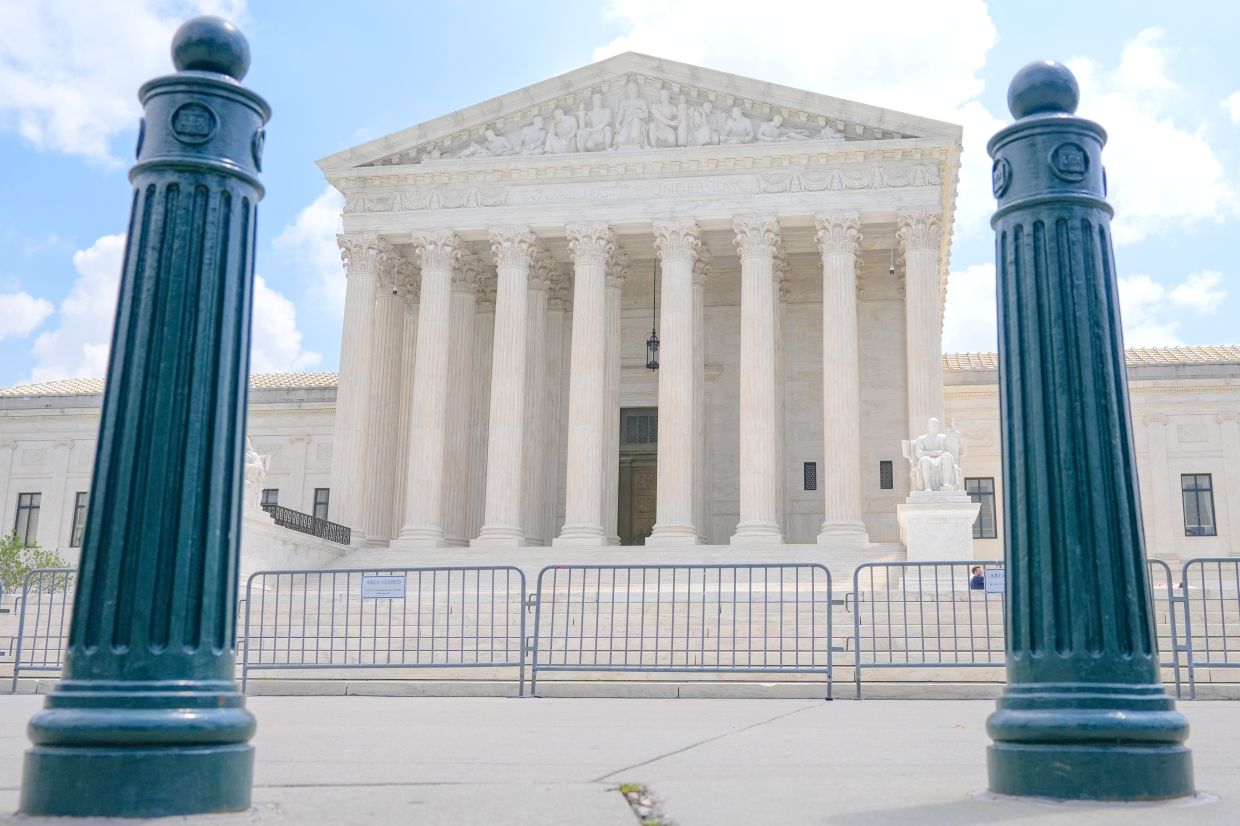
The United States Supreme Court has cleared the way for Texas to enforce a controversial law requiring age verification before users can download applications from digital storefronts, dealing a significant setback to technology industry groups and digital rights advocates who argue the measure violates constitutional protections for free expression. Justice Samuel Alito issued two separate one-sentence orders denying emergency petitions filed by challengers seeking to prevent the law from taking effect, effectively allowing the contentious statute to move forward despite ongoing legal battles over its constitutionality.
The Texas App Store Accountability Act has become a flashpoint in the broader debate over how governments should regulate content distribution platforms and protect minors online. The law essentially mandates that app stores verify the age of users before permitting downloads, a requirement that proponents say shields children from inappropriate material and predatory practices while critics contend it creates unnecessary barriers to accessing legitimate information and speech. The Supreme Court's refusal to intervene at this stage suggests the nation's highest court is unwilling to take an aggressive stance in overturning the measure on emergency grounds, even as the underlying constitutional questions remain unresolved.
A three-judge panel from the 5th US Circuit Court of Appeals had previously ruled in June that the law could proceed despite a lower court's December finding that it was unconstitutional. That appellate decision essentially resurrected the statute after a federal district judge had temporarily blocked its enforcement, setting up the current situation where the law continues advancing through the courts while remaining technically enforceable. The decision to allow implementation while litigation continues is a common judicial approach that effectively signals judicial skepticism toward the preliminary injunction that had halted the law's operation.
The legal challenge to the Texas measure has attracted a diverse coalition of opponents. The Computer & Communications Industry Association, which represents major technology companies, joined forces with Students Engaged in Advancing Texas, a civil liberties organization focused on protecting constitutional rights, to mount the constitutional challenge. Both groups named Texas Attorney General Ken Paxton as the defendant, though the law itself reflects broader policy initiatives emerging from Texas and other Republican-led states seeking to impose stricter content controls on digital platforms.
Attorneys representing the challengers have framed their opposition around fundamental First Amendment principles, arguing that the law impermissibly restricts access to constitutionally protected material including news reporting and educational content. Their position suggests that age verification requirements, while potentially well-intentioned, function as a de facto censorship mechanism that prevents adults from accessing information and prevents the free flow of ideas essential to democratic society. The legal argument emphasizes not only individual speech rights but also parents' constitutional authority to make decisions about their children's media exposure without government mandates.
The Students Engaged in Advancing Texas legal team articulated this position forcefully in their filing, asserting that protecting First Amendment freedoms and parental discretion in child-rearing represents a compelling public interest that should override the state's desire to regulate app downloads. Their brief underscores a philosophical divide about whether government should set uniform standards for content access or whether families should retain autonomy over such decisions. This tension between state paternalism and individual liberty has become increasingly significant as regulators worldwide grapple with children's safety in digital environments.
State officials defending the law adopt an entirely different analytical framework, emphasizing the genuine risks children face in accessing application stores without parental oversight or knowledge. The Texas Attorney General's office argues that the current system allows minors with minimal supervision to download applications that expose them to privacy invasions, unauthorized data collection, and objectionable content spanning the entire spectrum of material available online. From this perspective, age verification functions as a reasonable protective measure comparable to other age-based restrictions on youth access to certain products and services.
The substantive concern about children's digital safety carries weight beyond Texas. Data breaches, surveillance practices embedded in applications, and the collection of children's personal information have become well-documented problems within the app ecosystem. Parents' inability to monitor or control what applications their children download represents a genuine governance challenge in an era when mobile devices function as primary gateways to digital content and services. The state's framing of age verification as child protection rather than content restriction shapes how courts might ultimately evaluate the law's constitutionality.
For Malaysian and Southeast Asian observers, this case demonstrates how developed democracies are grappling with reconciling free speech protections against emerging regulatory impulses to restrict access to online content. The Texas approach differs from mechanisms employed in various Asian jurisdictions, yet the underlying tension—between protecting youth and preserving open access to information—resonates across the region. As governments throughout Southeast Asia consider their own digital governance frameworks, particularly regarding content regulation and child safety, the resolution of the Texas dispute may provide instructive precedent about how courts balance competing interests.
The Supreme Court's silence on the merits, conveyed through Alito's terse denials, suggests the broader bench may be inclined to permit states considerable latitude in implementing their own content regulation policies. This deference to state legislative authority could encourage similar age verification measures elsewhere, potentially reshaping how digital platforms operate across multiple jurisdictions. The decision notably avoids endorsing or condemning the law's constitutionality, instead allowing the lower courts to continue wrestling with whether such requirements represent constitutionally permissible child protection or unconstitutional restriction on protected speech.
As the litigation continues through the appellate process, the practical effect of the Supreme Court's refusal to block the law immediately is that Texas can begin enforcing age verification requirements while courts ultimately determine their validity. This procedural posture creates a complex situation where platforms and users must adapt to the law's requirements even as its constitutional status remains disputed. The outcome of this constitutional clash will likely reverberate throughout the tech industry and influence digital policy discussions across North America and globally, particularly as other jurisdictions consider comparable regulatory approaches to digital content distribution.

