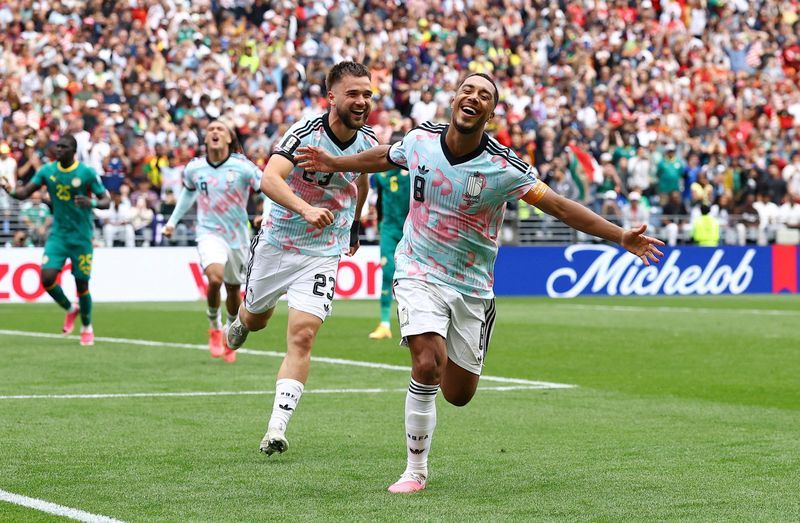
The United States enters a decisive World Cup encounter against Belgium on Monday in Seattle, where expectations have climbed considerably higher than many observers predicted before the tournament began. Playing at the Seahawks' home stadium—known for its overwhelming noise and passionate crowd—the Americans will attempt to advance to the quarter-finals against a Belgium side struggling to find consistency despite boasting star-studded credentials. The atmosphere in one of North American soccer's most intimidating venues should provide a considerable advantage for the host nation, whose tournament trajectory has exceeded pre-World Cup projections.
Before the competition started, most American soccer analysts considered reaching the knockout stages a satisfactory outcome, marking genuine progress for a program that had endured decades of moderate achievement on the global stage. The group phase performances dramatically altered that calculus, however, with the team dispatching Paraguay and Australia before delivering a particularly impressive defensive display against Bosnia and Herzegovina. Remarkably, the Americans managed a 2-0 victory over Bosnia despite spending the final 36 minutes of that contest defending with ten players after receiving a red card, suggesting a tactical maturity and resilience that has galvanised the domestic fan base and transformed the narrative surrounding the campaign.
Under the direction of Mauricio Pochettino, the American squad has demonstrated progressive tactical organisation and clinical finishing when opportunities arise. The group-stage run suggests the infrastructure put in place by the coaching staff is yielding tangible results, creating space for genuine optimism about what might be achieved in the knockout rounds. Each successive victory has broadened the pool of potential believers, transforming what would have once been fringe interest into genuine mainstream attention within American sports discourse. The opportunity to play on home soil intensifies the stakes considerably, as a deep tournament run would represent a watershed moment for American soccer's credibility within the broader sporting landscape.
Belgium presents a fundamentally different challenge, though the European nation has hardly inspired confidence through their opening matches. The Belgians required dramatic late interventions to overcome Senegal in their previous fixture, trailing for substantial portions of the match before mounting an unlikely comeback that culminated in a controversial penalty decision awarded through video assistant referee review. That VAR intervention generated considerable frustration in the Senegalese camp and raised questions about whether Belgium's tournament credentials will prove sufficient against a prepared and cohesive opponent. The struggle against Senegal betrayed defensive vulnerabilities that the Americans, having demonstrated organisational improvement, may be positioned to exploit.
The Belgian squad carries the weight of expectations surrounding their so-called "Golden Generation," a collection of world-class talent including midfielder Kevin De Bruyne, striker Romelu Lukaku, and goalkeeper Thibaut Courtois. These players represent the pinnacle of Belgian football achievement, yet the window for translating individual excellence into collective tournament success may be closing. For several key performers, this World Cup could represent the final realistic opportunity to claim a major championship, lending the encounter particular significance within the broader narrative of European football. The disparity between Belgium's talent inventory and inconsistent performances has created genuine uncertainty about their capacity to win knockout matches against prepared opposition.
America's defensive unit, which had been questioned as a potential vulnerability prior to tournament commencement, has established itself as a genuine strength through measured displays in the group stage. The backline coordinated effectively against Bosnia despite numerical disadvantage, suggesting the tactical instruction and individual positioning have improved substantially. However, Belgium's attack features Jeremy Doku, a young winger who has remained relatively subdued during the opening rounds and appears positioned for a more impactful performance when elevated to a knockout stage environment. Containing Doku's direct running and ability to create space from wide positions will present a significant tactical puzzle that Pochettino's defensive organisation must solve convincingly.
The fixture carries historical resonance for both nations, recalling a 2014 World Cup encounter in Brazil when Belgium eliminated the Americans through extra-time drama. That match became memorable for goalkeeper Tim Howard's extraordinary shot-stopping display, recording 16 saves in a contest that saw the Americans mount a desperate late rally that ultimately fell short of forcing a penalty shootout. The emotional sting of that defeat lingered within the American soccer consciousness for nearly a decade, creating a genuine desire within the current squad to exorcise that particular ghost and prove that American football has progressed meaningfully since that disappointing afternoon in South America.
The Americans will navigate the Belgium encounter without striker Folarin Balogun, who received a suspension following a red card late in the Bosnia match. Balogun had scored during the first-half period before his dismissal, meaning Pochettino must solve the significant tactical question of how to maintain attacking threat and clinical edge without his services. The selection decisions made by the American coaching staff in response to this enforced absence could prove decisive in determining whether the Americans advance or encounter disappointment that would represent a considerable setback to the tournament narrative that has captured American sporting attention.
The broader significance of this encounter extends beyond the immediate football contest itself, reflecting deeper questions about American soccer's trajectory and potential future at the elite international level. Multiple stakeholders—from the United States Soccer Federation to broadcasters, corporate sponsors, and the emerging base of domestic soccer enthusiasts—recognize that extended World Cup success creates tangible momentum for the sport's development within American culture. Tyler Adams, representing the American midfield, expressed the team's collective determination to make a lasting impact, suggesting that the squad understands the historical implications of their performances extending into deeper tournament stages. The calculus is clear: the further America advances, the greater the opportunity to establish soccer as a legitimate component of American sporting consciousness rather than remaining a niche interest.
Belgium possesses sufficient quality to prevail through tactical discipline and clinical execution, yet their wavering performances suggest vulnerability against a well-organised opponent. The Americans have created genuine momentum through successive victories, constructed a cohesive defensive structure, and developed belief in their collective capacity to compete against elite opposition. The Seattle stadium environment should provide considerable psychological advantage, translating crowd energy into tangible support that affects decision-making by officials and creates an intimidating backdrop for visiting teams. The match will resolve definitively whether American expectations represent justified confidence or premature optimism, but either way represents a genuinely significant moment in the contemporary evolution of international football and American soccer's place within it.

