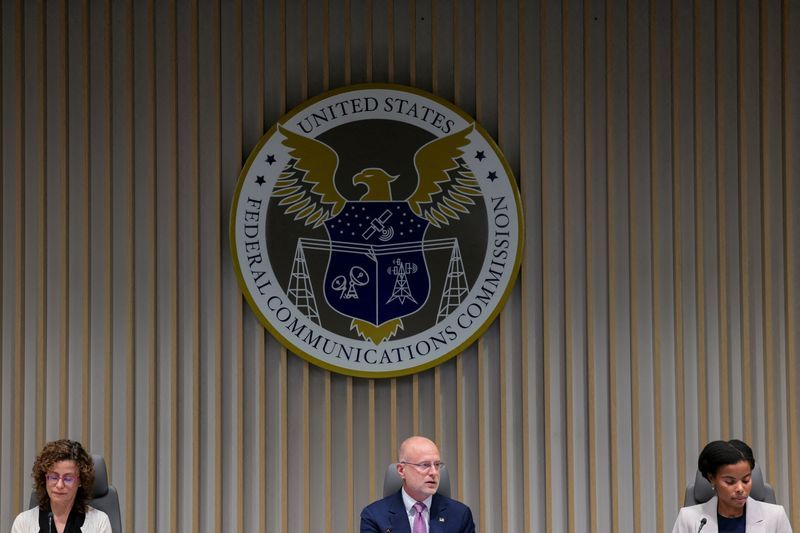
The United States Federal Communications Commission has taken a significant step in its ongoing technological decoupling from China, voting to prevent the sale of any devices in the American market that incorporate critical hardware components manufactured by Chinese companies on its national security watchlist. The decision, announced on July 22, represents a substantial tightening of existing restrictions that had previously allowed some loopholes to persist in the regulatory framework governing imports of electronics and telecommunications equipment.
The FCC maintains a curated roster of Chinese firms whose products are deemed threats to national security infrastructure, a list anchored by major companies such as Huawei Technologies and ZTE Corporation. Under previous guidelines established in 2022, complete devices manufactured by these blacklisted companies were blocked from obtaining new market authorizations in the United States. However, a critical gap existed: manufacturers could circumvent these restrictions by incorporating component parts—semiconductors, processors, and other logic-bearing hardware—sourced from the banned firms into devices produced by other companies, which could then proceed through the approval process and reach American consumers.
FCC Chair Brendan Carr framed the new regulations as essential to eliminating this oversight, describing it as an effort to "fully close the component part loophole." Under the revised rules, any device seeking approval for the American market is now prohibited from containing logic-bearing hardware components manufactured by firms on the FCC's restricted list, regardless of which company ultimately assembles the final product. This represents a more comprehensive approach to supply chain security, recognizing that individual components sourced from compromised manufacturers could potentially undermine the integrity of entire systems.
The strategic reasoning behind such restrictions has gained visibility through security experts and policymakers. Chris McGuire, who previously served as a White House National Security Council official during the Biden administration, articulated the concern to Reuters: compromised components, particularly semiconductors or communications infrastructure, possess the capacity to corrupt entire devices. This assessment reflects longstanding anxieties about embedded vulnerabilities that could enable surveillance, data interception, or sabotage at the component level—risks that cannot be adequately managed through post-manufacturing inspection or device-level oversight alone.
The FCC's action occurs within a broader context of escalating technological friction between Washington and Beijing. President Donald Trump's administration has championed an aggressive strategy of restricting Chinese technology access to American markets and infrastructure. Over the preceding weeks and months, the agency had already banned the importation of additional equipment from various Chinese manufacturers, with restrictions taking effect on July 16. Simultaneously, the FCC proposed prohibiting the introduction of most military-grade drone systems from Chinese sources, reflecting concerns about surveillance capabilities and potential vulnerabilities in unmanned systems that might be deployed across sensitive American territories.
Beyond consumer electronics, the regulatory pressure extends to broader telecommunications infrastructure. The FCC has recently blocked imports of new foreign drone and router models and is advancing proposals that would prevent American telecommunications carriers from establishing interconnections with Chinese telecom firms classified as national security risks. These measures aim to fragment the technical links that enable seamless global communications, effectively creating regulatory firebreaks between the American telecommunications ecosystem and Chinese operators.
The commission is additionally contemplating more severe restrictions on Chinese telecommunications companies that maintain data centers or Points of Presence within United States territory. These Points of Presence represent physical infrastructure nodes at internet exchange points where data traffic is routed and analyzed. Should the FCC proceed with such prohibitions, Chinese telecommunications firms would face effective expulsion from operating these critical American infrastructure components, fundamentally restructuring the architecture of their participation in United States internet operations.
For Malaysian readers and Southeast Asian observers, these American actions carry significant implications. The region has emerged as an important battleground in the US-China technology competition, with Malaysian businesses increasingly dependent on supply chains that span both economies. The expansion of American restrictions on component-level sourcing creates new compliance challenges for manufacturers throughout Southeast Asia who rely on Chinese suppliers for critical parts. Electronics manufacturers, telecommunications equipment producers, and device assemblers operating in Malaysia must now navigate a more restrictive American regulatory environment that extends beyond finished products to encompass the entire component supply chain.
Moreover, the strategic decoupling between Washington and Beijing influences broader regional technology policy. Southeast Asian nations, including Malaysia, have traditionally sought to maintain pragmatic relationships with both superpowers. However, escalating American restrictions force regional manufacturers to make strategic decisions about technology sourcing and market positioning. Companies that have built business models around flexibility in supply chain sourcing—shifting between Chinese and non-Chinese component providers depending on cost and availability—must now account for permanent restrictions on American market access if Chinese components are incorporated into their products.
The telecommunications interconnection restrictions proposed by the FCC carry particularly acute implications for regional connectivity. Southeast Asia's internet infrastructure relies on established relationships and physical points of presence operated by Chinese telecom firms. Any American effort to sever these interconnections could create fragmentation in regional internet routing, potentially increasing costs for Southeast Asian internet service providers and ultimately affecting connectivity quality and pricing for Malaysian consumers and businesses.
Huawei, which remains a major supplier of telecommunications infrastructure and consumer electronics throughout Southeast Asia and Malaysia specifically, has not yet publicly responded to the FCC's expanded restrictions. The company's ability to continue serving regional markets may depend on its capacity to redesign products and supply chains to eliminate restricted Chinese components—a challenging technical and commercial task that could influence equipment availability and pricing across the region.

