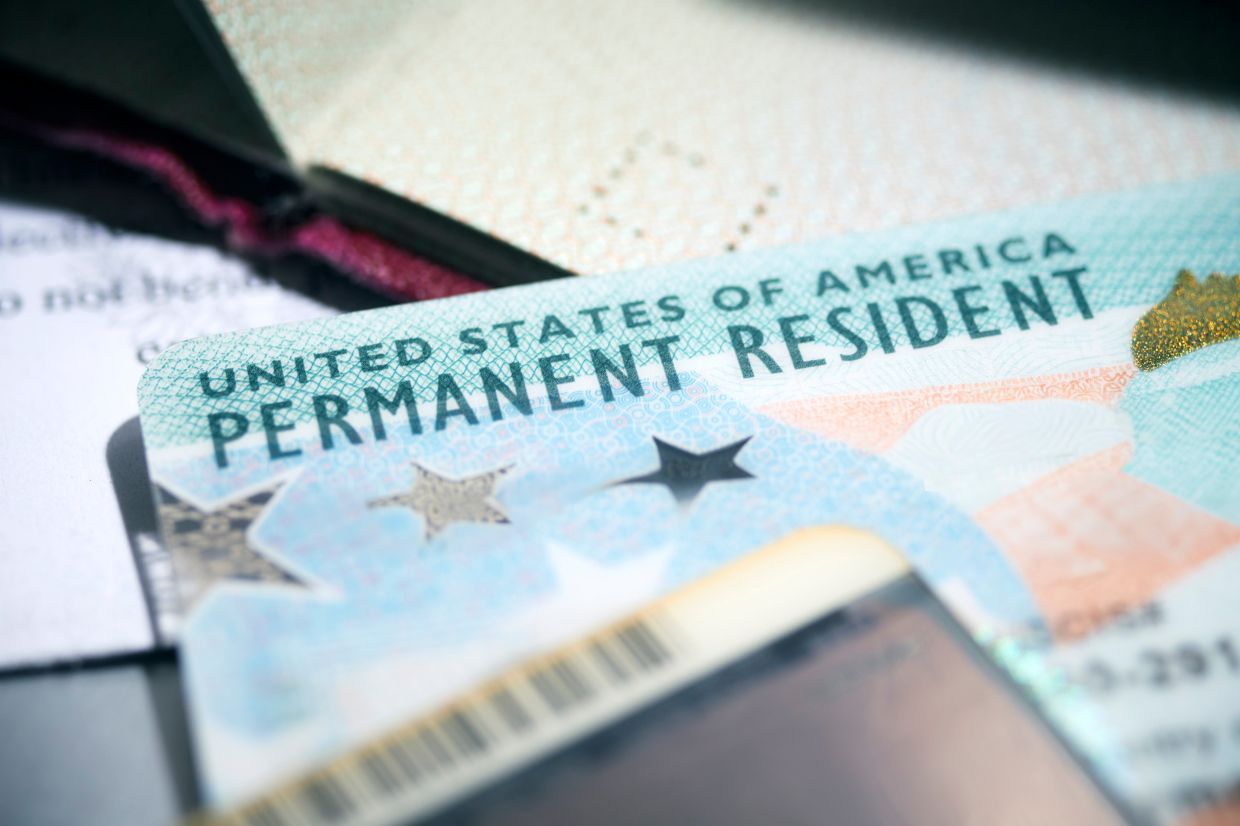
The United States has initiated a sweeping pause on immigrant visa interviews at embassies and consulates worldwide, directing consular officers to undergo retraining on how to apply a more stringent evaluation of whether applicants might become dependent on public assistance. This freeze emerged shortly after a federal court invalidated a separate travel restriction affecting 75 countries that operated on similar criteria, yet the Trump administration has pushed ahead with the public charge initiative despite mounting legal challenges to its approach.
The reassessment framework itself relies on established metrics: evaluators now weigh an applicant's age, overall health, size of family unit, financial resources, educational attainment, professional capabilities, and employment trajectory. However, the critical shift lies in how aggressively these criteria are being deployed. Training materials instruct officers to apply the test with substantially greater rigour than previously practiced, and in certain circumstances, to demand public charge bonds—financial guarantees meant to shield taxpayers from potential welfare dependency claims. This represents a meaningful escalation in discretionary power wielded by consular staff in visa adjudication.
Sarah Pierce, who leads social policy research at Third Way and brings prior experience as an analyst at US Citizenship and Immigration Services, characterised the Trump administration's execution as deliberately disruptive. By restructuring enforcement mechanisms without adequate transition periods or clear regulatory guidance, officials chose what she termed the "most disruptive possible way to roll this out." Conversely, Charles Kuck, an immigration attorney based in Atlanta with extensive experience opposing government overreach, observed that training sessions appear designed to equip officers with tactical approaches to deny applications under the expanded public charge doctrine—a mission creep that extends far beyond the traditional gatekeeping function of visa screening.
The broader implications extend across multiple visa categories. Family-sponsored immigrants face substantially elevated barriers, as the heightened scrutiny encompasses household composition and financial interdependencies that previously warranted only cursory review. Diversity visa lottery winners—whose selection has already occurred through a randomised process—now confront delayed processing and potential administrative obstacles despite having secured their allocated opportunity. Employment-based visa holders occupy an intermediate position: while H-1B, student, and tourist visa windows remain formally exempt from the current freeze, legal experts warn that the public charge doctrine could theoretically extend to nonimmigrant categories, creating uncertainty about future applications even if enforcement remains currently limited to green card cases.
For applicants whose interviews have been cancelled, the stakes involve more than bureaucratic inconvenience. Many individuals have already booked international travel, liquidated assets, completed medical examinations, and made life-altering arrangements premised on imminent visa approval. The State Department has not communicated when normal interview scheduling will resume, leaving thousands in a state of indefinite suspension. Cancelled interviews do not automatically invalidate approved petitions or reset priority dates—a technical distinction that offers minimal comfort to those awaiting resolution.
The administrative situation becomes particularly precarious for diversity visa recipients, who operate under rigid deadlines set by the US fiscal calendar ending September 30. These individuals must complete all processing steps within a compressed timeframe, and prolonged delays directly threaten their eligibility. Applicants must ensure that contact information on file with the National Visa Centre remains current and accessible, as communication gaps compound the already challenging regulatory environment.
Consular officers retain theoretical ability to overturn prior USCIS approvals only in narrow circumstances—instances of fraud, material changes in applicant circumstances, or clear administrative error. Once an officer flags concerns, the petition returns to USCIS for reconsideration, preventing unilateral consular rejection. Yet immigration practitioners worry about the vacuum created by insufficient statutory guidance. Charles Kuck emphasised that the absence of clear regulatory boundaries "allows for a great deal of mischief," enabling officers to develop inconsistent interpretations across different posts and regions. What constitutes an acceptable financial affidavit of support, previously sufficient in family cases absent extraordinary concerns, now faces aggressive reassessment under the revamped standard.
For Malaysian and Southeast Asian applicants navigating this environment, the practical consequences warrant immediate attention. Those awaiting consular interviews should remain in their home countries until their appointments are rescheduled, avoiding the compounded risk of unauthorized departure and re-entry complications. Applicants already holding lawful status in America must exercise extreme caution regarding international travel unless facing genuine emergencies. Departing the US to obtain visa stamps abroad now carries substantially elevated risk, particularly for those dependent on newly approved immigration petitions. Any re-entry requires consular approval, and officers applying the tightened public charge framework may deny readmission even to individuals with previously validated status.
Those with approved petitions should meticulously review all documentation submitted in their names before consular interviews resume, avoiding speculative answers to officer inquiries about facts within their case files. For workers and visa holders remaining in the US, carrying comprehensive proof of immigration status—valid green cards, arrival-departure records (I-94), and accompanying documentation—is now essential practice. Employment-based applicants should maintain pay stubs and employer verification letters in readily accessible form. Critically, individuals lacking lawful status—including those with H-1B extensions nearing expiration, pending green card applications, or pending asylum cases—must avoid all international travel, as re-entry would be impossible without current authorization.
New arrivals to the United States now receive fixed departure dates capped at four years, with a grace period reduced from 60 to 30 days, effectively narrowing the margin for adjustment and extension. This compressed timeline adds urgency to status maintenance and creates additional vulnerability for those managing multiple visa categories or complicated employment transitions.
The cumulative effect of these measures amounts to a qualitative restructuring of American immigration pathways. Sarah Pierce cautioned that while the new push may not constitute a formal "legal blanket ban," aggressive implementation by consular officers in different jurisdictions risks creating functional equivalents for particular populations and regions. The Trump administration's deliberate choice to deploy maximum disruption while offering minimal regulatory clarity transforms immigration from a regulated process into one where outcomes depend heavily on individual officer discretion and interpretation. For Malaysian applicants and others throughout Southeast Asia navigating these systems, the narrowing path demands careful strategic planning and awareness that previous assumptions about visa approval processes no longer reliably predict outcomes.

