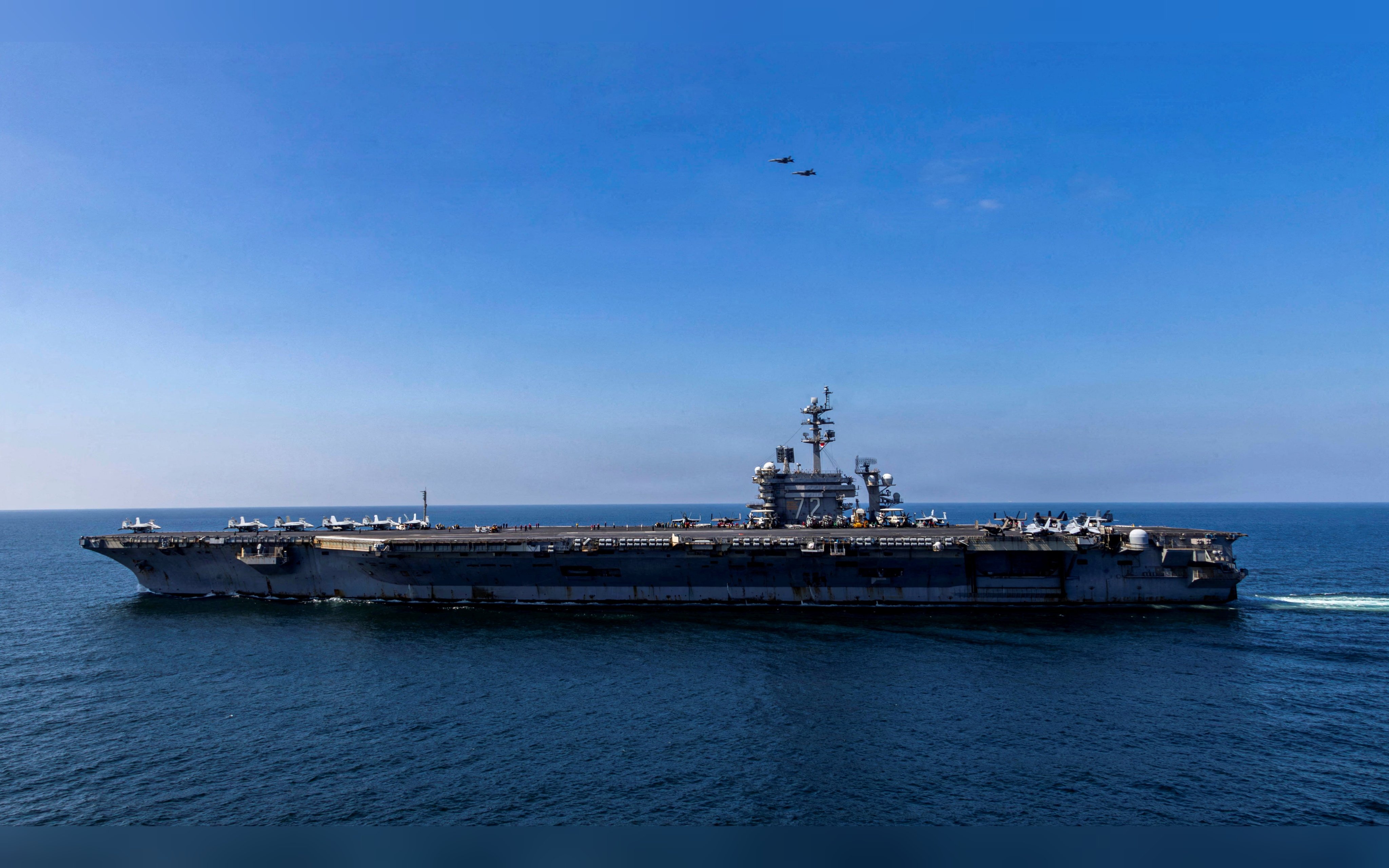
The United States has confirmed plans to rotate out the USS Abraham Lincoln from West Asia, marking the end of an exceptionally long deployment that has drawn scrutiny from Capitol Hill over the wellbeing of its crew. President Donald Trump announced the carrier swap on Friday, stating that the Lincoln is being relieved by another comparable vessel as part of a scheduled rotation. The Wall Street Journal identified the replacement as the USS George Washington, which will assume operational duties in the strategically vital region as tensions remain elevated across multiple theatres in the Middle East and surrounding waters.
The Lincoln's extended operational tempo underscores the strain placed on American naval assets in maintaining persistent presence across contested waters. Deployed since November, the carrier was redirected toward West Asia in January amid escalating US-Iran tensions, fundamentally altering the anticipated scope and duration of its mission. The vessel has now spent 266 days away from its home port, with an unbroken 200-day stretch without touching land, creating cumulative fatigue and logistical challenges for the approximately 5,000 sailors and Marines aboard. During this period, aircraft from the carrier conducted more than 10,000 sorties and released more than 1.5 million pounds of ordnance in combat operations, reflecting the intensity of sustained operations.
The decision to rotate the carrier comes after Senator Richard Blumenthal raised formal concerns about conditions aboard the Lincoln. In correspondence to Defense Secretary Pete Hegseth and acting Navy Secretary Hung Cao, Blumenthal detailed troubling reports from service members and their families, documenting shortages of essential supplies, water contamination affecting crew hygiene and safety, deteriorating plumbing infrastructure, emerging mental health challenges among personnel, documented hazards on flight decks, and significant delays in mail delivery that prevented care packages from reaching sailors for extended periods. These concerns reflect the human cost of extended deployments in combat zones, where normal quality-of-life considerations become secondary to mission demands but remain vital for crew morale and long-term readiness.
Acting Navy Secretary Hung Cao acknowledged the difficulties faced by personnel while emphasizing the operational necessity for the extended deployment. In a statement released Friday, Cao framed the return as recognition of the crew's achievements while stressing that the extension occurred because operational requirements demanded it. He articulated the service's perspective that combat operations inherently disrupt normal routines and that warfighting introduces unpredictable elements requiring constant adaptation. Cao noted that despite meticulous planning and communication efforts, the fluid nature of military operations means that adjustments and uncertainties inevitably arise, and institutional success depends on how effectively the Navy responds to these changing circumstances.
President Trump's characterization of the deployment differed notably from the concerns articulated by lawmakers and some service members. When asked whether the mission had extended excessively, Trump responded dismissively that it had not lasted nearly long enough, suggesting a preference for prolonged forward presence in the region. This rhetorical stance reflects broader strategic considerations regarding American commitment to deterring adversaries and reassuring regional partners, though it contrasts sharply with the documented hardships experienced by the deployed personnel and the concerns raised by their families and congressional representatives.
The Lincoln's operational achievements during this extended period were substantial by any measure. Cao released figures demonstrating that the carrier's aircraft generated an average of approximately 37 sorties per day, while ordnance expenditure averaged roughly 5,600 pounds daily. These statistics illustrate the intensity of air operations sustained across the deployment, indicating the carrier has functioned as a major kinetic platform in ongoing regional conflicts. The sheer volume of operations conducted emphasizes both the strategic importance placed on continuous carrier presence and the operational strain imposed on flight crews, maintenance personnel, and support staff working in demanding environmental conditions.
Mental health challenges emerged as a particular concern during the extended deployment, though Cao reported that cases remained limited in number and that no service members died from causes related to psychological distress or mental health crises. The acknowledgment of mental health treatment episodes indicates that the accumulated stress of extended deployment in a combat zone, combined with isolation from family and limited port time for psychological recovery, generated measurable impacts on crew wellbeing. The Navy's recognition of these challenges marks a shift toward greater transparency about the psychological dimensions of warfighting, moving beyond purely operational metrics to address the complete spectrum of service member welfare.
For Southeast Asian observers, the carrier rotation carries implications for regional security dynamics and American strategic positioning. The continued rotation of major capital ships through the region demonstrates sustained American commitment to maintaining freedom of navigation and countering threats perceived as emanating from Iran and its network of allies. Malaysia and other regional states maintain interests in ensuring stable shipping lanes and predictable security arrangements, making the consistency of American naval presence a factor in their own strategic calculations. The deployment patterns of American carriers influence regional diplomatic balances, particularly regarding how states navigate relationships between the United States and other major powers with Middle Eastern interests.
The logistics of rotating carriers involves complex coordination extending across months, as new vessels must prepare for deployment, crews must conduct training and certification exercises, and administrative machinery aligns transit schedules. The USS George Washington will need to progress through pre-deployment workup cycles, potentially involving port calls and exercises that themselves create scheduling requirements. This transition period provides a window where American carrier presence in the region may temporarily diminish, creating both operational vulnerability and potential diplomatic opportunity for regional actors. The specifics of the transition timing remain undisclosed, with Cao indicating that details would emerge at a later date.
The broader pattern of extended carrier deployments reflects structural pressures within American military planning. With a finite number of carrier strike groups and growing demands for forward presence across multiple regions simultaneously, individual deployments have lengthened beyond historical norms. This practice generates cumulative fatigue that affects not only deployed crews but also the complex support infrastructure required to sustain operations, from maintenance facilities to family support services. Future force structure debates will likely reference the Lincoln deployment as evidence of either the necessity for additional carriers or the need for different operational approaches that reduce the burden on existing assets.
The episode also highlights tensions within the military chain of command regarding acceptable standards for personnel welfare during combat operations. While Cao positioned the extended deployment as an example of institutional success and adaptation, the concerns raised by Blumenthal and implicit criticism from service members' families suggest that some stakeholders question whether operational achievement should override quality-of-life considerations. This tension between mission accomplishment and troop welfare will likely continue shaping debates about future deployment policies and force management decisions.

