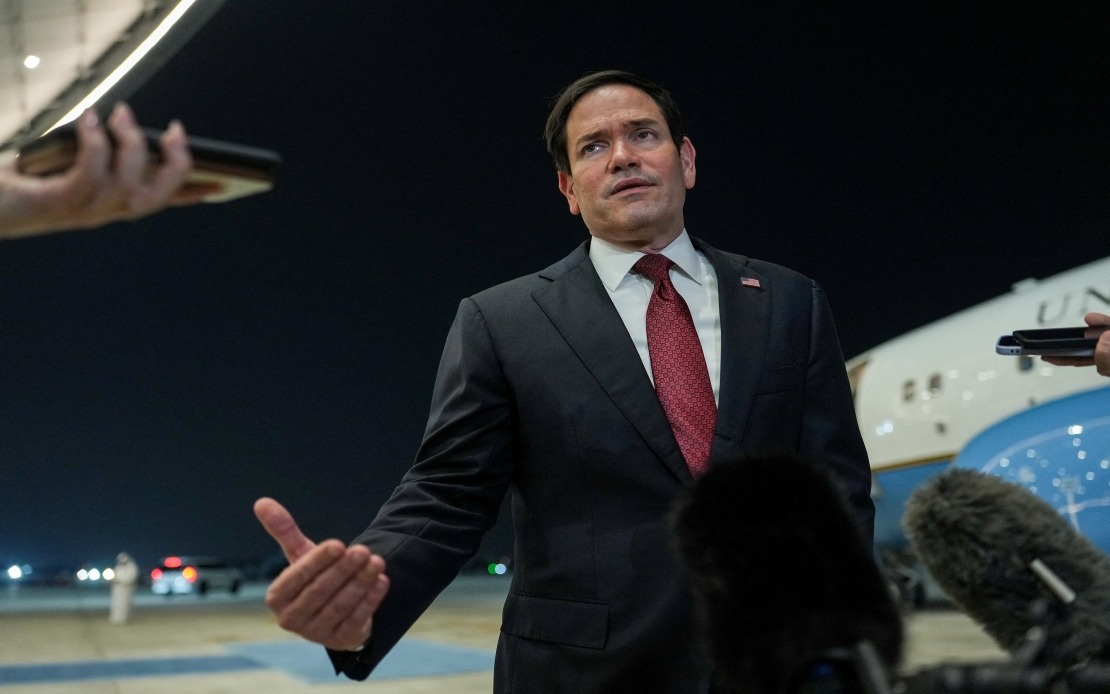
The possibility of American participation in rebuilding efforts for Iran has been firmly ruled out by the Trump administration. US Secretary of State Marco Rubio made clear on Tuesday that while various nations may consider contributing to such an undertaking, Washington itself will not be among them. His statement came in response to questions about potential investments from Gulf states in what has been described as a reconstruction fund for the Iranian economy, dismissing reports that have circulated regarding the scope and nature of any such arrangement.
Rubio's position reflects the broader American stance toward Iran in the current diplomatic context. The top US diplomat emphasised that if Iran wishes to pursue economic development and growth opportunities, those possibilities remain available to the nation. However, he made explicit that any financial commitment would need to be sourced from outside the United States government coffers. This clarification becomes particularly significant given that President Donald Trump had dismissed reports last week concerning a purported $300 billion fund that was alleged to be part of broader US-Iran arrangements.
The timing of Rubio's comments arrives amid a notable shift in US-Iran relations following recent diplomatic breakthroughs. Just days earlier, representatives from both nations gathered in Burgenstock, Switzerland, where Qatar and Pakistan served as mediators facilitating substantive negotiations. The American delegation was headed by Vice President JD Vance, while Iran's parliamentary speaker Mohammad Bagher Ghalibaf led the Iranian contingent. Both the Iranian Foreign Ministry spokesman Ismail Baghaei and Vance subsequently announced that measurable progress had been achieved during these discussions, signalling a meaningful thaw in relations that have been characterised by decades of tension and mutual suspicion.
The diplomatic momentum has extended to concrete agreements on military and economic matters. Earlier in the week, Iran and the United States jointly signed a memorandum that formally addresses the military conflict that erupted on February 28. This agreement establishes specific timelines for the removal of American naval blockades affecting Iranian shipping operations and commits Tehran to restoring maritime commerce through the Strait of Hormuz, one of the world's most critical shipping lanes. For Southeast Asian nations reliant on stable Middle Eastern trade routes, this development carries significant implications for regional commerce and energy security.
Nuclear considerations remain central to the broader framework of renewed US-Iran engagement. As part of the recently signed agreement, Iran has committed itself to refraining from pursuing nuclear weapons development. Rather than resolving this contentious issue within the current accord, both parties have designated the Iranian nuclear programme as subject to separate and dedicated negotiations. These follow-up discussions are scheduled to commence within a 60-day window, providing a defined timeline for addressing what has historically been one of the most intractable points of contention between Washington and Tehran.
Rubio's insistence that reconstruction funding remains contingent on progress across multiple security dimensions reveals the interconnected nature of current diplomacy. The Secretary of State suggested that economic opportunities for Iran cannot be considered in isolation from developments on broader security fronts that the two nations must confront in coming months. This conditionality underscores the American view that financial arrangements, whether private or governmental, should be linked to verifiable compliance across the security spectrum. The approach reflects lessons learned from previous engagement attempts and represents an effort to ensure that any economic normalization proceeds in tandem with concrete security improvements.
For Malaysia and other Southeast Asian nations, these developments warrant careful monitoring. The region's economies depend significantly on stable oil supplies and predictable shipping through the Strait of Hormuz. A genuine reduction in Iran-US tensions could stabilise energy markets and reduce insurance premiums for vessels transiting through this crucial waterway. Conversely, any setbacks in these negotiations would likely elevate regional geopolitical risks and increase costs for commercial shipping. The involvement of Qatar and Pakistan as mediators also demonstrates how neighbouring nations utilise their diplomatic channels to facilitate resolution of major international disputes.
The question of which nations might contribute to Iranian reconstruction opens broader questions about the post-conflict economic architecture being contemplated. While Rubio explicitly ruled out American government involvement, his comments implicitly acknowledged that such discussions are actively occurring. Gulf Cooperation Council members, given their geographical proximity and historical economic ties with Iran, have long been viewed as potential investors should political conditions permit normalisation. Private sector participation from various nations could feasibly occur even without official government backing, creating a complex landscape of economic actors with varying strategic interests.
Rubio's framing of the reconstruction question as premature reflects the ongoing nature of negotiations. By suggesting that determinations about funding sources remain well into the future, the Secretary of State preserved flexibility for American negotiators while avoiding commitments that domestic political constituencies in Washington would likely oppose. This measured approach allows the administration to maintain focus on what it views as more immediate priorities: securing concrete security assurances and verifiable compliance from Iran on nuclear matters and regional military activities.
The broader context of these diplomatic efforts cannot be divorced from the Trump administration's previous withdrawal from the Joint Comprehensive Plan of Action, the multilateral nuclear agreement negotiated under the Obama administration. That decision in 2018 had triggered years of escalating tensions, regional instability, and military confrontations. The current engagement represents a departure from that approach, though whether it signals a fundamental strategic reorientation or a tactical adjustment remains subject to interpretation among regional observers and American analysts.
As these negotiations advance, Malaysia and other Southeast Asian nations should note that stability in the Iran-US relationship directly affects their own strategic interests. The reduction of tensions in the Middle East creates beneficial spillover effects for global trade patterns, energy prices, and maritime security in waters through which enormous volumes of regional commerce transit daily. The success or failure of current diplomatic efforts will likely shape Middle Eastern geopolitics for years to come, with consequences that extend far beyond the immediate parties involved in these Burgenstock discussions.