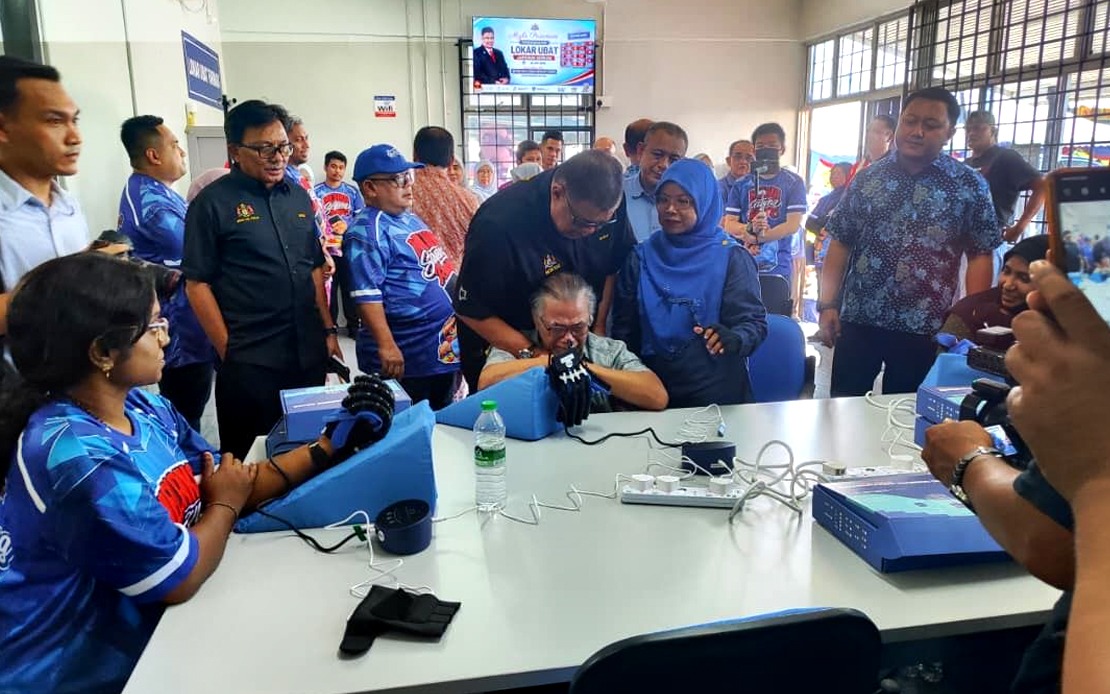
Universiti Teknikal Malaysia Melaka (UTeM) has inaugurated a groundbreaking rehabilitation facility that represents a significant step forward in bringing cutting-edge medical technology to community health services. The MADANI Community Rehabilitation Centre and Gymnasium, located in Serkam, Jasin, officially opened by Melaka Chief Minister Datuk Seri Ab Rauf Yusoh, showcases how academic research can translate into tangible benefits for patients requiring intensive physiotherapy and recovery support. The centre draws its funding from the Finance Ministry's UniMADANI 2024 Grant, reflecting the government's commitment to embedding innovation within public health infrastructure across Malaysia's regions.
The facility addresses a critical gap in rehabilitation services by offering accessible, technology-enhanced treatment options for individuals managing stroke recovery, traumatic injuries, and conditions causing mobility restrictions or muscular weakness. Rather than relying solely on conventional manual therapy techniques, the centre deploys a suite of proprietary technologies developed by UTeM's research teams, fundamentally altering how rehabilitation protocols can be standardised and intensified. This approach proves particularly valuable in a Malaysian context where rural and semi-urban areas often lack specialist physiotherapy resources, making innovation-driven solutions essential for equitable healthcare distribution.
Among the centre's flagship innovations is Roboglove, a robotic device engineered to facilitate structured hand rehabilitation through precisely controlled exercises and resistance training. Patients can engage with the technology repeatedly without fatigue-induced degradation of therapy quality, enabling consistent progress tracking and objectively measurable outcomes. The Assistive Lower Limb Chair (ALLC) complements this offering by automating lower limb exercise protocols, particularly beneficial for post-stroke patients requiring extensive repetitive motion to rebuild motor function and muscle memory. These innovations eliminate variability inherent in manual therapy, where practitioner fatigue or inconsistent technique can affect treatment efficacy.
The exoskeleton system integrated into the centre represents the most sophisticated element of UTeM's technological portfolio. By mechanically supporting and guiding patient movement, exoskeletons enable individuals with severe mobility limitations to perform exercises that would otherwise prove impossible, simultaneously rebuilding neural pathways and strengthening atrophied muscles. This technology opens rehabilitation possibilities for patients previously considered unable to benefit from intensive movement-based therapy, fundamentally expanding who can access meaningful recovery interventions.
UTeM Vice-Chancellor Prof Datuk Dr Massila Kamalrudin emphasised the centre's role as a demonstration model for scaling technology-enabled rehabilitation across Malaysia. Rather than confining research outputs to academic publications, the university has embedded its innovations within a functioning clinical environment, creating a proof-of-concept facility that other institutions and healthcare providers can study and replicate. This philosophy of translational research—moving discoveries from laboratory to community application—aligns with broader global trends in academic medical institutions prioritising practical health impact alongside theoretical advancement.
The establishment process reveals the multi-stakeholder approach increasingly necessary for successful health innovation deployment. Beyond UTeM's research capabilities, the project engaged the Serkam State Constituency Development and Coordination Committee (Japerun) Office, the Kampung Pulai Village Development and Security Committee, Malaysia's Social Welfare Department, and the Social Security Organisation (PERKESO). This constellation of partners reflects the reality that technological innovation alone proves insufficient; successful health service delivery requires coordination across government structures, community engagement, and institutional expertise, each contributing distinct capacities.
For Malaysian healthcare policy-makers, the MADANI Centre exemplifies how public universities can function as innovation engines serving broader population health objectives. Rather than positioning UTeM's research primarily as an export commodity or prestige asset, the centre demonstrates commitment to domestic application, generating evidence about what rehabilitation technologies work effectively within Malaysian clinical contexts. This localization proves critical, as technologies developed in different healthcare systems, with different patient populations, may require adaptation before achieving optimal outcomes within Malaysia's specific demographic and resource landscape.
The centre's emergence reflects sophisticated understanding of stroke and injury burden within Southeast Asia. Malaysia, like most regional economies experiencing rapid urbanisation and demographic ageing, faces escalating incidence of cerebrovascular accidents and age-related mobility disorders. Conventional rehabilitation infrastructure struggles to accommodate demand, typically resulting in long wait times, limited treatment intensity, and suboptimal functional outcomes for survivors. Technology-enabled facilities can partially address capacity constraints, allowing existing physiotherapists to supervise and guide patients working with robotic systems rather than delivering all therapeutic input manually.
From a policy perspective, the MADANI Centre's sustainability model warrants attention. Funded through a specific government grant, the facility now operates as a community resource, with patients potentially accessing services through existing healthcare financing mechanisms including PERKESO coverage and government subsidisation. This financial positioning differs markedly from purely private ventures, potentially offering more economically vulnerable populations access to technologies otherwise confined to high-end private clinics. The partnership with PERKESO particularly matters, as this social security body covers occupational injuries and illnesses, suggesting the centre can serve substantial patient populations with formally funded treatment episodes.
Regionally, UTeM's initiative signals Malaysia's positioning within the Southeast Asian health technology landscape. Neighbouring countries including Thailand and Singapore have invested heavily in rehabilitation innovation and robotic-assisted therapy, establishing competitive advantages in both service delivery and technology manufacturing. Malaysia's public university systems, through facilities like the MADANI Centre, can reduce this gap by demonstrating viable, locally-appropriate applications. Success with this prototype may encourage other Malaysian universities to establish comparable innovation-focused health service centres, building a distributed network of technology-driven rehabilitation capacity.
The centre's long-term impact will depend substantially on sustained funding, ongoing staff training in technology operation and clinical interpretation, and systematic documentation of patient outcomes. Universities occasionally develop innovative facilities that languish due to insufficient operational resources or limited integration with conventional healthcare referral pathways. UTeM's stated intention to expand this model to additional locations suggests institutional commitment extending beyond ribbon-cutting ceremonies, though implementation will require persistent advocacy for funding and bureaucratic support across multiple government cycles.
For individual patients and families, the MADANI Centre offers concrete advantages: proximity to advanced rehabilitation technology without requiring travel to specialised urban medical centres, integration of evidence-based robotically-assisted exercises within structured programmes, and potential for improved functional recovery through intensified, consistent therapy. For rehabilitation professionals, the centre provides opportunity to develop expertise with emerging technologies, positioning them advantageously as Malaysia's health system increasingly incorporates robotic and assistive devices. This professional development dimension proves particularly important for regions like Melaka, where healthcare workforce opportunities sometimes lag behind peninsular urban centres.

