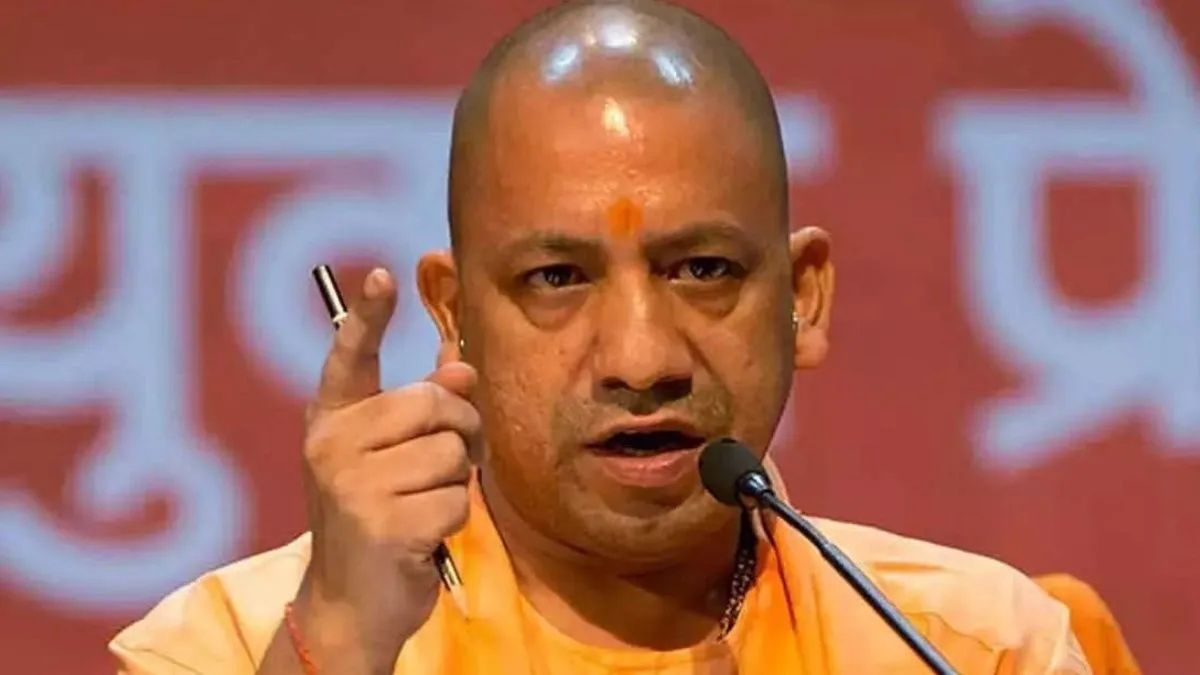
Uttar Pradesh Chief Minister Yogi Adityanath has drawn a firm line in the sand following the registration of the first FIR in the Shri Ram Janmabhoomi Teerth Kshetra donation case, making clear that any attempt to exploit or manipulate people's religious devotion will be met with decisive governmental response. Speaking at a public gathering in Deoria on Friday, where he inaugurated various development projects, Adityanath underscored the seriousness with which his administration views the alleged financial impropriety at one of India's most significant religious sites, signalling that the investigation would proceed without compromise or political consideration.
The Chief Minister's comments come shortly after the Special Investigation Team submitted its report on the matter, triggering the immediate commencement of official proceedings. Adityanath emphasised that his government has consistently maintained its commitment to separating authentic accounts from distortions, and that anyone found guilty of breaching public trust through manipulation of faith would face proportionate consequences. The remarks reflected both his personal investment in protecting the sanctity of the Ram Temple project and his administration's broader positioning as a guardian of Hindu religious interests in a state where such messaging carries considerable political weight.
Adityanath's defensive posture extended beyond the immediate donation scandal to encompass a broader historical narrative. He reminded audiences that Ayodhya itself represents far more than a single temple—it embodies the collective faith of millions of devotees and stands as a symbol of India's Sanatan Dharma. This framing transformed the donation case from a simple instance of potential financial misconduct into something with greater spiritual and civilizational implications, a rhetorical move that has proven effective in shaping public perception of controversies involving Hindu religious institutions in recent years.
The Chief Minister used his Deoria address to launch a sustained critique of the Indian National Congress and the Samajwadi Party, characterising both organisations as historically hostile to Ram worship and Hindu religious expression. He recalled that Congress had long denied the historical existence of Ram himself, effectively rejecting the entire theological foundation underlying the Ayodhya movement. Adityanath highlighted the legal battles these parties mounted against the temple's construction, arguing that they had systematically opposed the project through courtroom tactics and deployed extensive legal resources to prevent its realisation. This historical recapitulation served to delegitimise any criticism emerging from these quarters regarding the current donation irregularities.
Adityanath's critique extended to allegations of communal violence allegedly perpetrated by previous administrations. He referenced incidents where security forces opened fire on Ram Navami processionists, and detailed restrictions imposed on religious observances including Krishna Janmotsav celebrations, the Kanwar Yatra pilgrimage, and Durga Puja festivities. He pointedly mentioned the Lar riot as emblematic of communal instability allegedly fostered under earlier governance, constructing an argument that opposition parties had consistently undermined rather than protected religious faith. This historical inventory aimed to position the current Yogi government as fundamentally different in its orientation toward Hindu religious concerns.
The Chief Minister's broader political message contained an implicit warning to both Congress and Samajwadi Party about the limits of acceptable political opposition. He suggested that accusations regarding Ayodhya and the Ram Temple constituted an intolerable breach of respect for public sentiment, particularly given these parties' historical records on religious matters. Adityanath cast their current criticism as opportunistic—emerging only because their traditional political fortunes had declined under the double-engine government arrangement combining state and central BJP administrations. The implication was that criticism of the temple or its administration carried particular illegitimacy given the critics' own problematic histories.
In terms of governance messaging, Adityanath directed opposition parties to either produce concrete evidence supporting their allegations or cease public commentary entirely. He framed the Special Investigation Team's work as a professional undertaking that should proceed without political interference or countervailing media campaigns. This positioning attempted to recast the donation scandal as a matter best resolved through administrative channels rather than public debate, effectively attempting to remove the issue from political contestation. His call for cooperation with the SIT, extended conditionally to those with genuine evidence, suggested that he viewed the investigation less as a neutral fact-finding exercise and more as a process that should vindicate his administration's oversight of the temple institution.
For Malaysian and Southeast Asian observers, this episode illuminates how religious controversies intersect with political competition in India's federal system. The Uttar Pradesh Chief Minister's muscular response demonstrates how state governments leverage religious sentiment to consolidate political support while simultaneously delegitimising opposition. The donation case itself—whatever its factual origins—has become absorbed into larger narratives about religious authenticity and communal governance. This pattern reflects broader dynamics across the region where religious institutions increasingly become focal points for political contestation and where administrative control over such institutions carries significant electoral implications.
The implications extend to questions about institutional accountability and transparency in religious organisations. Adityanath's framing of the investigation as primarily a matter of protecting faith rather than ensuring financial probity suggests that religious considerations may potentially override conventional principles of administrative oversight. This blending of religious and political imperatives characterises governance in several South Asian contexts, where separating institutional accountability from religious sentiment proves persistently difficult. For international observers and diaspora communities invested in these institutions, the episode raises questions about the future governance standards that will apply to major religious sites under such political dispensations.
Looking ahead, the Special Investigation Team's findings and subsequent official action will largely determine whether Adityanath's hardline response proves proportionate or excessive. Should the investigation reveal substantial financial irregularities, the government's handling of the matter will test whether its commitment to accountability extends equally to institutions aligned with its religious and political worldview. Conversely, should the investigation exonerate current temple management, opposition parties will face renewed difficulty in maintaining credibility on governance issues. Either outcome carries implications for how religious institutions balance administrative transparency with protection of devotional sentiment—a tension that extends well beyond Ayodhya to affect institutional governance across South Asia's diverse religious landscape.

