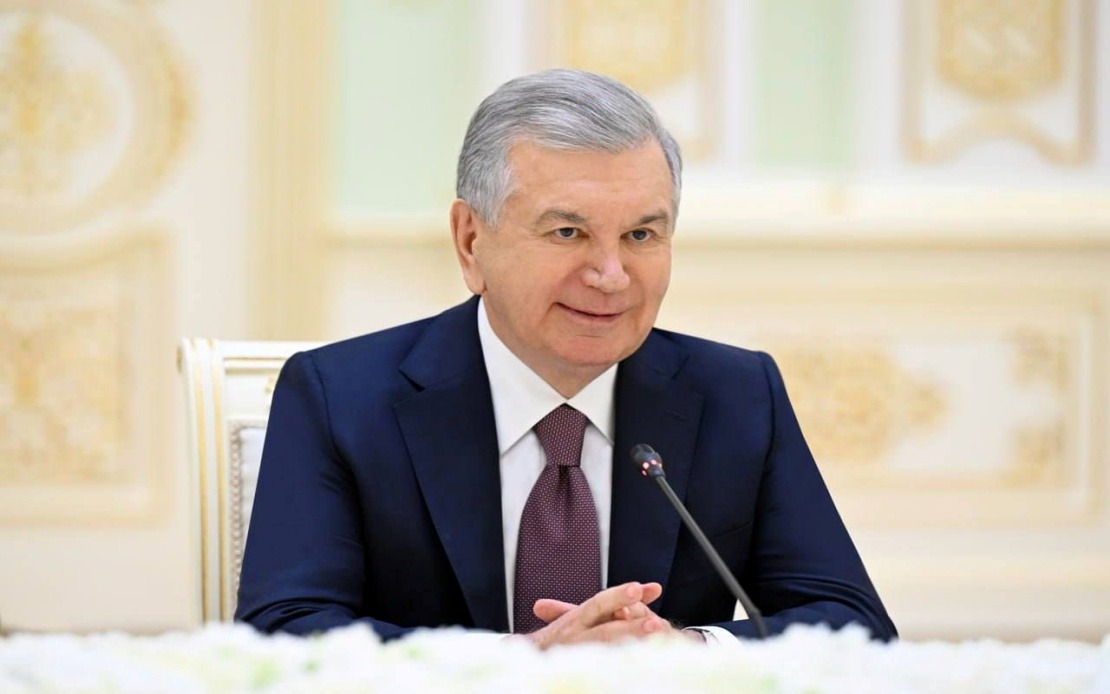
Uzbekistan President Shavkat Mirziyoyev has made a compelling case for leveraging the historical and contemporary contributions of Islamic civilisation to address mounting global tensions, divisions and prejudice. Speaking at the First International Islamic Civilisation Forum in Tashkent on July 7, the Central Asian leader positioned science, education and shared cultural values as antidotes to the rising conflicts, mutual suspicion and deliberate attempts to fracture relations between different faiths and peoples that characterise today's geopolitical landscape.
Mirziyoyev's intervention arrives at a moment when Islamophobia and sectarian tensions continue to destabilise regions across Africa, the Middle East and Asia, while extremist interpretations of Islam have provoked backlash against Muslim-majority societies. His remarks, delivered through presidential adviser Khayriddin Sultanov, reflect Uzbekistan's broader strategic positioning as a neutral cultural and intellectual hub in Central Asia capable of bridging Eastern and Western perspectives. The forum itself, spanning three cities—Tashkent, Samarkand and Termez—and drawing approximately 300 participants from more than 50 nations, underscores the breadth of international engagement Uzbekistan has cultivated around this agenda.
The Uzbek president anchored his argument in historical precedent, reminding participants that Islamic civilisation has long been a crucible for scientific innovation, philosophical inquiry and cultural achievement. He specifically invoked Central Asia's outsized intellectual contributions to world thought, pointing to luminaries including Muhammad al-Khwarizmi, whose algorithmic methods underpin modern mathematics; Abu Rayhan Biruni, the polymath astronomer and geographer; Abu Ali ibn Sina, whose medical treatises dominated European universities for centuries; and Imam al-Bukhari, whose Islamic jurisprudential work remains foundational. This genealogy serves to reposition Islam not as a threat to global modernity but as a civilisation integral to the very development of contemporary scientific and rational thought.
Central to Mirziyoyev's vision is Uzbekistan's "Enlightenment Against Ignorance" initiative, formally presented to the United Nations in 2017. The framework posits that science, education, cultural preservation and ethical values constitute the bedrock upon which durable peace, social cohesion and sustainable development must be constructed. By framing the challenge in these terms—ignorance versus enlightenment—rather than along ideological or religious fault lines, Uzbekistan advances a universalist argument that transcends sectarian divisions and appeals to shared human interests in prosperity, knowledge and dignity.
The establishment of the Islamic Civilisation Centre itself represents institutional embodiment of these principles. Mirziyoyev characterised the centre as an "intellectual bridge" connecting past and future, and East and West, serving as an open platform where scholars, researchers and religious figures from diverse backgrounds can collaborate on expanding scientific cooperation and protecting what he termed "universal values." For Malaysian and Southeast Asian readers, this model offers insights into how Muslim-majority nations can strategically position themselves as custodians and promoters of Islamic heritage without retreating into insularity or confrontationalism, thereby strengthening rather than weakening international standing.
The five-day forum, themed "The Path of Peace, Tolerance and Enlightenment" and jointly organised by the Islamic Civilisation Centre and the Islamic World Educational, Scientific and Cultural Organisation (ICESCO), encompasses an ambitious intellectual programme. Eleven plenary sessions, four international scientific conferences, exhibitions of rare manuscripts and cultural artefacts, and presentations on digital heritage preservation and artificial intelligence applications for safeguarding Islamic manuscripts constitute a comprehensive attempt to showcase Islam's contributions to knowledge production while demonstrating Islam's compatibility with cutting-edge technology and contemporary methodologies.
Mirziyoyev's emphasis on science and education as "the greatest unifying forces of our time" represents a deliberate recentring of the conversation around Islam away from theological disputes or geopolitical competition toward shared intellectual endeavour. This rhetorical move carries particular resonance in Southeast Asia, where Muslim-majority countries including Malaysia, Indonesia and Brunei have long grappled with balancing Islamic identity with participation in a globalised, technology-driven knowledge economy. By positioning Islamic civilisation as fundamentally aligned with scientific advancement and innovation, Mirziyoyev provides ideological cover and philosophical justification for such integration.
The forum's expected conclusions—adoption of the Tashkent Declaration, approval of the Islamic Civilisation Centre's 2027-2030 development roadmap, and signing of cooperation agreements among international organisations, research centres and cultural institutions—suggest that Uzbekistan is laying institutional groundwork for sustained, multi-year collaboration. These mechanisms create formal channels through which governments, universities, museums and research bodies can coordinate efforts in preserving Islamic manuscripts, conducting comparative civilisational studies and advancing intercultural dialogue.
For Malaysia and the broader Southeast Asian region, Uzbekistan's initiative carries several implications. First, it demonstrates how a Central Asian Muslim-majority nation is leveraging its geographic position, historical legacy and soft power to carve out diplomatic space and influence in an increasingly multipolar world. Second, it offers a template for how Islamic identity can be mobilised not as a source of conflict or isolation but as a platform for constructive international engagement anchored in culture, education and scientific collaboration. Third, it suggests that framing religious and civilisational identity in terms of intellectual contribution and historical achievement—rather than contemporary political grievance—can enable broader coalition-building among diverse actors.
The presence of representatives from over 50 countries at the Tashkent forum indicates that Mirziyoyev's framing resonates beyond the Muslim world. By inviting policymakers, scholars and cultural figures from across the globe to engage with Islamic civilisation's heritage and contemporary relevance, Uzbekistan positions itself as a convener capable of transcending traditional geopolitical blocs. For Southeast Asian nations concerned about maintaining balanced relationships while advancing regional development priorities, this approach offers instructive lessons in strategic positioning.
Ultimately, Mirziyoyev's call for global unity through Islamic civilisation represents an attempt to rewrite the narrative around Islam in international affairs. Rather than allowing extremism, Islamophobia and sectarian conflict to define how the Islamic world is perceived, the Uzbek president insists on foregrounding contributions to human knowledge, artistic achievement and ethical thought. Whether this ambitious intellectual and diplomatic project can durably shift global perceptions and behaviour remains to be seen, but the breadth of participation and institutional infrastructure being deployed suggests that Uzbekistan is making a serious, long-term commitment to this vision.

