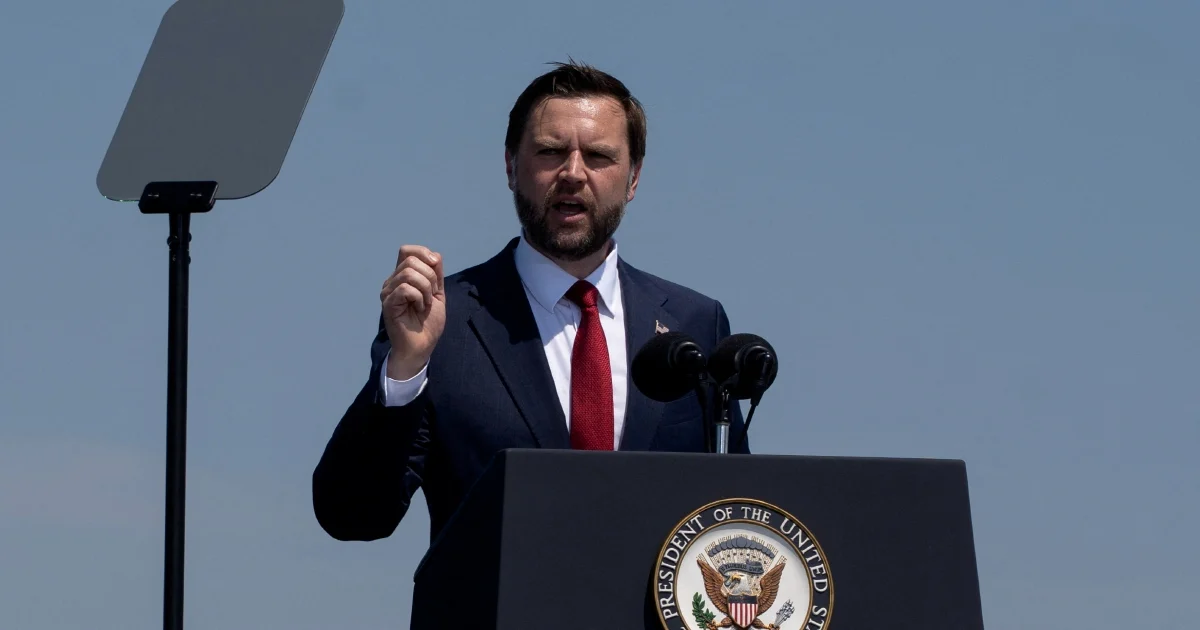
US Vice President JD Vance has levelled a pointed critique at Britain's political establishment during a London visit, declaring that the country has been "failed by its leadership for a long time" and signalling hopes that the incoming prime minister will tackle the deep-rooted institutional problems vexing British voters. The remarks underscore growing American attention to British domestic politics as the two allies prepare for a potential shift in their relationship under new UK leadership.
Vance's assessment reflects growing frustration in Washington with British governance structures that have produced rapid leadership changes and policy gridlock in recent years. The United States, under the incoming Trump administration, appears intent on rebuilding transatlantic ties based on practical alignment rather than automatic deference. American officials are increasingly candid about expecting their British counterparts to project strength and competence, particularly as geopolitical tensions mount in Europe and the Indo-Pacific region. The Vice President's comments signal that the new US administration will evaluate the UK partnership through a performance-based lens.
The timing of Vance's intervention is significant. British voters have expressed deep dissatisfaction with the state of their political system, and the incoming government will inherit an economy facing headwinds, a fractured electorate, and diminished international standing. By publicly endorsing the notion that structural change is essential, Vance is amplifying a message that resonates across the British political spectrum, from Labour activists to Reform UK supporters. This approach helps position the incoming Trump administration as aligned with public sentiment rather than with any particular political faction.
For Malaysian and Southeast Asian observers, the Vance intervention illuminates broader patterns in how Washington evaluates its alliances. The straightforward criticism of a longtime ally suggests that the Trump administration intends to judge partnerships by measurable outcomes in defence spending, intelligence cooperation, and trade agreements rather than by traditional diplomatic niceties. This has implications for ASEAN nations contemplating their own relationships with the United States, as it signals a preference for transactional engagement over sentiment-based partnerships.
The emphasis on "structural change" carries particular weight. Britain's political system has grown unwieldy through decades of incremental legislation and constitutional conventions, making it difficult to implement coherent long-term strategy. The failure to resolve major questions—from NHS funding to energy policy to social cohesion—has accumulated into what Vance characterises as systemic leadership failure. American observers worry that without substantive institutional reform, Britain will continue to experience the kind of political churn that undermines its reliability as a partner in confronting emerging strategic challenges.
Vance's remarks also reflect calculations about Britain's place in American strategic thinking. The UK remains crucial for NATO, intelligence gathering through the Five Eyes alliance, and maintaining democratic influence in Europe. However, Washington increasingly views British influence as dependent on domestic stability and coherent policy direction. A British government that cannot command parliamentary support or articulate a credible economic strategy becomes less useful to American interests, regardless of historical ties. The Vice President is essentially issuing a marker that the UK must restore its own capacity before it can meaningfully contribute to shared Western objectives.
The incoming British prime minister will face pressure to demonstrate swift action on the issues Vance implicitly flagged. These include economic competitiveness, institutional efficiency, and projection of national purpose. The new government's ability to move decisively on immigration, energy security, and defence spending will signal whether it represents the "structural change" that voters and American officials believe is necessary. Early stumbles could reinforce perceptions of British decline, while decisive leadership could help restore both domestic confidence and international credibility.
For the broader Western alliance, Vance's intervention highlights a recalibration underway. The post-Cold War consensus that bound Atlantic allies is being replaced by a more competitive logic, where partners must demonstrate concrete value. Britain's historical role as a bridge between North America and Europe carries less weight if that bridge is weakened by domestic dysfunction. The incoming Labour government under Keir Starmer will need to prove it can deliver the stability and reformist energy that American officials like Vance are publicly requesting.
The Vice President's comments also reflect American concern about Britain's ability to contribute meaningfully to Indo-Pacific strategy. The AUKUS alliance and British interest in maintaining naval presence east of Suez require a government with fiscal discipline and strategic clarity. Vance's implicit message is that Britain cannot simultaneously grapple with intractable domestic problems and project credible influence in Asia-Pacific. This presents a challenge for the new British government, which will need to balance domestic reform with international commitments.
From a diplomatic perspective, Vance's directness represents a departure from the carefully calibrated praise that American officials traditionally offer to longstanding allies. This shift suggests the Trump administration intends to maintain a transactional approach to international relations, where blunt assessments of partner performance are offered alongside offers of cooperation. For Britain and other US allies, the message is clear: prove your worth through domestic stability and strategic clarity, or accept diminished influence in the councils that shape global affairs.

