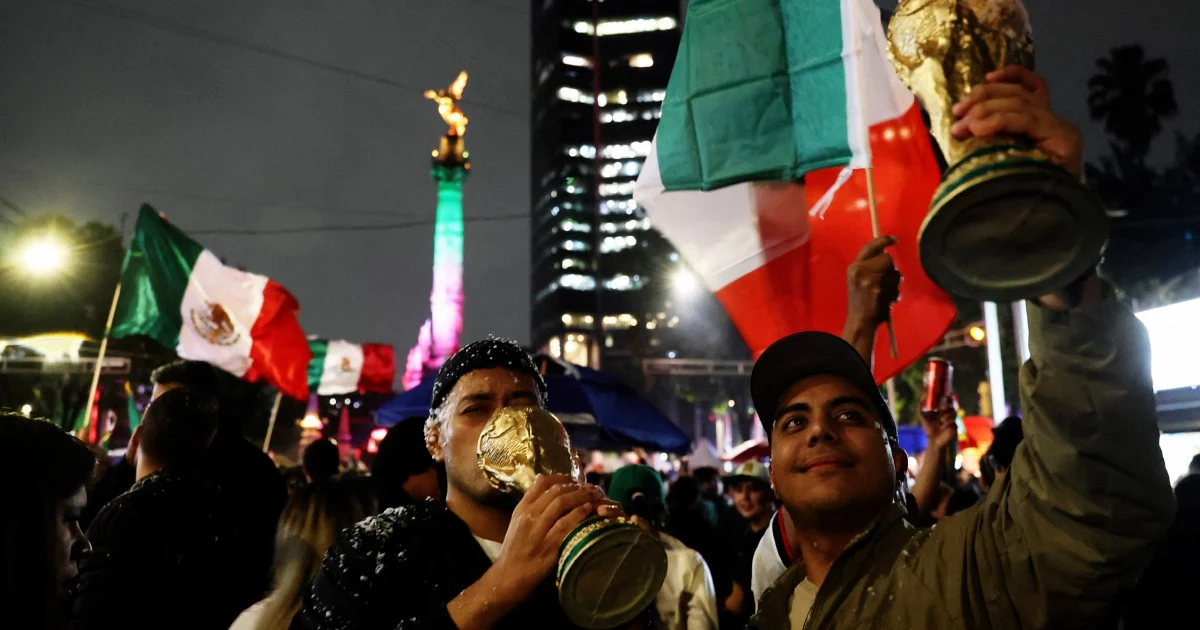
Mexico's World Cup celebrations descended into chaos on Wednesday evening when a vehicle accelerated into a gathering of supporters in Cabo San Lucas, one of the country's most visited tourist destinations. The incident, which unfolded in the beachside resort town, resulted in injuries to 17 individuals, according to a statement released by Los Cabos city authorities. Among the injured was the driver, who was immediately taken into custody following the collision.
Footage circulating on social media platforms and authenticated by Reuters captured the moments leading up to the collision. The videos show a black sedan positioned among a throng of jubilant fans dressed in Mexico's national football team attire. Moments later, the vehicle suddenly surged forward into the crowd, with witnesses describing the disturbing scene as people were thrown through the air by the force of the impact. The car continued its trajectory until striking protective bollards installed along the street, bringing it to a halt.
The immediate aftermath proved equally disturbing. Additional verified footage shows members of the crowd attempting to extract the driver from the vehicle while simultaneously attacking them. Simultaneously, multiple individuals could be seen lying on the ground with visible injuries, though their conditions remained unclear at the time of the initial reporting. Emergency responders arrived at the scene to treat the wounded and secure the area.
Cabo San Lucas, situated at the southern tip of the Baja California Peninsula, is a renowned international tourist destination that welcomes hundreds of thousands of visitors annually. The resort area's vibrant nightlife, beaches, and resort facilities make it particularly popular during major sporting events when celebrations tend to intensify. The incident has raised questions about crowd safety management during high-profile celebrations in densely populated public spaces throughout Mexico.
The motivations behind the driver's actions remain under investigation by local authorities. Whether the incident was deliberate, accidental, or the result of a medical emergency has not been immediately clarified. Los Cabos officials have indicated that further details would emerge as the investigation progresses and statements from witnesses and the driver are formally documented.
This incident reflects broader concerns across Mexico regarding public safety during major sporting celebrations. Football victories, particularly those involving the national team on the world stage, tend to draw massive crowds into streets and public venues, creating both festive atmospheres and potential hazards. Authorities in various Mexican cities have in the past implemented additional security measures and crowd control strategies during anticipated periods of celebration following significant national sporting achievements.
The injury toll of 17 individuals represents a substantial medical response requirement for the resort destination. Local healthcare facilities in Cabo San Lucas, while equipped to handle typical tourist injuries and medical emergencies, faced an unusual surge in trauma cases. The extent of injuries ranged across the group, with some individuals requiring immediate hospital admission while others likely received treatment for minor wounds at medical clinics.
For Malaysian and Southeast Asian readers, this incident underscores the unpredictable nature of large public gatherings during sporting events, a phenomenon not unique to Mexico. Similar celebrations occur throughout Asia during World Cup tournaments and continental football championships, drawing massive crowds into public spaces. The incident serves as a cautionary reminder of the importance of adequate security infrastructure, crowd management protocols, and emergency response systems in high-density celebration zones.
The social media documentation of the incident highlights how modern communications technology enables rapid information sharing during emergencies, though it also spreads graphic content that can be distressing to viewers. Authorities worldwide increasingly grapple with balancing public information needs against the psychological impact of widely circulated traumatic imagery from such events.
Los Cabos authorities have not yet announced specific measures that might be implemented to prevent similar incidents at future celebrations. Questions linger about whether physical barriers were inadequate, whether security personnel presence was insufficient, or whether other factors contributed to the driver's ability to accelerate into the crowd. The investigation will likely inform subsequent safety assessments conducted by municipal officials in Cabo San Lucas and other major Mexican resort destinations.

