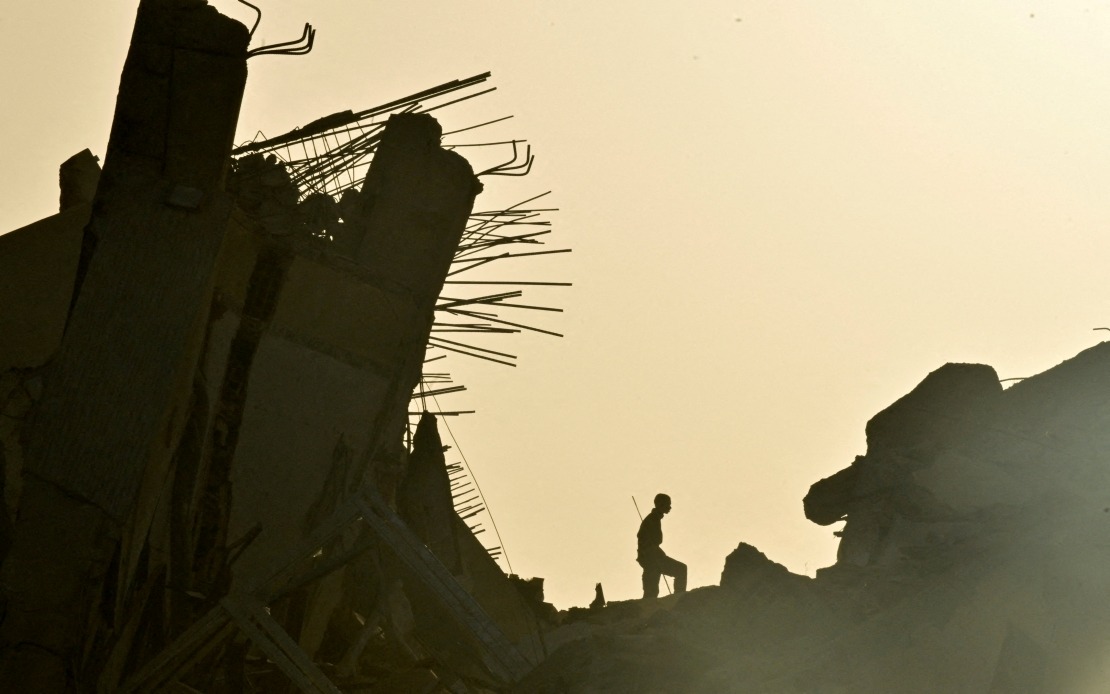
Venezuela is grappling with a humanitarian catastrophe following twin earthquakes that struck the nation on Wednesday, with the death toll now climbing to at least 1,450 and more than 3,200 people suffering injuries, according to official statements released on Sunday. The scale of devastation has prompted an unprecedented international rescue mobilisation, yet authorities acknowledge that thousands may still lie trapped beneath tonnes of concrete and steel as the window for locating survivors alive rapidly diminishes.
The back-to-back seismic events registered magnitudes of 7.2 and 7.5, unleashing destructive force across the country with particular severity in the coastal region of La Guaira and the capital Caracas. The intensity of the initial quakes was followed by an additional 430 aftershocks, creating ongoing instability that complicates both rescue operations and the structural integrity of partially damaged buildings. National Assembly President Jorge Rodríguez underscored the continuing danger posed by these secondary tremors, which have hindered rescue efforts and displaced tens of thousands of residents.
The physical destruction has been staggering in scope. More than 2,500 residential structures and public facilities have either completely collapsed or sustained severe damage, fundamentally altering the urban landscape of affected regions. Among the hardest hit infrastructure are healthcare facilities, with approximately 38 hospitals either destroyed or rendered inoperable, and residential housing stock, with roughly 780 homes in ruins. This destruction of medical infrastructure presents a secondary crisis, as treatment for the injured becomes increasingly difficult precisely when demand for medical services peaks.
Rescue operations represent the largest coordinated international relief effort currently underway, reflecting both the severity of the crisis and international solidarity with the Venezuelan people. Around 30,000 Venezuelan emergency personnel have been mobilised from across the country, complemented by 2,700 specialised rescue workers dispatched from 24 countries. This multinational workforce operates around the clock through debris fields, employing advanced detection equipment and manual excavation techniques to locate and extract survivors. Yet despite these substantial resources and determined efforts, the mathematics of disaster response work against their mission.
Expert consensus holds that the critical period for locating viable survivors typically extends only 72 hours from the moment of collapse, after which survival rates plummet dramatically due to dehydration, internal injuries, and the physical impossibility of sustaining life without air, water, or medical intervention. This narrow timeframe has created urgent pressure within rescue command structures, as teams recognise that each passing hour reduces the statistical likelihood of discovering anyone alive beneath the wreckage. The combination of vast affected areas, ongoing aftershock dangers, and limited rescue capacity has forced difficult prioritisation decisions about where resources should focus first.
The earthquakes have exposed vulnerabilities in Venezuela's disaster preparedness infrastructure and building codes. The extent of structural failure suggests that many buildings did not meet seismic safety standards, a reality that development experts attribute to decades of underinvestment in maintenance and construction oversight. The complete levelling of entire apartment blocks in densely populated urban areas indicates that these structures may have suffered from poor construction quality, inadequate reinforcement, or deferred maintenance—factors that transform a significant natural disaster into a calamity of exceptional proportions.
For Malaysian policymakers and regional development planners, the Venezuela disaster offers sobering lessons about earthquake resilience. Southeast Asia sits within the Pacific Ring of Fire and experiences regular seismic activity, with several countries—particularly Indonesia and the Philippines—facing considerable earthquake risk. The Venezuelan experience demonstrates how inadequate building standards and insufficient disaster preparedness can transform geological events into mass casualty incidents. Malaysia's own building codes and enforcement mechanisms merit reassessment in light of these developments, particularly as urban densification continues.
The international response to the Venezuelan crisis also carries diplomatic implications. The coordination of rescue efforts across 25 countries, despite Venezuela's political isolation and fraught international relations, demonstrates that humanitarian imperatives can transcend geopolitical divides. This unprecedented cooperation suggests that even deeply polarised international circumstances can motivate unified action when human suffering reaches sufficient scale. For ASEAN member states, this model of overcoming political differences to address shared humanitarian challenges presents relevant precedent.
The immediate aftermath will concentrate on search and rescue operations through the critical window, but medium-term challenges loom equally large. Providing shelter, food, and medical care to hundreds of thousands of displaced persons will strain resources for months. The destruction of hospitals complicates treatment of the injured and elevates risk of disease outbreaks among displaced populations crowded into temporary shelters. Reconstruction will require sustained international financial assistance and expertise, a process that typically spans years rather than months. Venezuela's already strained economy, weakened by years of political crisis and international sanctions, possesses minimal domestic capacity to finance reconstruction independently.

