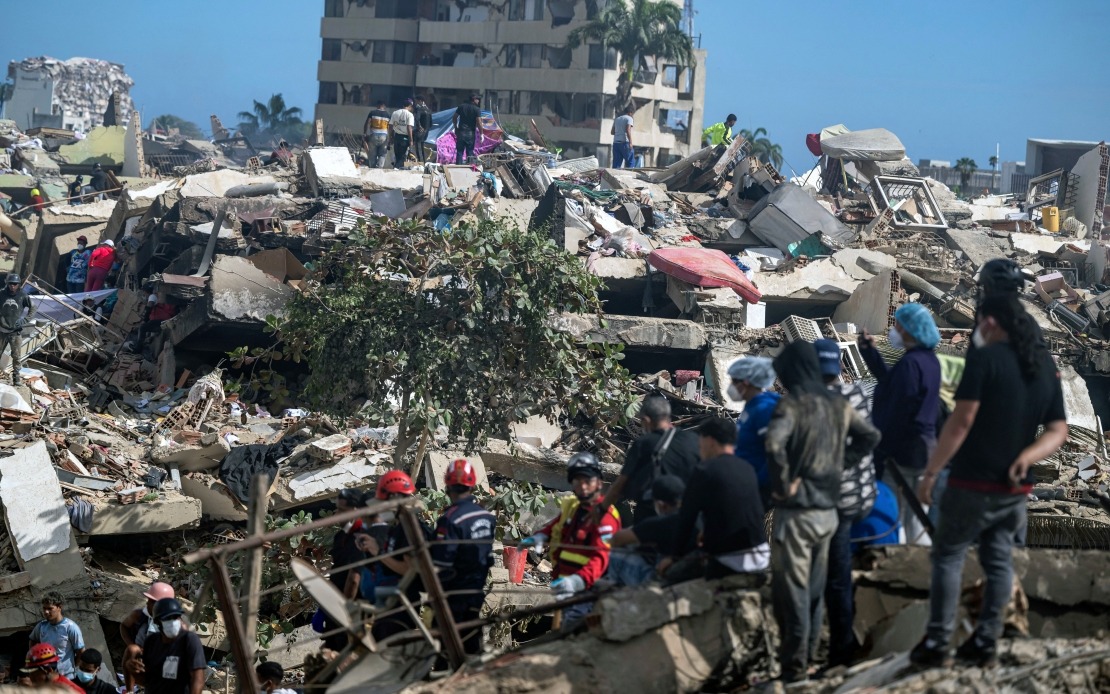
The humanitarian crisis unfolding in northern Venezuela has deepened significantly, with National Assembly President Jorge Rodriguez confirming that 2,295 people have perished in the devastating twin earthquakes that struck the country on June 24. Speaking during a televised address on state broadcaster Venezolana de Television (VTV), Rodriguez painted a grim picture of the disaster's expanding scale, revealing that documented injury figures have surged to 11,267 individuals while approximately 12,841 residents remain displaced from their homes.
The seismic event that has left the northern region reeling comprised two powerful tremors measuring 7.2 and 7.5 magnitude respectively. The destructive force unleashed by these earthquakes has proven formidable, with preliminary analysis of satellite data from NASA indicating that in excess of 58,000 structures have sustained significant damage or been completely destroyed across the affected zones. Such comprehensive structural damage raises serious concerns about housing shortages and the logistical challenges facing reconstruction efforts in the months ahead.
Search and rescue operations represent a critical focal point in the ongoing response, with more than 4,000 emergency personnel mobilised across impacted regions having managed to extract 6,461 survivors from the rubble of collapsed buildings as of Wednesday. The international community has mobilised swiftly to support these efforts, with rescue teams drawn from more than 30 countries actively participating in the dangerous and labour-intensive work of locating and retrieving survivors from debris fields. This unprecedented coordination underscores the severity of the disaster and the need for sustained external assistance.
The earthquake has produced a substantial aftershock sequence that continues to rattle the region and complicate rescue operations. Electoral and municipal records indicate the area has experienced 782 aftershocks since the initial seismic doublet struck, though seismologists have reported encouraging trends in recent days. Both the frequency and intensity of these secondary tremors have demonstrated a marked decline over the preceding 48-hour period, suggesting that the seismic activity is gradually subsiding. Nevertheless, Rodriguez maintained a cautious tone during his briefing, warning that while the acute threat appears to be diminishing, residents and rescue workers must remain vigilant given the ongoing risk from further aftershocks and the structural instability of damaged buildings.
The humanitarian dimensions of this disaster extend beyond immediate casualty figures. The displacement of nearly 13,000 people from their homes represents a significant secondary crisis requiring urgent provision of shelter, food, clean water, and sanitation facilities. Public health authorities face mounting pressure to prevent disease outbreaks in makeshift accommodation centres, particularly given the warm tropical climate of northern Venezuela and the potential for waterborne illnesses in areas where infrastructure has been compromised.
International humanitarian organisations have begun coordinating their response, with the United Nations announcing it is procuring 10,000 body bags to assist in the management of fatalities. This sobering metric reflects both the scale of mortality and the challenges facing authorities in dignified handling of the deceased during what remains an active disaster recovery phase. The acquisition of such supplies demonstrates the serious nature of assessment by UN officials regarding the potential for further casualty discoveries as rescue operations progress.
The earthquake's impact on Venezuela carries particular significance given the country's existing economic and political challenges. The disaster has struck a nation already grappling with widespread poverty, inadequate healthcare infrastructure, and limited government capacity to respond to large-scale emergencies. This convergence of pre-existing vulnerabilities and acute crisis creates a complex humanitarian environment where recovery will require sustained attention and resources beyond what Venezuela's stretched public institutions can mobilise independently.
For Malaysia and other Southeast Asian nations, this disaster serves as a sobering reminder of the region's own seismic vulnerabilities, particularly in areas of high population density. Indonesia, the Philippines, and other earthquake-prone nations in the region can extract valuable lessons from Venezuela's experience regarding emergency preparedness, international coordination mechanisms, and the critical importance of rigorous building code enforcement. The scale of structural damage in Venezuela underscores how inadequate construction standards can exponentially increase both casualties and economic losses when major seismic events occur.
The participation of rescue teams from over 30 countries in Venezuelan operations demonstrates how natural disasters can transcend political boundaries and foster international cooperation. For Southeast Asian countries, maintaining robust mutual aid agreements and pre-positioned rescue equipment capacity represents an investment in regional resilience. The Venezuelan earthquake also highlights the importance of early warning systems, public education on earthquake safety protocols, and regular drills that can meaningfully reduce casualties when major seismic events inevitably occur in vulnerable regions.

