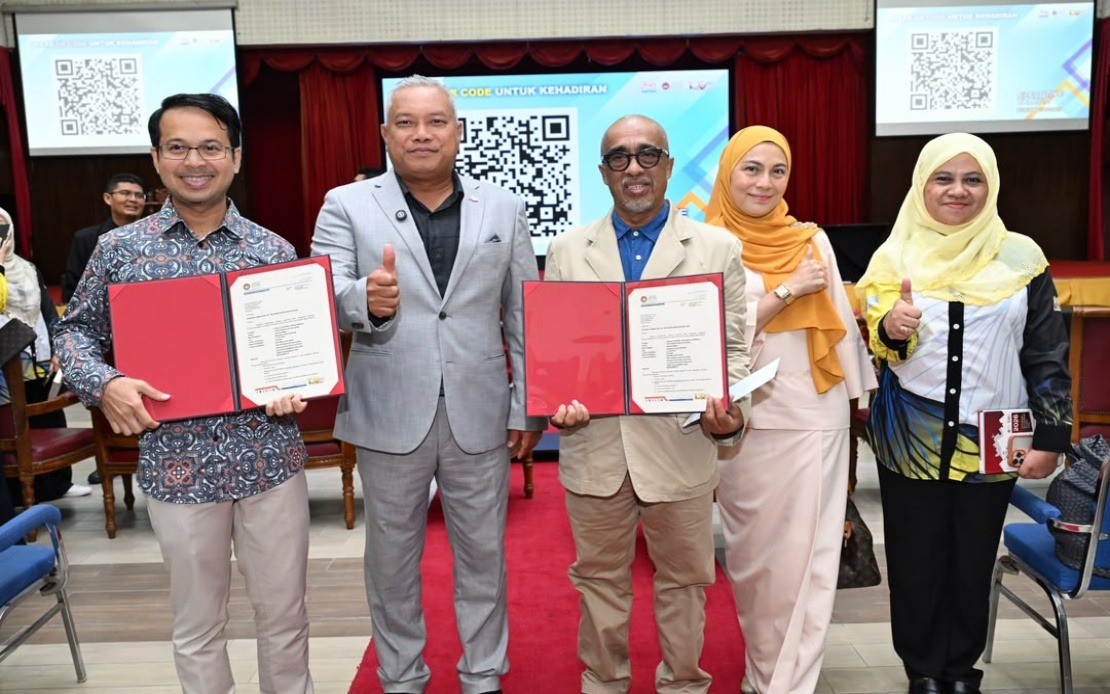
Two prominent figures from Malaysia's entertainment industry have achieved a long-held academic ambition by securing places at Universiti Pendidikan Sultan Idris (UPSI) to pursue postgraduate studies. Celebrated actor and director Mohd Sabri Yunus, aged 65, and television presenter Ahmad Fedtri Yahya, 45, have both been offered admission through the Accreditation of Prior Experiential Learning for Award of Qualifications (APEL.Q) pathway, making them the first cohort of students enrolled in newly developed programmes within UPSI's Faculty of Languages and Communication.
For Sabri Yunus, the admission represents the realisation of an educational dream deferred for more than four decades. During an address at UPSI's Tanjong Malim campus, the veteran entertainer revealed that he had attempted university enrolment twice previously while working at Dewan Bahasa dan Pustaka (DBP) during the 1980s and early 1990s. Career commitments and professional obligations at the national language and literary agency had prevented him from pursuing formal higher education at those earlier junctures, despite his consistent desire to further his academic credentials.
Sabri's Master of Education programme will focus on Malay Literature, a field intimately connected to his professional trajectory spanning decades in arts and cultural production. He emphasised that his thirst for knowledge and intellectual development never ceased, even without formal university enrolment. Rather, he cultivated learning through diverse life experiences and interactions with mentors across his career, treating every encounter as an opportunity for knowledge transfer. Through his UPSI research project, he intends to investigate specific aspects of pantun, the traditional Malay poetic form, bringing scholarly rigour to a cultural practice he has long championed.
Ahmad Fedtri's decision to pursue a Master of Education in Malay Language stems from his conviction that linguistic practice directly reflects a society's civilisational development and intellectual sophistication. The broadcaster expressed genuine enthusiasm about joining the UPSI community, acknowledging the institution's distinguished heritage and academic standing. His choice of programme reflects growing concern among cultural observers about how younger Malaysians engage with the national language, particularly given the dramatic shifts in communication patterns driven by social media platforms and digital technologies.
The television personality highlighted that strengthening Malay language usage among younger generations requires systematic, deliberate effort. Digital platforms and instant messaging applications have fundamentally altered how youth express themselves, often incorporating code-switching, abbreviations, and borrowed vocabulary that traditional language advocates view with concern. By pursuing formal postgraduate education in Malay Language, Fedtri aims to contribute meaningfully to discussions about language preservation and pedagogical innovation in an increasingly digital society.
The APEL.Q pathway itself represents an important evolution in Malaysian higher education accessibility. This accreditation mechanism recognises and validates substantial life experience, professional expertise, and demonstrated competency acquired outside traditional classroom settings. For mature-age students like Sabri and Fedtri, whose careers have generated significant cultural capital and professional accomplishment, APEL.Q provides an alternative route into advanced academic study that conventional entrance requirements might not accommodate. The programme acknowledges that decades of practical engagement with language, literature, and cultural transmission constitute legitimate foundational knowledge for postgraduate research.
UPSI Vice-Chancellor Professor Datuk Dr Md Amin Md Taff underscored the symbolic and practical significance of enrolling these two entertainment personalities. Their presence on campus creates natural bridges between the university's approximately 25,000 students—predominantly future teachers—and the broader cultural and entertainment sectors. As educators-in-training, these students will carry forward lessons about language, artistic expression, and cultural values into classrooms across Malaysia, potentially amplifying UPSI's influence on national cultural education.
The university leadership explicitly framed this enrolment as contributing to efforts to reconstruct Malaysia's cultural identity during a period of rapid social transformation. Both Sabri and Fedtri bring professional credibility and public recognition to discussions about cultural preservation and linguistic standards at a moment when traditional forms face competition from globalised digital culture. Their academic engagement with these subjects lends institutional legitimacy to concerns about language erosion and cultural continuity among younger cohorts.
Sabri Yunus's journey particularly resonates with questions about equity and access in Malaysian higher education. The four-decade delay between his initial aspiration and eventual enrolment illustrates how professional obligations and institutional constraints historically prevented accomplished individuals from formalising their expertise through university credentials. His successful admission via APEL.Q suggests that Malaysia's tertiary sector is gradually recognising that alternative pathways can accommodate mature-age students whose life achievements warrant advanced study without requiring conventional prerequisites.
The implications extend beyond these two individuals. Their UPSI enrolment signals institutional openness to non-traditional student profiles and validates experiential learning as a legitimate foundation for postgraduate work. As Malaysia's education system grapples with questions of inclusivity and lifelong learning, the APEL.Q pathway represents a pragmatic response to demographic changes and the reality that many accomplished professionals arrive at formal study later in life.
Both Sabri and Fedtri's research interests intersect with pressing policy concerns. Malay Literature scholarship addresses questions of cultural heritage documentation and artistic value assessment, while Malay Language research confronts real challenges of linguistic vitality amid technological disruption. By conducting their Master's research within a university committed to teacher education, they will contribute scholarly insights that potentially shape how language and literature are taught across Malaysian schools.
Their presence at UPSI also provides symbolic representation for mature-age learners considering postgraduate study. In a higher education landscape often dominated by younger cohorts, Sabri and Fedtri demonstrate that academic credentials remain achievable regardless of life stage, provided appropriate pathways exist. This carries particular resonance in Southeast Asia, where demographic ageing and extended working lives create growing populations of accomplished professionals seeking advanced educational engagement.

