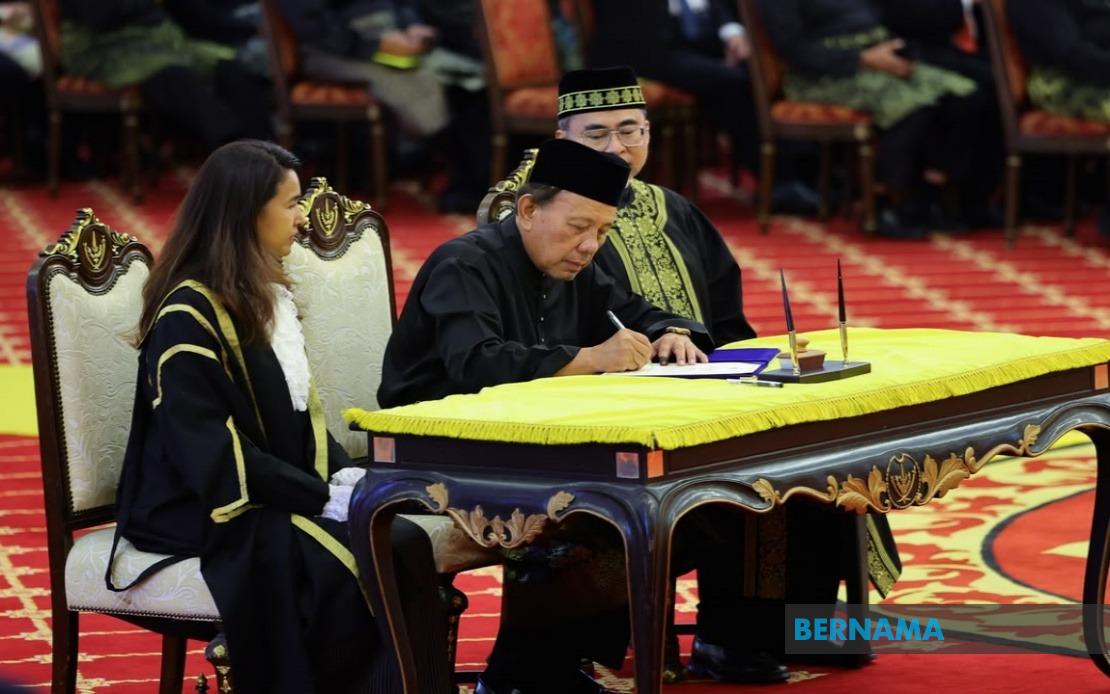
Negeri Sembilan has a new chief executive in Datuk Ismail Lasim, the 67-year-old Juasseh assemblyman who took his oath of office on August 2 before Tuanku Muhriz Tuanku Munawir, the Yang Dipertuan Besar of Negeri Sembilan, at the Balairong Seri in Istana Besar Seri Menanti. The appointment caps a remarkable political journey spanning nearly three decades in state governance, during which Ismail has built a reputation as a steady administrator and UMNO stalwart with deep roots in Negeri Sembilan's political establishment.
Ismail's ascent to the top leadership position represents continuity for the state after the recent 16th state election, which delivered a decisive mandate to the Barisan Nasional and Perikatan Nasional coalitions. The election outcome saw BN claim 18 of Negeri Sembilan's state seats whilst PN secured seven, together furnishing the state government with a commanding two-thirds majority. This stability, combined with Ismail's extensive track record in executive roles, suggests the new administration will prioritise maintaining policy momentum across key development areas.
The new Menteri Besar's career trajectory began in earnest when he first won election to the Negeri Sembilan State Legislative Assembly representing the Senaling seat in 1999. This marked the beginning of his systematic rise through party and state structures. In his most recent electoral contest, Ismail successfully defended the Juasseh seat against opposition challenges, defeating Mohd Aidil Abdullah of Pakatan Harapan and Mohd Zuhaimi Md Yusof of Parti Pribumi Bersatu Malaysia with a commanding majority of 4,091 votes. This substantial victory margin underscores his enduring popularity within his constituency and suggests continued confidence from voters in his leadership credentials.
Ismail's executive experience in state government spans two distinct periods, demonstrating his staying power within Negeri Sembilan's political hierarchy. He first received appointment to the State Executive Council in 2004 and retained this position through three consecutive terms until 2018, a fourteen-year tenure that gave him substantial influence over policy formulation. During this extended period, he held responsibility for the education portfolio, positioning him centrally in debates about human capital development and institutional quality—matters of pressing concern for a state seeking to compete in Malaysia's knowledge-based economy.
Following the establishment of the Unity Government after the 15th state election, Ismail's profile within the administration was elevated when he assumed the chairmanship of the Education and Human Capital Action Committee. This appointment reflected his deep familiarity with educational policy and underscored his value to the broader coalition project. The focus on human capital development signals the state government's recognition that demographic challenges and skills shortages remain critical constraints on economic advancement, positioning Ismail's expertise as particularly relevant for addressing these structural concerns.
Beyond his political credentials, Ismail brings a professional pedigree that many observers regard as an asset. A graduate of the University of Malaya with a Bachelor of Laws degree, he established a legal practice before entering full-time political life. This background provides him with analytical frameworks and institutional knowledge that prove valuable when navigating complex governance questions. Additionally, his experience at board level within corporate entities suggests familiarity with modern management practices and stakeholder engagement—capabilities that increasingly matter in contemporary state administration.
Within UMNO's organisational structure, Ismail has cultivated a profile as a reliable party functionary. He currently serves as Negeri Sembilan UMNO's Information Chief, a position reflecting his standing among the party's senior membership. He also holds the Kuala Pilah Division chief role, anchoring his influence within the broader party architecture. These various responsibilities have accumulated into a reputation as an organisation man—someone comfortable working within established hierarchies and committed to party cohesion rather than ambitious disruptive agendas.
Ismail's appointment comes at a particular moment for Negeri Sembilan, which like other Malaysian states faces questions about economic diversification and fiscal sustainability. The state's historical dependence on agricultural and mining sectors has created vulnerabilities in an economy increasingly shaped by technological change. As a leader committed to education and human capital development, Ismail's appointment suggests the state government recognises that competitive advantage will hinge on the quality of its workforce and the effectiveness of its institutions. His appointment may therefore signal intent to pursue more systematically policies aimed at skills upgrading and sectoral transition.
The personal background of the new Menteri Besar rounds out the picture of a leader steeped in Negeri Sembilan society. Born in Juasseh, Kuala Pilah, he received his schooling at Sekolah Kebangsaan Pusat Juasseh before proceeding to Sekolah Menengah Kebangsaan King George V, embedding him within institutional pathways familiar to generations of Negeri Sembilan's educated classes. Married to Datin Noraishah Othman, with whom he has five children, Ismail represents a particular type of Malaysian leadership—deeply rooted in community structures, professionally accomplished, and committed to institutional stability.
The transition to the Menteri Besar position also reflects broader dynamics within UMNO and the Unity Government coalition. Ismail's elevation suggests that experienced, institutionally-loyal figures continue to be valued within the party structure, even as UMNO confronts internal generational tensions and debates about renewal. His appointment, therefore, carries implications beyond Negeri Sembilan—it signals to party members that longevity, technical competence, and demonstrated reliability remain pathways to advancement, even in an era when some quarters within Malaysian politics advocate for fresh faces and more disruptive approaches.
Looking ahead, Ismail assumes leadership at a moment when Malaysian states are increasingly expected to demonstrate policy innovation and fiscal responsibility. The proliferation of state-level initiatives on green economy transitions, digital infrastructure, and social welfare provision means that contemporary state leaders require not merely administrative competence but visionary capacity. Whether Ismail's appointment represents continuity in traditional styles of governance or signals an evolving approach to state-level economic policy remains to be seen through the decisions and priorities his administration articulates in coming months.

