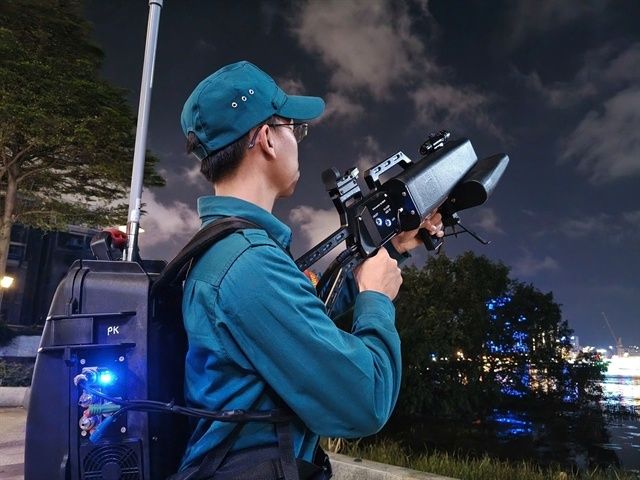
Vietnam's authorities are stepping up enforcement against the growing menace of unauthorised drone operations around its airports, warning the public of the serious safety and economic consequences of the illegal practice. The Immigration Department under the Ministry of Public Security has issued a fresh alert highlighting how drone incursions into restricted airspace have created an escalating crisis that threatens aviation safety and strains the country's air transport infrastructure.
The scale of the problem has expanded dramatically over recent years. Vietnam recorded 34 cases of drones or other unauthorised aircraft penetrating restricted airspace at airports throughout 2025, a figure that underscores how pervasive the issue has become. That troubling trend accelerated further into 2026, with authorities documenting 17 additional incidents in just the first six months of the year alone. The rapid growth in these breaches suggests that public awareness of the regulations and the dangers involved remains inadequate, despite previous warnings from aviation authorities.
When drones enter airport restricted zones, air traffic controllers face immediate pressure to take emergency measures that can cascade into significant operational disruptions. These responses—halting scheduled departures, suspending incoming flights, or rerouting aircraft to alternative airports—are necessary to prevent potentially catastrophic collisions between drones and commercial aircraft. However, each emergency action carries substantial costs and ripple effects throughout the aviation system and beyond.
The financial impact on airlines and airports has been substantial and measurable. Vietnam Airlines disclosed that drone-related disruptions occurring between February 17 and February 24 alone cost the carrier approximately VNĐ5.6 billion, equivalent to roughly US$215,000. Beyond the direct financial losses, those incidents disrupted travel arrangements for approximately 9,200 passengers through schedule delays and forced changes to their planned itineraries. Danang International Airport separately calculated its direct losses from such incidents at more than VNĐ10 billion, or approximately US$384,000, though airport officials acknowledged this figure represents only the most immediately quantifiable costs. The broader economic damage—including expenses borne by logistics companies, tour operators, and travelers facing delays or cancelled trips—extends well beyond these directly measured figures.
The underlying safety concern is perhaps more serious than the economic toll. Aviation experts and officials have stressed that a collision between a drone and a commercial aircraft during the critical phases of takeoff or landing could result in a serious or catastrophic accident, potentially endangering the lives of everyone aboard. Aircraft are particularly vulnerable during these phases when they are low to the ground, travelling at significant speeds, and maneuvering carefully. A drone strike under these conditions could damage critical systems or cause loss of control, with potentially tragic outcomes.
Vietnam's legal framework governing drone operations attempts to create clear accountability through a system of registration and permitting. Under Vietnamese law, drone owners must register their aircraft with relevant authorities and obtain an explicit flight permit before conducting any operations. Crucially, registration alone does not grant the right to fly; the permit specifies the exact geographic area where flight is permitted, the maximum altitude, the times of operation, and the scope of the activity. This permit requirement creates a structured system where authorities can oversee and control drone operations near sensitive areas like airports.
Violators of these regulations face a graduated scale of penalties depending on the severity of the breach. A government decree introduced in 2025 established administrative sanctions that can include monetary fines, confiscation of the drone equipment, and temporary or permanent suspension of the violator's flight privileges. For more serious infractions where a drone has obstructed air traffic operations or created a genuine danger to aviation safety, the authorities can pursue criminal prosecution rather than merely administrative action.
The criminal penalties available to prosecutors are notably severe, reflecting the seriousness with which Vietnamese authorities view these violations. Individuals convicted of flying a drone into an aircraft's approach path, takeoff corridor, or landing zone—creating a realistic risk of collision—can face fines ranging from VNĐ10 million to VNĐ50 million, roughly US$384 to US$1,920. Depending on the circumstances, violators may also receive non-custodial reform sentences of up to two years or imprisonment of three months to two years. In the most egregious cases where a drone strikes an aircraft or causes a serious accident, criminal penalties can extend to imprisonment of up to 15 years.
A notable aspect of Vietnamese law is that prosecution does not require an actual accident or collision to have occurred. Rather, the authorities can bring criminal charges based on the dangerous conduct itself—the act of flying a drone in an aircraft's path in a manner that creates genuine risk of collision. This approach allows prosecutors to intervene before a disaster happens rather than waiting for an accident to provide evidence of criminal intent. Additionally, individuals convicted of these offences can be barred from holding certain employment positions or public roles for between one and five years following their conviction, creating further disincentives for violations.
The Ministry of Public Security has made an explicit appeal to drone operators to comply with permit conditions, flying only within the specified time windows, geographic areas, and operational parameters authorised by their permits. Beyond appeals to voluntary compliance, authorities have also called on the broader public to play an active role in enforcement by reporting any suspected unauthorised drone activity near airports to police, military personnel, or airport officials. This approach recognises that detecting all illegal drone flights through government surveillance alone is challenging, and public vigilance can complement official monitoring efforts.
For Malaysia and other Southeast Asian nations monitoring the development, Vietnam's experience offers important lessons about the rapid expansion of drone technology and the regulatory challenges it presents. As consumer drones become cheaper and more accessible across the region, similar incidents are likely to emerge in other countries unless regulatory frameworks are established and enforced promptly. The Vietnamese authorities' emphasis on shared responsibility—framing aviation safety as a societal concern rather than solely a government function—may serve as a useful model for other nations developing their own drone management policies.

