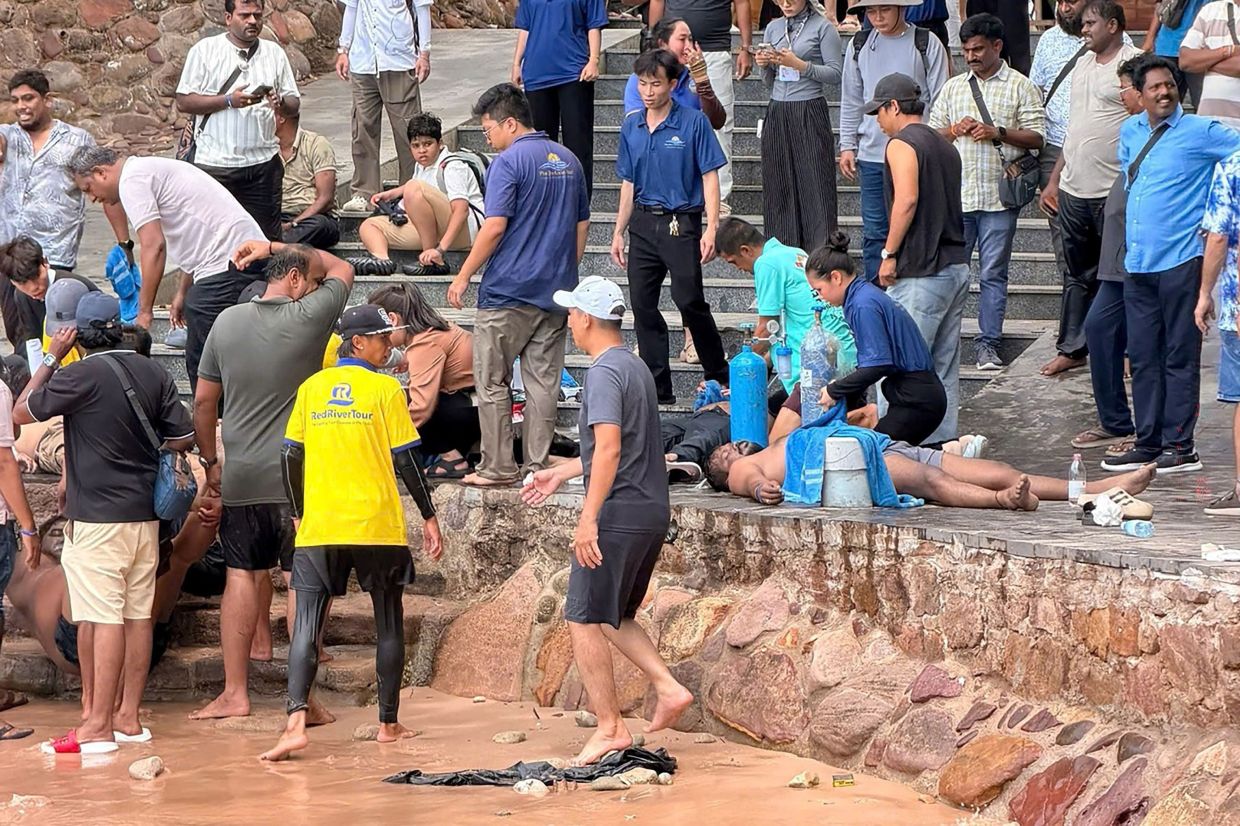
Vietnam's government has launched a comprehensive investigation into one of the country's deadliest maritime accidents in recent years after a speedboat capsized off the coast of Phu Quoc Island, resulting in the deaths of 15 Indian tourists. Prime Minister issued an urgent directive on July 11 requiring all relevant ministries and provincial authorities to immediately assess the circumstances surrounding the incident and implement corrective measures to prevent similar tragedies.
The speedboat was carrying 32 Indian visitors when it overturned near Hon May Rut Ngoai in the Phu Quoc Special Zone, along with four crew members and guides. Among the 36 people aboard, 15 were confirmed dead—13 men and two women—while 21 others were successfully rescued and brought to shore. The Indian Embassy subsequently released an official manifest of the 32 tourists involved, identifying 30 men and two women, and has since established support centres in Ho Chi Minh City and Hanoi to assist affected nationals and their families.
The Prime Minister's dispatch stressed the need for immediate deployment of all available medical personnel and pharmaceutical supplies to treat the injured survivors. This emphasis on rapid medical intervention reflects the critical condition of some rescued passengers and the importance of preventing secondary fatalities among those who survived the initial capsizing. Provincial health authorities have been coordinated to ensure comprehensive care across all affected individuals.
An Giang Province, which has jurisdiction over the Phu Quoc area, has been designated to lead a multi-agency investigation into the root causes of the accident. This provincial-level coordination is standard protocol for major maritime incidents in Vietnam and ensures that local knowledge and expertise inform the assessment process. Authorities will examine factors including vessel maintenance, weather conditions, passenger capacity compliance, and crew qualifications.
The Ministry of Public Security has been tasked with conducting a formal criminal investigation to determine whether any violations of maritime law occurred. The directive explicitly authorises strict enforcement action against any organisations or individuals found culpable, signalling the government's determination to hold responsible parties accountable. This component of the response is particularly significant given growing international scrutiny of tourist safety standards in Southeast Asian maritime operations.
Beyond the immediate investigation, the Ministry of Construction has been instructed to conduct a broader safety audit of all inland waterway and maritime traffic infrastructure in the Phu Quoc region and comparable coastal zones throughout the country. This systemic review suggests authorities are treating the incident as potentially indicative of wider safety gaps rather than an isolated failure. Enhanced inspection protocols and stricter adherence to international maritime safety standards may result from this assessment.
Diplomatic engagement has been elevated as a priority, with the Ministry of Foreign Affairs directed to work in close coordination with the Indian Embassy in Vietnam. This collaboration will address consular matters, victim identification, repatriation of remains, compensation discussions, and broader citizen protection frameworks. Such coordinated engagement is essential given the significant bilateral implications of the tragedy and the need to maintain strong India-Vietnam relations amid a sensitive incident involving Indian lives lost in Vietnamese waters.
The incident underscores persistent vulnerabilities in the tourism infrastructure of popular Southeast Asian destinations. Phu Quoc, a major tourist attraction known for its beaches and marine activities, has experienced rapid tourism growth in recent years, sometimes outpacing the development of adequate safety systems. The mixing of high tourist volumes with ageing vessel fleets and potentially inconsistent enforcement of maritime regulations creates conditions for accidents like this capsizing.
For Malaysian travellers and businesses operating in similar maritime tourist sectors across the region, the incident carries sobering lessons. Southeast Asian nations compete intensively for tourist dollars, sometimes prioritising rapid capacity expansion over rigorous safety protocols. The Phu Quoc accident demonstrates that such shortcuts can prove catastrophic, particularly given the seasonal weather patterns and challenging maritime conditions common throughout the region. Malaysian operators in tourism and hospitality sectors should view this tragedy as a cautionary example of why investment in proper training, vessel maintenance, and safety infrastructure must never be compromised.
The response from Vietnam's government has been notably swift and comprehensive, with the Prime Minister's intervention occurring within hours of the incident. This rapid escalation to the highest levels of government reflects the severity of the tragedy and its potential diplomatic ramifications. However, the real test of Vietnam's commitment will be the thoroughness of the investigation and the substantiveness of reforms implemented in its aftermath.
The incident also highlights the vulnerability of regional tourism ecosystems to maritime disasters. With millions of Southeast Asian and international tourists undertaking boat excursions annually across the region's archipelagos and coastal zones, safety standards become a matter of regional concern. This tragedy in Vietnamese waters serves as a reminder that tourism development must be accompanied by equally rigorous safety evolution, a lesson that extends across Malaysia, Thailand, Indonesia, and other maritime-dependent destinations throughout Southeast Asia.

